In the ancient city of Salamanca, where the golden sandstone buildings seem to glow beneath the Castilian sun, there lies a shadowed legend whispered through centuries, the tale of La Cueva de Salamanca, the Cave of Salamanca.
Beneath the Church of San Cebrián, once stood a mysterious cave, half-buried and silent, its entrance sealed by time. Locals said it had once been the classroom of the Devil himself, where he taught forbidden arts to those bold, or foolish, enough to learn them.
The Hidden School Beneath the Church
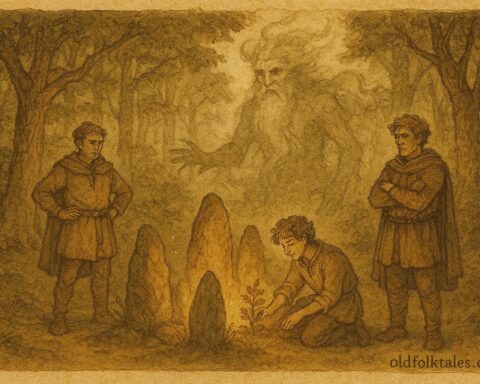
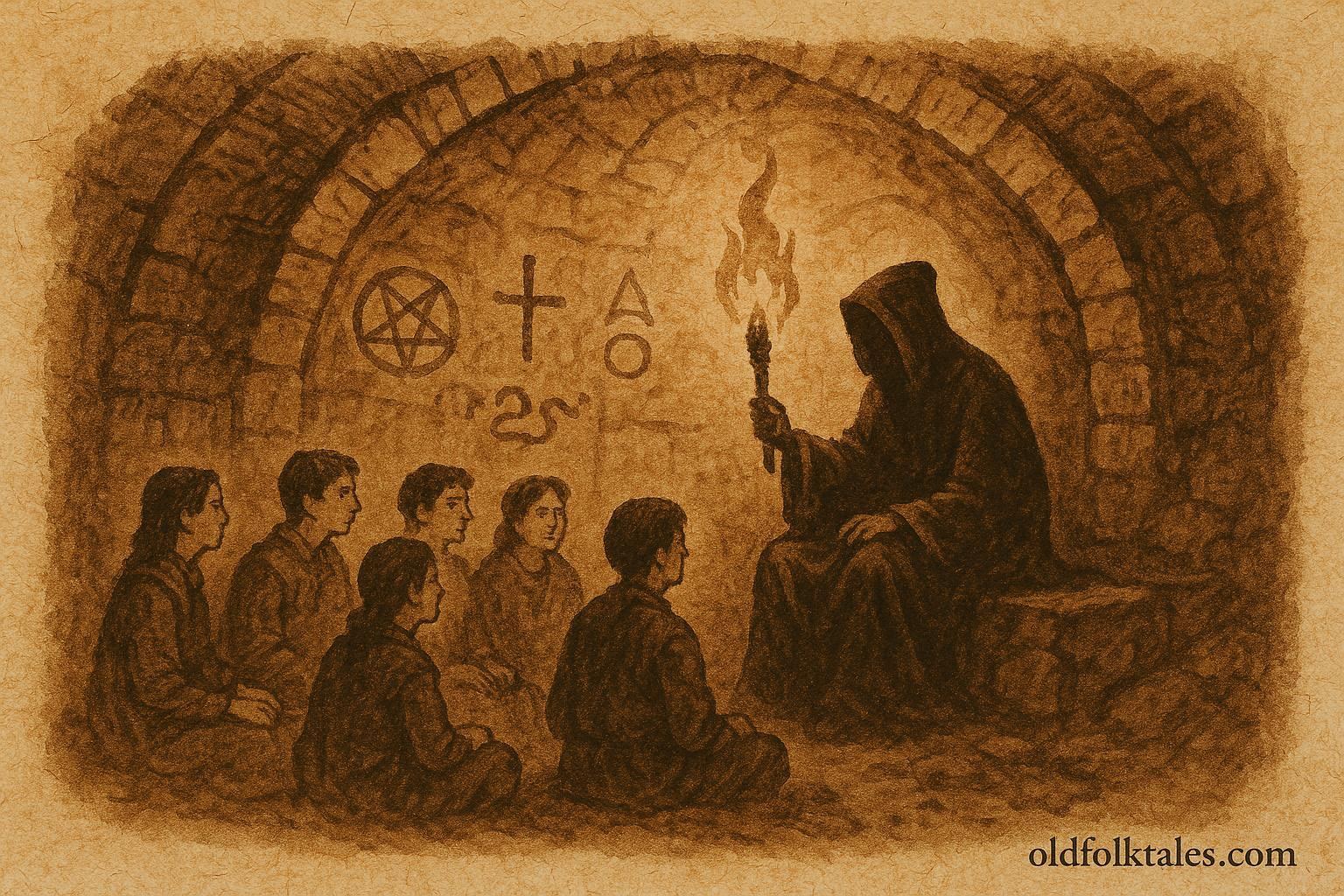
Long ago, when Salamanca’s university was already famed across Europe for its scholars and magicians, rumor spread of a secret school unlike any other. It was said that deep under the city, seven students would gather in the dead of night, led by a master no one dared to name aloud.
By the dim flicker of torches, the students learned all manner of forbidden sciences: astrology, necromancy, divination, and the power to command spirits. Each midnight lesson revealed secrets that no mortal was meant to know. The teacher, a dark, commanding presence, demanded silence, obedience, and secrecy.
None could say how the chosen students were selected. Some claimed they were ambitious scholars, others said desperate wanderers seeking power or wealth. But all agreed on one point: when their studies were complete, a terrible price must be paid.
The Devil’s Bargain
The legend tells that the master, none other than Lucifer in human disguise, would teach for seven years. At the end of that time, one of the seven students would be chosen by lot. The unfortunate one would remain forever in the cave, serving as payment for the Devil’s lessons, while the others were released back into the world, armed with dark knowledge and marked by secrecy.
Some stories say the chosen soul was taken into the earth itself, vanishing in a swirl of sulfur and wind. Others say he remained trapped as the guardian spirit of the cave, bound for eternity, waiting for the next generation of seekers.
The Arrival of the Student
Among those who sought this forbidden school was a curious young student, clever but poor, whose hunger for wisdom knew no bounds. He had heard whispers of a place where all knowledge could be gained, at a price.
Driven by ambition, he followed clues through old manuscripts and cryptic rumors until he found the narrow stairway descending beneath the Church of San Cebrián. There, by the flickering light of his candle, he saw carved into the stone a sign of seven stars and a serpent coiled around a book.
He entered, and the darkness swallowed him whole.
For seven years he studied under the mysterious master. He learned the language of the stars, the secrets of the dead, and the words that could summon storms. His mind grew vast, but his heart grew hollow. When the time came to draw lots, he trembled as the Devil’s eyes gleamed in the firelight.
The Clever Escape
Fate was cruel: the lot fell upon him. He was to remain forever in the cave, a prisoner of his own thirst for knowledge. But the young man was as cunning as he was learned.
He asked one final favor, to confess his sins before the light of day. The Devil, intrigued, allowed him to ascend to the surface under promise of return. As soon as he emerged, he fled, running through the winding streets of Salamanca until dawn broke across the rooftops.
When the Devil rose to reclaim him, the first rays of sunlight struck the city, and the entrance to the cave collapsed with a thunderous sound. Trapped beneath the earth, the Devil could no longer reach him.
Yet even as he escaped, the student found no peace. Wherever he went, shadows seemed to follow, and whispers of the cave echoed in his dreams. He had gained the knowledge he sought, but lost his innocence forever.
The Cave Sealed in Silence
Centuries passed, and the cave beneath San Cebrián was sealed for good. Some say it was to protect the city from evil; others claim it was to keep mortals from their own curiosity. But even today, travelers to Salamanca speak of strange noises near the site on quiet nights, the faint murmur of lessons still being taught in the depths below.
The story lives on in the Golden Age theatre of Spain, most famously in Cervantes’ “Entremés de la Cueva de Salamanca”, where the legend takes on a playful twist about deception and hidden truths. Yet behind every version lies the same warning: that knowledge without wisdom can lead a soul into darkness.
Moral of the Story
The legend of La Cueva de Salamanca reminds us that the desire for forbidden knowledge can come at a terrible cost. True wisdom lies not in knowing everything, but in understanding the limits of what should be known.
Knowledge Check: The Cave of Salamanca (Spanish Folktale)
- What is La Cueva de Salamanca?
A legendary cave beneath Salamanca, Spain, said to be a secret school where the Devil taught forbidden arts. - Who were the students of the Devil’s school?
Seven chosen individuals who studied magic and secret knowledge for seven years. - What happened to one student at the end of each cycle?
One student was chosen to remain forever in the cave as payment for the Devil’s teachings. - How did one clever student escape the Devil’s bargain?
He asked to confess in daylight and fled before the Devil could reclaim him, as sunlight sealed the cave. - What cultural lesson does the legend teach?
That ambition and the pursuit of forbidden knowledge can lead to spiritual ruin. - How has the legend influenced Spanish literature?
It inspired works such as Miguel de Cervantes’ Entremés de la Cueva de Salamanca, which reinterprets the legend in comedic form.
Source: Spanish folktale, Salamanca region, Spain.
Adapted from traditional legends and literary treatments, including La Cueva de Salamanca (Cervantes, early 17th century).