In the lush, verdant mountains of Asturias, where mist drifts over moss-covered rocks and rivers sing their eternal songs, there dwell most wondrous creatures known as the xanas. These water-nymphs are beautiful beyond mortal reckoning, often fair-skinned, with hair as golden as the sun glinting on the morning waters. They inhabit the hidden springs, mysterious caves, and crystal-clear pools that dot the northern Spanish landscape, places where nature holds its secrets closely and whispers its magic only to the attentive.
Xanas are rarely seen by humans, yet those who glimpse them are forever changed by their otherworldly charm. They are said to comb their golden hair with combs of pure gold, the tiny teeth gleaming like rays of sunlight. At night, xanas often emerge to walk along riverbanks or sit by waterfalls, singing melodies so sweet that even the birds pause in awe. In their presence, time seems to shift, and the ordinary world takes on a shimmering, enchanted hue.
One of the most enduring tales tells of a young woman named Elvira, who lived in a village nestled at the foot of a mountain stream. The villagers had long whispered of the xanas who dwelled in the hidden spring beyond the thick pine forest. Despite the warnings, Elvira was drawn to the forest, her curiosity sparked by the beauty she had glimpsed from afar, a fleeting figure with golden hair and luminous eyes, glimpsed at dawn, near the water’s edge.
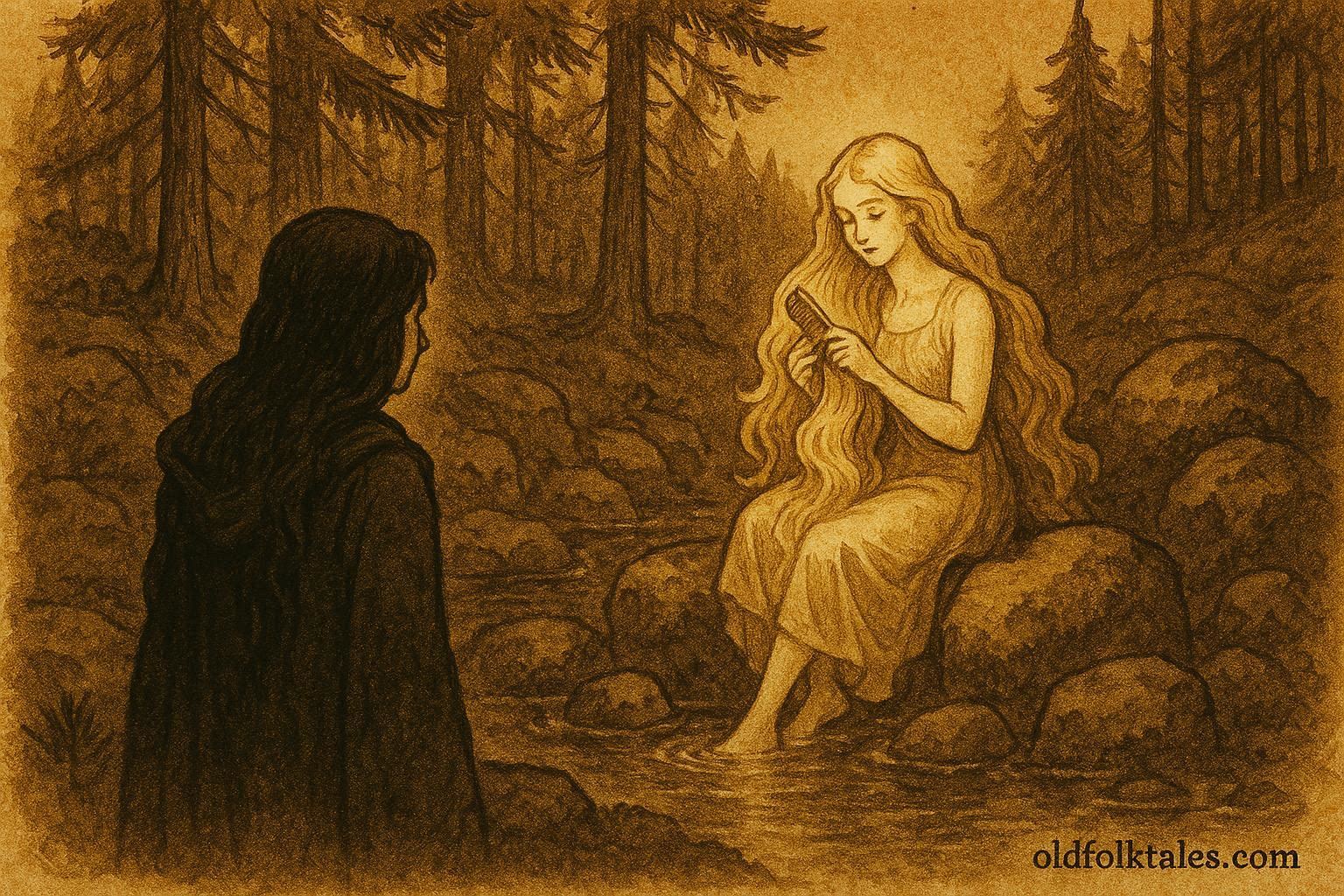
One misty morning, when the sun had barely risen, Elvira followed the silver trail of the stream. The air was damp and fragrant with moss and wildflowers, and the soft gurgle of the water called her forward. Soon, she arrived at a small, secluded pool encircled by ancient stones. To her astonishment, a xana sat on a rock, combing her golden hair with a delicate comb that shimmered like sunlight on liquid gold. The fairy’s voice, soft and melodic, seemed to blend with the gentle babble of the water, and Elvira felt both awe and a strange warmth in her chest.
The xana noticed Elvira but did not flee. Instead, she smiled, a smile that carried both mischief and kindness. “You are brave to venture here,” she said. “Few humans have the courage to find me.” Elvira, trembling yet captivated, asked the xana about her life. In reply, the fairy revealed the hidden treasures she guarded, small hoards of gold coins and precious gems, secreted away in caves only accessible at midnight. The xana explained that these treasures were gifts for those who proved worthy, but she warned that greed would bring only sorrow.
Elvira visited the xana often, listening to tales of the mountains, the rivers, and the creatures of the forest. The fairy showed her the wonders of the natural world, revealing secret paths and hidden grottos, teaching respect for all living things. In time, the xana entrusted Elvira with a small, delicate chest of gold, cautioning her to use it wisely. But the fairy also spoke of a darker part of her magic: occasionally, xanas would take human children as changelings, leaving a fairy child in their place. This was never done lightly, she explained, but it was a reminder that the world held mysteries that could not always be understood.
One evening, Elvira came to the spring to find the xana sitting solemnly by the water, her golden hair glimmering in the moonlight. “Tonight,” the fairy said, “you must promise to protect the treasures and respect the forest, for one day you may face a test of your heart.” Elvira nodded, her heart swelling with loyalty and awe.
Years passed, and the villagers noticed that Elvira seemed to carry a certain serenity and wisdom, as though she had glimpsed a world beyond their own. True to her promise, she guarded the treasures and shared only what was needed with those who were kind and deserving. Though many sought to find the xanas, Elvira alone knew the secret paths, the hidden caves, and the magical spring where the fairies dwelled.
The tales of the xanas remind us that the world is full of wonder, that beauty and magic exist even in the quietest corners, and that respect for nature and generosity of heart are the greatest treasures one can hold. The xanas of Asturias are not just creatures of legend, they are guardians of morality, keepers of hidden wealth, and symbols of the delicate balance between curiosity, courage, and wisdom.
Moral Lesson
This tale of the xanas teaches that courage and respect for nature are rewarded, while greed and selfishness bring loss. True treasure lies in understanding, generosity, and harmony with the world around us.
Knowledge Check
Q1: Who are the xanas in Asturian folklore?
A1: Xanas are water-nymphs or fairies from Asturias and León, often depicted as beautiful, blonde, and dwelling in springs, pools, or caves.
Q2: What treasures do xanas guard?
A2: Xanas guard hidden treasures, including gold coins, gems, and magical items, which they may give to humans who prove worthy.
Q3: What is the changeling motif associated with xanas?
A3: Occasionally, xanas may exchange a human child for a fairy child, highlighting their mysterious and morally complex nature.
Q4: What natural settings are xanas associated with?
A4: Xanas are linked to springs, caves, rivers, waterfalls, and other secluded, pristine natural locations in northern Spain.
Q5: What lesson does Elvira learn from her encounters with the xana?
A5: Elvira learns the value of respect, responsibility, generosity, and courage, using the treasures wisely and protecting the forest.
Q6: How do xanas symbolize moral values in folklore?
A6: Xanas symbolize the balance of curiosity, courage, and respect for nature, rewarding virtue and cautioning against greed.
Cultural Origin: Asturian folktale, Asturias and León, Spain
Source: Adapted from regional folklore studies and encyclopedia entries on the xana.