Long ago, in the green hills of Erin, there lived a mighty king who ruled a vast and peaceful realm. His castle rose above the glens, and his lands were rich with herds and harvests. Yet, for all his prosperity, a strange shadow troubled him. He had twelve fine sons, strong and wise, but when the thirteenth was born, an old prophecy came whispering through the halls, “Woe to the thirteenth son, for misfortune shall follow him unless he wanders far from home.”
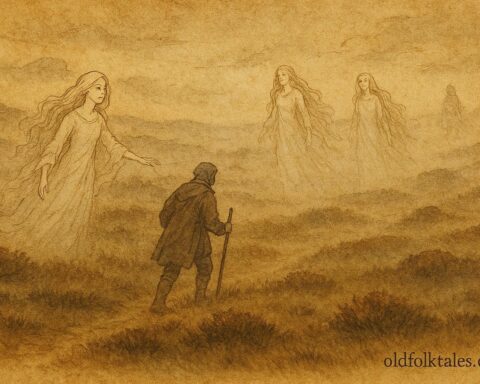
To protect his kingdom and his child, the king reluctantly decreed that his youngest must leave the royal household when he came of age. The boy grew fair and kind, unlike his elder brothers, who mocked him for his fate. When his time came, the thirteenth son took leave of his father, wearing only simple garb and carrying a herdsman’s staff. With courage in his heart, he set out across the emerald fields of Ireland.
Discover the moral heart and wild spirit of the north through timeless Nordic storytelling
He wandered until he came to a great castle owned by a foreign king, whose land was plagued by a monstrous giant. The creature terrorized the countryside, stealing cattle and gold, and none dared face him. The young man offered to tend the royal herds, concealing his noble birth under the name of a poor herdsman. Each day, he drove the cattle to graze near the hills where the giant roamed.
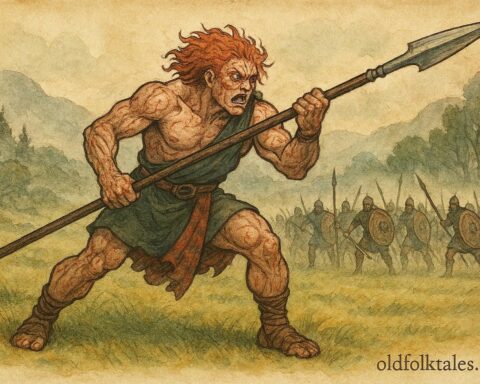
One day, as the sun hung low, the ground trembled beneath thunderous steps. The giant appeared, wielding an iron club as thick as a tree trunk. “Who dares trespass on my meadow?” he bellowed. The lad stood firm, his voice calm. “I guard the king’s herds and mean no harm, but harm shall come to those who steal them.”
The giant roared with laughter, until the youth drew forth a small silver whistle. With a single breath, a splendid horse sprang from the air, clad in shining armor. The thirteenth son leapt upon its back, and a fierce battle began. Dust swirled and sparks flew as sword met club. At last, with one swift stroke, the youth struck down the giant and buried him beneath the hill.
Word of the victory spread, but the young herdsman told no one his true name. He merely returned to his humble work, tending cattle and living quietly. Yet peace never lasts long for a hero. Soon, a sea-serpent rose from the ocean depths, demanding tribute from the king, or the destruction of his lands.
Again, the thirteenth son volunteered to face the danger. He rode his magical horse to the coast, where waves crashed like thunder. The serpent reared its head high above the sea cliffs, its eyes blazing like fire. Three times the youth charged the beast, striking with his sword of light. On the third blow, he pierced its heart, and the creature fell into the deep, never to rise again.
The grateful king declared a grand feast in honor of the mysterious herdsman. Yet envy brewed among courtiers, who claimed that one of their own had slain the serpent. The humble youth said nothing, but when the king’s daughter stepped forward to honor the hero, she revealed a golden shoe left behind at the scene of battle. She declared that she would marry only the man whose foot fit the shoe.
One by one, noblemen tried and failed. When at last the herdsman was called, the court laughed, until he placed his foot within the golden shoe, and it fit perfectly. In that moment, his disguise fell away. The thirteenth son of the King of Erin stood revealed in shining armor, his courage and truth undeniable.
The foreign king rejoiced to give him his daughter’s hand, and word reached Erin of the youngest son’s triumph. His father welcomed him home, proud and repentant. The twelve older brothers, who had once scorned him, hung their heads in shame.
So it was that the thirteenth son, once cast away in humility, returned a hero, proof that greatness comes not from birth or fortune, but from bravery, wisdom, and the quiet heart that faces fear without faltering.
Moral Lesson
This Irish folktale teaches that true nobility lies in courage, humility, and steadfast character. Even when destiny seems cruel, faith and bravery can turn exile into triumph.
Knowledge Check
1. Who is the main hero in “The Thirteenth Son of the King of Erin”?
The youngest son of the King of Erin, known as the thirteenth son, who proves his bravery through great deeds.
2. What monsters does the thirteenth son defeat in the Irish folktale?
He defeats a fierce giant and a deadly sea-serpent, showcasing courage and skill.
3. What magical object helps the thirteenth son succeed?
A silver whistle that summons a magical horse in his time of need.
4. How is the hero’s true identity revealed?
By the golden shoe that fits only his foot, proving him the rightful hero and winner of the princess’s hand.
5. What cultural themes are shown in this Irish legend?
The story celebrates humility, destiny, and courage — values central to Irish folklore.
6. What lesson does “The Thirteenth Son of the King of Erin” teach?
That humble beginnings and a brave heart can lead to honor, love, and recognition.
Source: Adapted from Myths and Folk-lore of Ireland by Jeremiah Curtin (1890).
Cultural Origin: Ireland (Irish folklore).