In a green and gentle corner of the Maltese countryside, where the sun warmed stone walls and ancient fig trees stretched their limbs toward the sky, there lived a woman with three sisters, her daughters, bound by blood yet different in heart. The eldest sister was tall and confident, the middle sister even-tempered but proud, and the youngest was soft-spoken, kind, and deeply in tune with nature. Among the golden fields and olive groves of Malta, their home stood quietly, and right nearby grew a venerable fig tree, its branches heavy with fruit, its roots deep in the rich earth of the island.
One day, as the mother gathered the three sisters beneath the shade of that fig tree, she bade them speak of what each would promise, should they take their turn to tend the tree under its branches. The eldest declared that if she were entrusted with the tree, she would have it bear the sweetest figs in the region, and would sell them to make the finest fortunes. The middle sister declared that she would have the tree’s shade host the most splendid feasts and music, that travellers from across the seas would come to sit beneath the fig tree’s leaves and feast at her invitation. When it came to the youngest sister, she smiled quietly: she promised that she would care for the tree with such devotion that everyone who sat beneath its branches would feel gratitude and wonder, and that the tree would become a place of peace. Impressed by her sincerity, their mother entrusted the fig tree to the youngest daughter, saying: “Then it is yours.”
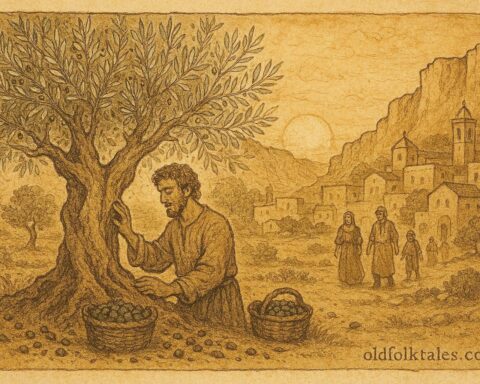
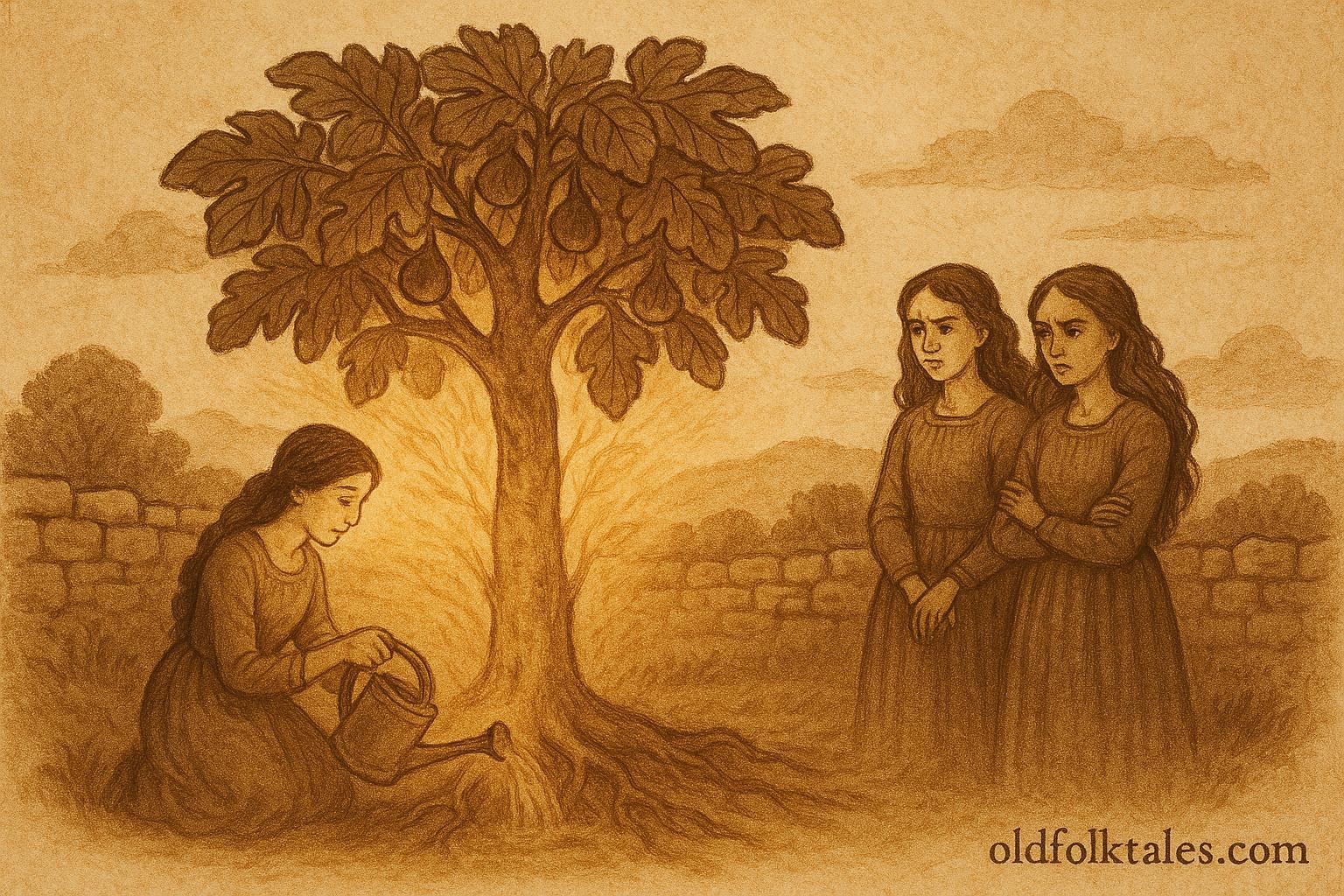
Seasons passed. The fig tree flourished under the youngest sister’s care. She sang softly while she pruned, she watered it in summer’s heat, she tucked the earth around its roots in winter’s chill. In time the tree bore abundant fruit: sweet figs that glowed like amber, leaves that rustled like whispers, and a shady canopy that gave comfort to all who rested beneath. People from the village walked with jars to gather figs; travellers paused to rest beneath the branches. The tree became beloved and celebrated.
The older sisters, however, grew silent with envy. They watched the younger sister’s success and the love that the fig tree’s shade inspired. Their hearts hardened with resentment. “Why should she alone receive praise for the fig tree,” they wondered. “Why should people come to her and leave with jars full of figs while we are overlooked?” So they began to plot.
One late afternoon, when the fig tree’s leaves glowed in the golden light of dusk, the two elder sisters came to the tree while the youngest was away. They stood beneath its branches and spoke in hushed voices, each banishing the truth of the promise given, and each claiming that they themselves had been the rightful keeper of the tree. Then they claimed that the youngest sister had done nothing and that the fruit was theirs by right. The fig tree heard. On the next morning, the older sisters visited the mother and declared that the younger had misused the tree and spent no effort planting, watering or harvesting, and that the tree’s fruit, while bountiful, was theirs to claim.
The mother, torn, pondered what to do. Ultimately she declared that since the fig tree belonged to the youngest, the two elder sisters would take a large basket of the harvest and present it at the village square, to demonstrate the tree’s bounty and their own labour. The eldest and middle sisters agreed, eager to show their superiority. They bound the basket and set out together. But by midday, under the bright Maltese sun, their jealousy weighed upon them and sloth crept in. They filled the basket with the finest figs, yet kept some for themselves, hidden in the folds of cloth, while the rest they pressed into the basket to show to the village folk.
When they presented the basket beneath the shade of the fig tree at the village square, villagers admired it. “What a harvest!” they exclaimed. But the tree itself seemed to sigh; its leaves whispered to the wind that something was not right. Days later, when some visitors visited the fig tree, they found that though the fruit remained, the roots were dry in places and the leaves trembled in sorrow.
Meanwhile the youngest sister continued her quiet work: watering the roots early in the morning, gathering fallen figs to nourish the soil, offering cups of fig-juice to thirsty travellers under the tree’s branches. She never spoke of the plot or of her sisters’ deed. She simply tended.
Then , a few dawns later, a great storm swept in from the sea. Winds howled across the Maltese fields; the fig tree bent low; some branches cracked; figs dropped. The older sisters rushed to the tree, wanting to claim what remained. But the tree shivered under them and its fruit seemed fewer. The villagers came to see and exclaimed: “The tree has suffered, yet see how it stands still under her care.” In that moment the mother gathered all three daughters beneath the fig tree. She declared that the tree’s promise had been fulfilled: the youngest sister’s care had been true, the fruit had been rich, the shade had become beloved, and the tree had borne witness to her devotion. The two elder sisters, in their envy, had claimed what never was theirs, and the tree had suffered under their claim.
Humbled, the elder sisters turned to their youngest sister and asked forgiveness, acknowledging the fig tree’s health and flourishing were due to her kindness and labour. The youngest sister embraced them kindly, and the three together renewed their bond beneath the branches of the fig tree, its leaves rustling in gentle approval, its roots strong in the Maltese soil once more.
From that day onward, the fig tree stood as a symbol of true stewardship, care, and humility in the village. Villagers gathered under its broad canopy to share figs and stories, and the three sisters, each in her way, found respect and reconciliation.
Moral Lesson
True belonging and success come not from rivalry or claiming what is not earned, but from constant, humble care, kindness, and devotion. The fig tree flourished not because of grand promises, but because of steady, selfless labour, and the youngest sister’s heart led it to thrive.
Knowledge Check
- Who were the main characters in the story?
The mother and her three daughters, the eldest, the middle, and the youngest, along with the fig tree they tended. - What was the symbolic significance of the fig tree in the story?
The fig tree symbolised care, nourishment, refuge and rootedness in the Maltese setting; it also reflected the character of its keeper through its flourishing or suffering. - What promise did the youngest sister make about the fig tree, and how did it compare to her sisters’ promises?
The youngest promised to care for the tree so everyone resting beneath it would feel peace and wonder; the older sisters promised wealth and grand feasts respectively, focusing on gain rather than care. - How did the two elder sisters act, and what was their motive?
They grew jealous of their youngest sister’s success, falsely claimed her work as their own, and sought to benefit from the tree’s fruit without fulfilling the care the youngest provided. - How was the youngest sister proved to be the rightful keeper of the tree?
Through continuing her quiet, diligent care, watering, gathering fallen figs, offering shade, and when the tree suffered in the storm, it was her stewardship that stood strong, revealing the truth of her worth. - What is the cultural origin of the tale and why is the fig tree motif significant?
The tale originates from Malta, where fig trees are common in the landscape and embedded in cultural symbolism of shade, fruitfulness and shelter, for this tale, the fig tree is rooted in that Maltese cultural context. Source: Maltese folktale, Malta.
Source: Maltese folktale, Malta
Cultural Origin: Maltese folktale