Once upon a time, in the green valleys and dense forests of South Småland, Sweden, there lived a great king who ruled over a land of silver lakes and golden fields. His castle stood high on a hill, crowned with towers that shone like ice in the morning sun. The king had a son, young and noble, whose heart was both brave and curious. Though he lacked for nothing, the prince longed for adventure, something beyond the marble walls and feasts of his father’s hall.
Discover the moral heart and wild spirit of the north through timeless Nordic storytelling
One spring morning, restless and full of dreams, the king’s son rode deep into the forest, following no road, only the whisper of the wind through the birches. After many hours, he came to a clearing he had never seen before. At its center stood a stone castle, tall and strange, glimmering faintly as if spun from moonlight.
As he approached, the gates opened on their own, and inside stood a maiden unlike any he had ever seen. Her name was Messeria. Her hair fell like sunlight across her shoulders, and her eyes were dark as forest pools. The air around her shimmered with power, neither mortal nor wicked, but something in between.
“Welcome, Prince,” she said softly. “I have been expecting you.”
Before he could ask how she knew his name or his purpose, the gates closed behind him. Though he felt a chill of unease, the beauty of Messeria and the enchantment of the castle soon clouded his thoughts. Days turned into weeks, and the prince remained her guest, or perhaps her prisoner.
For Messeria was no ordinary maiden. Some said she was the daughter of an ancient sorceress, others that she had learned her arts from the winds themselves. Whatever her origin, her power was great, and her heart was proud. She demanded that the prince serve her, not as a slave, but as one who must prove his worth before earning freedom or love.
She gave him three impossible tasks, each one meant to test his courage, wisdom, and heart.
The first task was to build a palace of pure silver overnight. The prince, struck with despair, sat beneath the window until Messeria appeared, her voice gentle for the first time. “Do not fear,” she whispered. “Sleep, and all shall be done.”
When morning came, the silver palace stood gleaming under the dawn. The prince was astonished, but Messeria only smiled, her eyes unreadable.
The second task was even harder. She ordered him to drain a lake so deep and wide that its waters touched the roots of the mountains. “If you fail,” she said, “the lake shall drown you.” Again, the prince sat in sorrow until Messeria appeared by his side. “Sleep again,” she said, “and it will be done.”
By sunrise, the lake had vanished, and in its place lay a meadow full of wildflowers. The prince began to see that Messeria’s heart was divided, part pride, part pity.
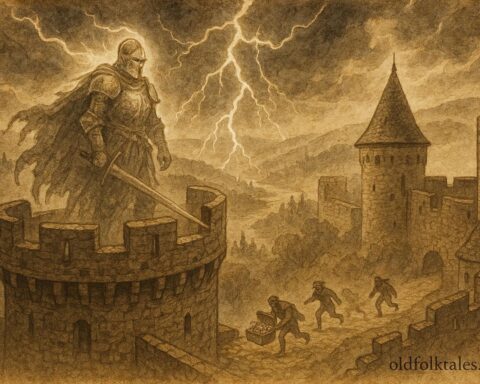
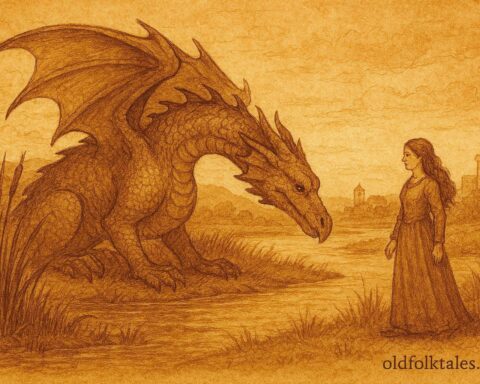
But the third task was the hardest of all. Messeria commanded him to capture a fierce dragon that guarded a chest of gold deep within the forest. “Bring it to me,” she said, “and perhaps you shall earn your freedom.”
Armed with nothing but a sword, the prince went into the forest. He fought bravely, and though the dragon’s fire burned his cloak to ashes, he did not fall. When Messeria saw him return, bruised and trembling but alive, something within her softened.
That night, she said quietly, “You have done all I asked. But now you must leave, or you will never be free of me. My mother’s magic binds me to this place, and if you stay, her power will claim us both.”
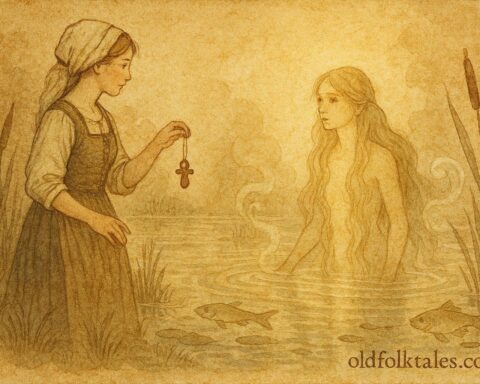
Tears filled her eyes. She gave him three gifts: a silver ring, a feather, and a lock of her hair. “If you ever need me,” she said, “burn the hair, and I will come.”
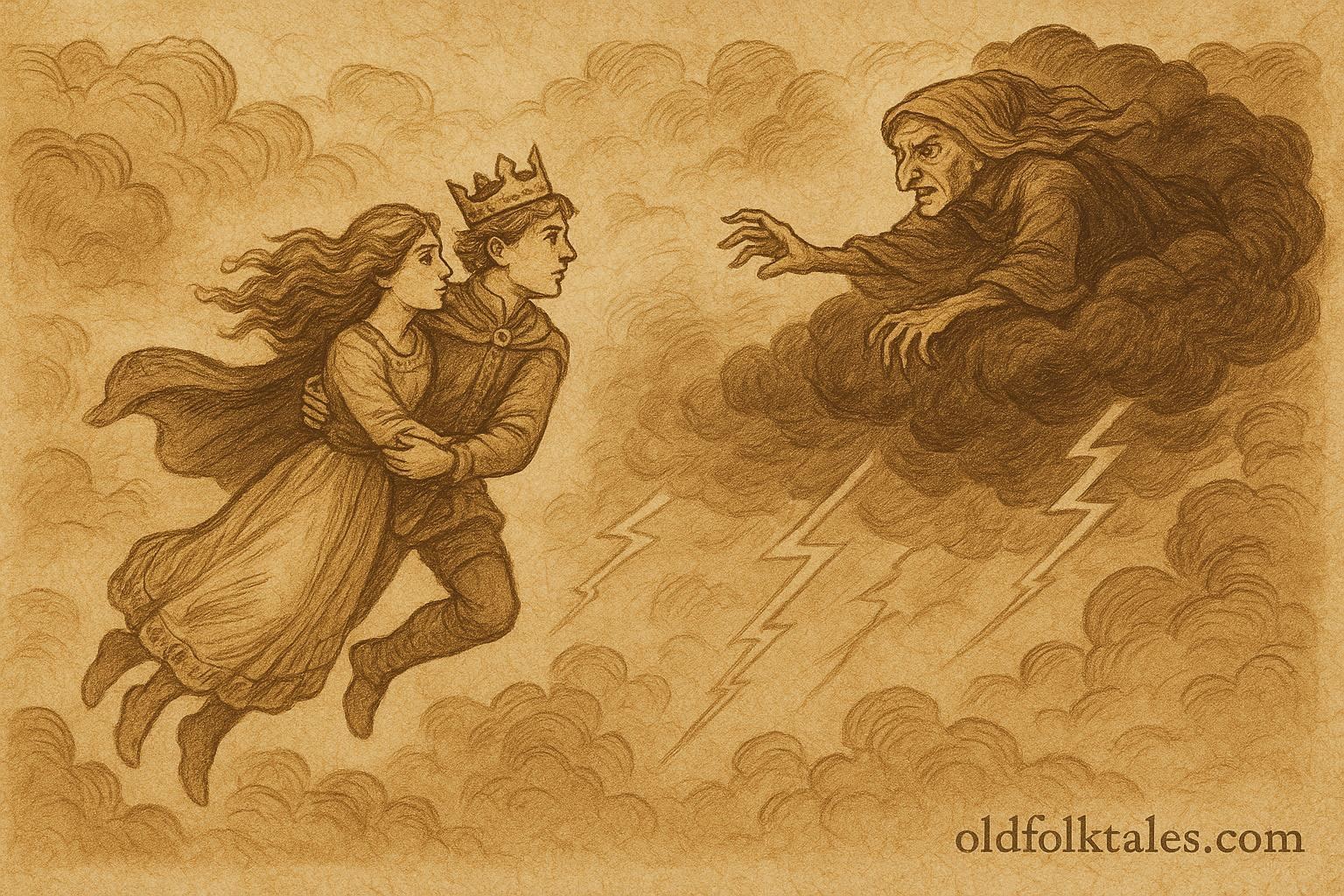
Before dawn, she led him to a high tower. “Hold fast to me,” she said, and with a word of power, the tower trembled, the air turned to flame, and the two were lifted into the sky. They fled on a magical flight, changing shapes as they went, first into birds, then into fish, then into a pair of stars streaking across the night.
Behind them thundered Messeria’s mother, the old sorceress, riding the storm. “You cannot escape me!” she cried. But Messeria cast the feather behind her, and it became a forest of thorns so vast and thick that the sorceress could go no farther.
At last, the prince and Messeria came to a faraway kingdom. There they lived in peace for a time, hidden from the world. But fate, as always, has its price. Messeria, bound still to the magic that had given her life, began to fade.
One morning, she took his hands and said softly, “Remember me not with sorrow, but with gratitude. My heart was once bound by magic, but your love set it free.” With that, she vanished like mist at sunrise, leaving behind only the silver ring and the scent of wildflowers.
The prince returned home, wiser and sadder than before, but carrying the memory of Messeria like a flame that would never die.
Discover the moral heart and wild spirit of the north through timeless Nordic storytelling
Moral Lesson
True love often demands sacrifice, courage, and the strength to let go. Magic can bind hearts, but only love freely given can set them free.
Knowledge Check
- Who was Messeria in the story?
Messeria was an enchanted maiden with great magical power, who tested and helped the king’s son. - What were the three tasks the prince had to complete?
Building a silver palace, draining a deep lake, and capturing a dragon that guarded a chest of gold. - How did Messeria help the prince complete his tasks?
She secretly used her magic each night to fulfill the impossible challenges. - What magical items did Messeria give the prince?
A silver ring, a feather, and a lock of her hair, each with protective or summoning power. - What happened during their escape?
Messeria and the prince fled through magical transformations, pursued by her sorceress mother, until Messeria’s magic stopped the chase. - What is the key moral of the tale?
Love must be tested through trial, and freedom sometimes requires parting from what we hold dearest.
Source: Adapted from “Konunga-Sonen och Messeria” in Svenska folk-sagor och äfventyr by Hyltén-Cavallius & Stephens.
Cultural Origin: Sweden (South Småland region)