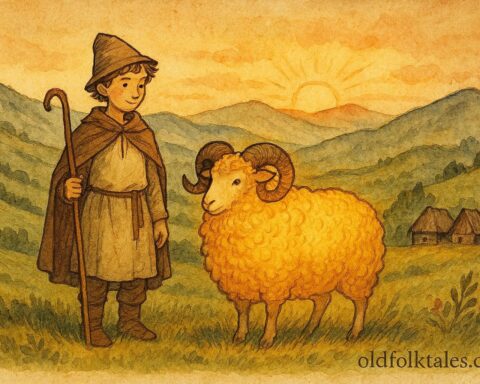
In a quiet valley of old Serbia, where sheep grazed over green meadows and mountain streams sang through the rocks, lived a poor shepherd whose heart was as gentle as the land he tended. His days were simple, he rose with the dawn, led his flock across the fields, and watched the golden sun set behind the hills. Yet within his humble life lay the quiet strength of kindness, a virtue that would soon bring him face-to-face with magic, danger, and destiny.
One summer afternoon, as the shepherd guided his flock along the riverbank, he heard a frantic fluttering above. Looking up, he saw a dove pursued by a fierce hawk. With no thought for his own safety, he waved his crook and shouted, frightening the predator away. The trembling dove landed beside him, resting upon his shoulder as if it knew it was safe.
The shepherd smiled softly and said, “Fly away now, little one. You’re free.”
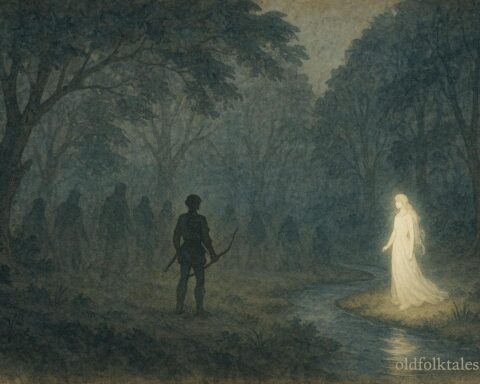
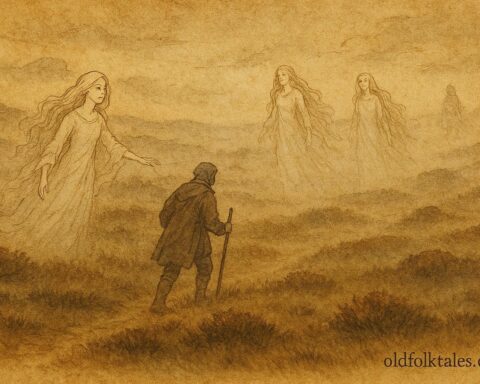
But instead of flying off, the dove shimmered with a radiant light. Before his astonished eyes, it transformed into a fairy, a graceful woman in robes of silver mist.
“You have saved me from certain death,” she said in a voice that carried both warmth and power. “I am a fairy of the northern winds, bound by enchantment to walk this world unseen. Because of your compassion, I owe you a debt. When the hour of need comes, call upon me, and I shall come to your aid.”
The shepherd bowed humbly, still bewildered by what he had seen, and the fairy vanished like morning dew.
The King’s Sorrow
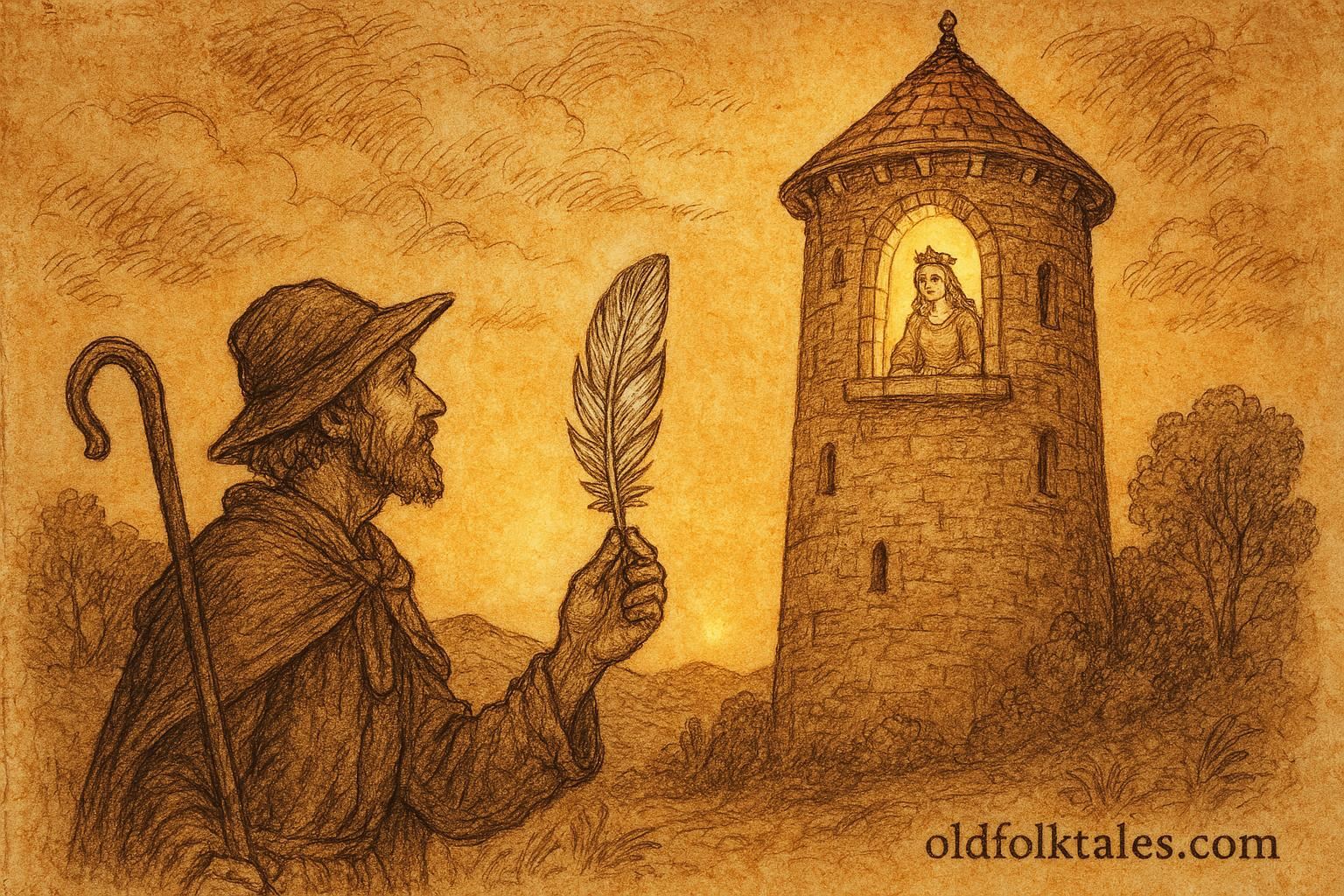
Not far away, a great king ruled over the land. His daughter, the most beautiful maiden in the realm, had been seized by a dark curse. A malicious spirit had imprisoned her in a tower atop a lonely hill, guarded by invisible powers that none could overcome.
The royal priests and wise men sought answers in ancient scrolls, until one prophecy was found: “Only a man pure of heart, neither prince nor warrior, may break the curse and set her free.”
The king sent heralds through every village, proclaiming that whoever freed the princess would win her hand and half the kingdom. Many came, knights in shining armour, sorcerers, and noblemen, but none returned.
The Shepherd’s Calling
When the shepherd heard the news, his heart stirred with courage. “Perhaps this is the moment the fairy spoke of,” he thought. Though his clothes were ragged and his only weapon a wooden staff, he trusted the goodness within him. Standing beneath the moonlight, he whispered into the night breeze, “Fairy of the northern winds, I ask for your help.”
Instantly, the air shimmered, and the fairy appeared once more, her eyes gleaming with gentle pride. “You have remembered me,” she said. “Take this silver feather. It holds my power. Use it wisely, and you shall not fail.”
The Three Trials
When the shepherd reached the tower, the spirits guarding it laughed in cruel voices. “Only one who can pass the three trials may approach the princess,” they hissed.
The first trial was the Path of Fire. The ground blazed before him, flames roaring high. But as he held the silver feather, a cool wind surrounded him, and he walked unharmed across the fire’s fury.
The second trial was the Riddle of the Shadows. A voice asked, “What is stronger than iron, yet soft as air?” The shepherd thought deeply and answered, “Kindness, because it bends no blade, yet conquers all hearts.” The spirits trembled and fell silent, for he had spoken truth.
The final trial was the Temptation of Power. Before him appeared a vision of a golden crown and a mighty throne. “Take these,” whispered the unseen spirits, “and forget the princess.” But the shepherd closed his eyes and said, “Power without love is emptiness.” The illusions vanished, and the doors to the tower opened wide.
The Reward of Kindness
Inside the tower sat the king’s daughter, pale and sorrowful, her golden hair shining in the dim light. When she saw the shepherd, her eyes filled with wonder. “Are you truly the one who came for me?” she asked softly.
He nodded, and the fairy’s voice echoed through the hall: “The curse is broken. A pure heart has triumphed.”
Light burst from the tower, breaking the spell that had bound it for years. The shepherd led the princess to the king, who wept with joy and embraced his daughter. True to his promise, the king offered the shepherd her hand in marriage.
As the wedding bells rang, the fairy appeared once more, blessing the couple with her silver light. “Never forget,” she said, “that true strength lies not in swords or crowns, but in kindness.”
Moral Lesson
The folktale teaches that kindness and purity of heart can overcome even the greatest obstacles. True strength is not found in power or wealth but in compassion, honesty, and courage.
Knowledge Check
-
Who is the main hero in the folktale “The Shepherd and the King’s Daughter”?
The humble shepherd who saves the fairy and frees the princess. -
What act of kindness sets the story in motion?
The shepherd saves a dove (a fairy in disguise) from a hawk. -
What are the three trials faced by the shepherd?
Walking through fire, solving riddles, and resisting temptation. -
What lesson does the folktale teach about true strength?
That kindness and purity are stronger than weapons or power. -
Where does this folktale originate from?
Serbia, within the Balkan region’s rich storytelling tradition. -
What symbolizes supernatural help in the story?
The silver feather given by the fairy.
Source: Adapted from “The Shepherd and the King’s Daughter” in Serbian Folk-Tales, collected by Vuk Stefanović Karadžić; trans. Elodie Lawton Mijatovich (1915). Project Gutenberg #24090.
Cultural Origin: Serbia (Balkan folklore)