Beside a wide and silvery river in old Poland, there once lived a humble ferryman. For many years, the old man rowed travelers from one bank to the other, through sunshine and storm alike. His hands were rough from the oar, and his back bent with age, yet his heart was gentle. He lived simply, asking little from life beyond the peace of his river and the prayers he said at dawn and dusk.
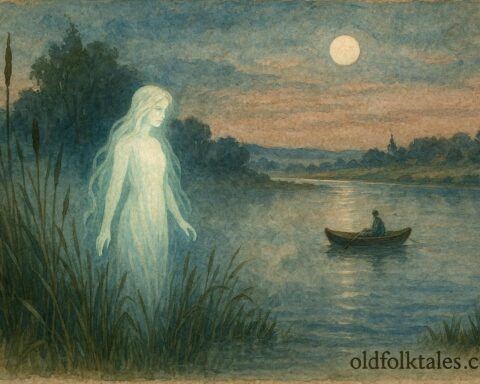
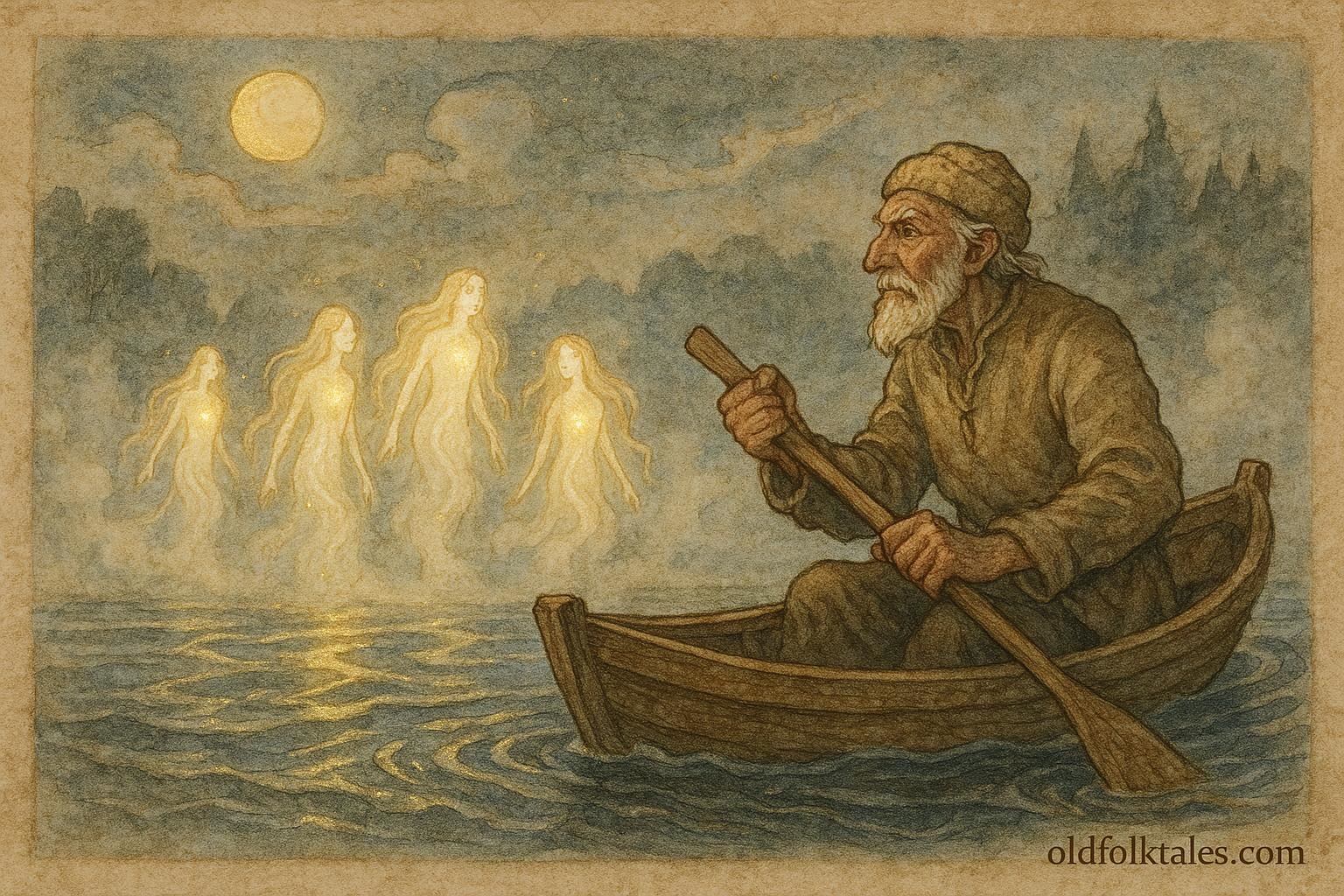
One still evening, as the moon rose high and bathed the waters in pale gold, the ferryman sat in his small boat, gazing at the reflection of the stars. Suddenly, from the heart of the current, there came a sound, soft at first, like the whisper of the reeds, then clear and hauntingly beautiful. It was the singing of water nymphs, the spirits of the river, whose voices could charm even the saddest soul.
He listened, spellbound, until their song grew sorrowful. Then, from the mist, came their plea:
“Good ferryman, we are troubled by evil spirits that have poisoned our waters. Will you help us?”
Though his heart trembled, the old man crossed himself and answered, “If it is God’s will, I shall help you.”
He stepped into his ferry and pushed from shore. The river seemed to darken as he rowed, the mist closing around him like smoke. The once calm waters churned, and a cold wind rose. He could sense the evil spirits lurking in the depths, dark shapes twisting beneath the waves, muttering like thunder. But the ferryman, holding fast to his faith, began to pray aloud.
As his voice rose, the spirits shrieked and fled before the light of his courage. The waters calmed once more, the mist thinned, and the nymphs’ song turned to joy. The moon shone bright again upon the river’s surface, and the ferryman rested his weary arms.
Then the nymphs appeared before him, radiant figures clothed in silver mist, their hair flowing like streams of moonlight. “Good ferryman,” they said softly, “you have saved our home. Accept our gift, a single drop of purest dew, gathered from the leaf of Heaven’s lily.”
They placed the shining drop into his palm, and as it touched his skin, it hardened into a pearl of flawless beauty.
The ferryman bowed his head in thanks. But he was a man of humble heart, and when morning came, he took the pearl to the market and sold it. With the money, he bought food and clothing for the poor, saying only, “The river’s blessing is not mine to keep.”
Years passed, and the ferryman grew older and frailer. Yet he never forgot that moonlit night. Often, he would sit by the river and listen, hoping to hear the distant voices of the water nymphs once more.
When at last his time came, he was found resting in his boat, his hands folded as if in prayer. The river, it is said, grew strangely calm that night. The moon cast a silver path across the water, and gentle waves carried his boat downstream. Those who lived nearby swore they heard soft singing on the current, a song of farewell.
And thus, the good ferryman went to his rest, borne by the very river he had served all his life.
Moral Lesson
Faith, kindness, and humility are greater treasures than any earthly wealth. True goodness lies in giving without expecting reward.
Knowledge Check
1. What virtue defines the ferryman in this Polish folktale?
The ferryman is defined by his selflessness, courage, and unwavering faith.
2. Who seeks the ferryman’s help in the story?
The water nymphs, spirits of the river, call upon him to drive away evil forces.
3. How does the ferryman defeat the evil spirits?
He prays with courage and faith, causing the spirits to flee before his goodness.
4. What reward do the nymphs give the ferryman?
A single drop of dew that turns into a beautiful pearl.
5. What does the ferryman do with his reward?
He sells the pearl and gives the money to the poor, showing humility and charity.
6. What cultural message does this Polish folktale convey?
It reflects Poland’s deep spiritual tradition, where faith and compassion triumph over darkness.
Source: Adapted from the Polish folktale The Good Ferryman and the Water Nymphs in Polish Fairy Tales, collected by Antoni Józef Gliński and translated by Maude Ashurst Biggs (Project Gutenberg eBook #36668).
Cultural Origin: Poland (Mazovian folklore)