In the deep, mist-laden forests of Wallonia, where the hills roll into valleys and streams shimmer like silver threads, a tale has been whispered for centuries, the story of Le Loup Blanc, the White Wolf. This fairy tale, collected in the regions of Namur, Hainaut, and Saint-Hubert, tells of magic, bravery, and a young princess whose courage would lift a terrible enchantment.
Discover the timeless charm of French, Dutch, and Belgian stories filled with cleverness and heart
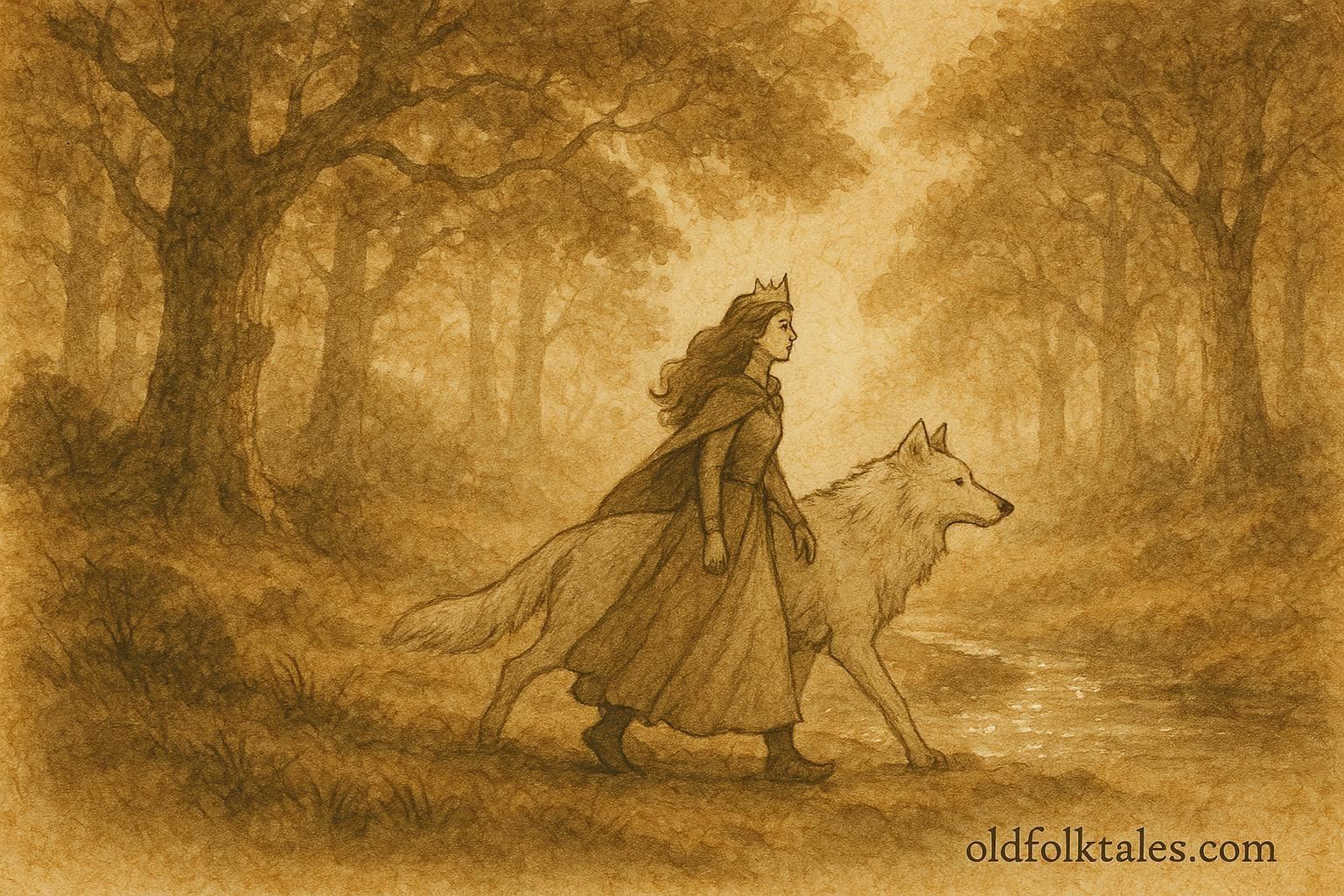
The story begins with a king obsessed with rare and wondrous treasures. His desire for the unusual led him into the forest one day, seeking curiosities no one else could find. Amidst the ancient oaks and whispering leaves, he discovered a mighty white wolf, a creature unlike any he had seen. Its coat gleamed like freshly fallen snow, and its eyes glimmered with a mysterious intelligence. The wolf, speaking in the uncanny manner of enchanted beasts, made a bold bargain with the king: in exchange for treasures beyond imagination, the wolf would claim the hand of one of the king’s daughters as its bride.
The king, fearful yet intrigued, agreed. When the time came, the youngest princess, known for her courage and gentle heart, was given to the White Wolf. Though her sisters whispered doubts and fears, she accepted her fate with quiet resolve, stepping into a world both terrifying and magical.
Life with the White Wolf
The White Wolf led the princess to a hidden palace deep within the forest. By day, he appeared as a fearsome wolf, towering and wild, yet at night he transformed into a handsome prince, bound by enchantment. The princess learned the rhythms of this magical life: the wolf’s dual nature, the beauty of the forest, and the secrets that lay hidden within the trees.
Though fear visited her in the quiet hours, the princess’s courage never wavered. She treated the wolf with kindness, tending to his needs and listening to his advice. In return, he showed her wonders beyond the king’s imagination: golden gardens, crystal-clear rivers teeming with fish, and enchanted rooms filled with rare treasures.
Trials and Rival Brides
As the story unfolds, the princess faces trials familiar to many “animal bridegroom” tales of Europe. Other women, jealous or bewitched, attempt to claim the prince for themselves. The princess must bribe rival brides with precious gifts, cleverly outwitting them while navigating the dangers of magic and human envy. Each trial tests her wit, loyalty, and courage.
She learns that love and trust are not merely emotions but acts of bravery. By showing patience, intelligence, and compassion, she begins to unravel the enchantment that binds the White Wolf. Her efforts are slow and demanding, but the forest seems to whisper encouragement, as though the very trees and streams support her noble cause.
Breaking the Enchantment
At last, the princess reaches the final stage of her quest. Using the lessons learned from her trials, she rescues the prince from a final spell, often aided by magical tokens or advice from enchanted helpers. In that decisive moment, the wolf transforms completely into a human prince, free from the curse that had bound him for years.
The forest seems to celebrate their victory. Sunlight pierces the canopy, illuminating flowers and sparkling streams, while birds sing in unison, welcoming the prince and princess into a life of joy and harmony. Their love, tested by magic and adversity, becomes a legend told throughout Wallonia, inspiring generations to respect courage, wisdom, and devotion.
Legacy of the White Wolf
Even today, in the hills and forests of Wallonia, storytellers recount the tale of Le Loup Blanc to children and travelers. The story carries the charm of the forest, the thrill of adventure, and the eternal lesson that true love requires bravery, cleverness, and faith. Variants of the story, preserved in the collections of Gittée & Lemoine (1891), echo across Europe, linking Wallonia to a broader tradition of enchanted animal bridegroom tales, while retaining a distinctly local character.
Discover the timeless charm of French, Dutch, and Belgian stories filled with cleverness and heart
Moral Lesson
The story of Le Loup Blanc teaches that courage, loyalty, and intelligence can overcome the most powerful enchantments. True love and devotion are tested through adversity, and perseverance, kindness, and cleverness can break even the most formidable spells.
Knowledge Check
- Who is the White Wolf in the Walloon fairy tale?
The White Wolf is an enchanted creature who demands the hand of a princess in exchange for treasures and later transforms into a prince. - Which princess becomes the bride of the White Wolf?
The youngest daughter of the king, known for her courage and gentle heart, accepts the White Wolf as her bride. - What type of trials does the princess face?
She faces trials typical of ATU 425A tales, including bribing rival brides, navigating magic, and reclaiming her lost husband. - Where was the tale of Le Loup Blanc collected?
It was collected in Wallonia, particularly in the regions of Namur, Hainaut, and Saint-Hubert. - What lesson does the story of Le Loup Blanc teach?
The tale emphasizes that bravery, cleverness, and loyalty are essential to overcoming challenges and breaking enchantments. - How is Le Loup Blanc connected to broader European folklore?
The story follows the Animal as Bridegroom pattern (ATU 425A), a motif found in many European fairy tales, linking Walloon culture to wider traditions.
Source: Walloon folktale, Wallonia, Belgium.
Adapted from Contes populaires du pays wallon, Gittée & Lemoine (1891); modern summaries and folklore indexes.