Long ago, in the wide, misty marshes of Polesye, there lived a people called the Poleshchuks. Strong, quiet, and deeply attuned to the land, they made their homes on the dry islands among the reeds, fished in the dark, winding rivers, and hunted in the dense forests that cloaked the horizon. The Poleshchuks understood the rhythms of nature and respected the unseen forces that shaped it.
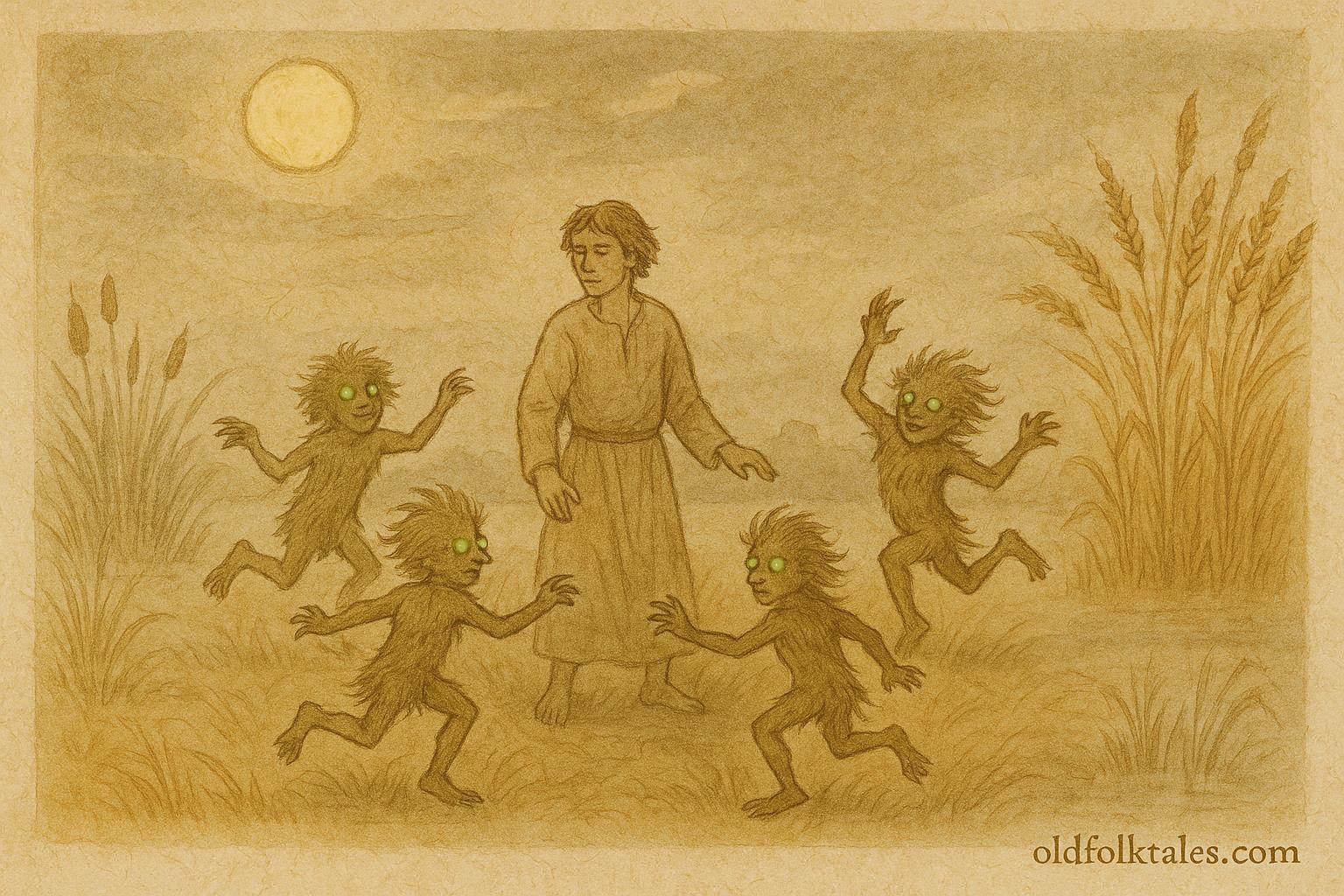
Among the reeds and fields dwelled spirits known as Poleviks, guardians of the crops. These small, shaggy beings had glowing green eyes that pierced the moonlight, and they roamed the meadows unseen by most. They nurtured the growing grains and watched for those who would harm the fields. While they were gentle toward the industrious, they punished idlers and those who disrespected the land.
Every spring, when the snow melted and the waters spilled over the meadows, the Poleshchuks would sow their rye and oats. Before casting the first seeds, they always left a small handful upon the earth, whispering:
“For you, good Polevik, guard our fields!”
In return, the Poleviks nodded invisibly and protected the crops through frost, storm, and scorching heat. The harvests were bountiful, and life in Polesye flowed in harmony with the spirits.
One year, however, a greedy stranger arrived, buying land in the marshes. He was loud and scornful, mocking the customs of the local people.
“Superstitions!” he sneered. “There are no spirits here.”
Ignoring the Poleshchuks’ careful rituals, he sowed his fields without leaving any seed for the Poleviks, scoffing at the unseen guardians.
That night, the Poleviks gathered in furious assembly, their green eyes gleaming like emerald fire.
“This man scorns us,” whispered the eldest Polevik. “Shall we let him reap his crop?”
When harvest time came, the stranger discovered to his horror that his fields were empty. The ears of grain were hollow, the stalks withered and brittle, as if the earth itself had rejected them. Meanwhile, the Poleshchuks’ own fields stood golden and full, glimmering under the sun.
Anger and disbelief twisted the stranger’s face. That night, he crept into his barren fields, determined to see who had robbed him. As he walked across the stubble, he noticed faint green lights flickering in the darkness. From the shadows, the Poleviks emerged, dozens of them, laughing and dancing like spirits of the wind.
“You mocked us!” they cried. “Now we will dance with you!”
The Poleviks seized the man by his coat, whirling him across the ground with wild, unrelenting energy. He fell to the earth, gasping for breath, his body exhausted and trembling. By dawn, the Poleshchuks found him lying in the fields, pale as chalk, his hair bleached white by the night’s ordeal.
From that day forward, no one in Polesye dared to sow without honouring the spirits. Each spring, the villagers continued to place a handful of grain at the edge of every field, murmuring:
“For the Poleviks, may our crops be safe!”
Through this respectful ritual, the land prospered, the harvests were abundant, and harmony between humans and the unseen keepers of nature endured for generations.
Moral Lesson
Respect for the land and its unseen guardians ensures prosperity. Arrogance, greed, and mockery of traditions invite misfortune, while humility and reverence for nature sustain life and community.
Knowledge Check
-
Who are the Poleshchuks in the story?
The Poleshchuks are the hardworking people of Polesye, living in harmony with the land and marshes. -
What are Poleviks, and what do they represent?
Poleviks are small, green-eyed spirits who guard the fields, representing the unseen forces of nature. -
How do the Poleshchuks honor the Poleviks?
They leave a handful of seed on the ground before sowing and whisper blessings to ensure the crops’ protection. -
What happened to the greedy stranger’s fields?
His crops withered and failed because he mocked the Poleviks and ignored the proper offerings. -
What lesson do the Poleviks teach the people?
That respect, humility, and reverence for nature and tradition lead to prosperity, while arrogance brings misfortune. -
What is the cultural origin of this folktale?
It is a Belarusian tale from the Polesye region, blending folk beliefs about spirits and agrarian wisdom.Source: Adapted from the Belarusian folktale “Poleshchuks and Poleviks” in Belarusian Fairy Tales – Detskie-Skazki.com, English public-domain translation.
Cultural Origin: Belarus (Polesye region folklore)