Once upon a time in the green valleys of Slovakia, where the forests whispered and rivers shimmered under the morning sun, there ruled a powerful king and queen. Their only son, the young prince, was admired throughout the land for his courage and noble heart. Yet for all his royal privileges, he longed for one thing that eluded him, true love.
One spring morning, while riding through the countryside, the prince came upon a maiden drawing water from a well. Her beauty shone like dawn breaking through mist, her eyes gentle as mountain lakes, her hair like dark silk. The prince was struck speechless. The maiden, though humble in dress, carried a quiet grace that stirred his heart.
He returned often, finding reasons to ride that way. Day by day, affection deepened between them. When the prince confessed his love and asked her to be his bride, the maiden blushed but agreed, for she too had grown to love him dearly.
But their joy did not please everyone. When the queen learned of her son’s choice, jealousy consumed her. She could not bear that a girl of humble birth, whose only crown was her innocence, would become queen beside her son. The queen summoned a sorceress, one known for her dark enchantments.
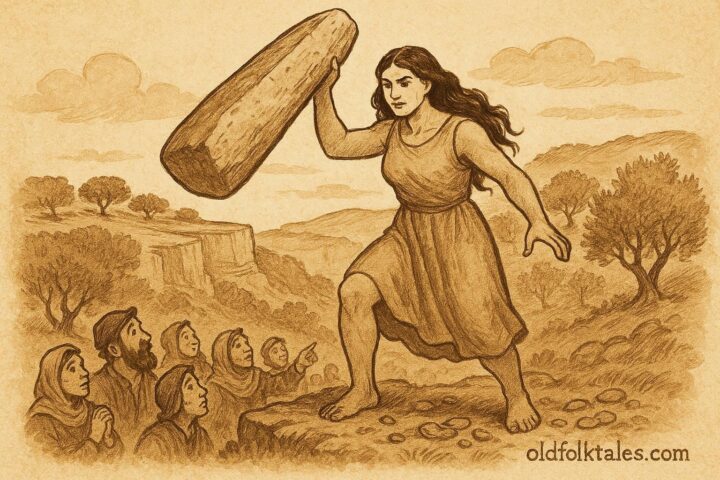
On the eve of the wedding, while the maiden slept peacefully in her chamber, the queen and the sorceress crept inside. The old woman muttered incantations, her fingers tracing symbols in the air. A cold wind swept through the room, and in a flash of cruel magic, the maiden vanished, her body stiffening, her eyes closing forever. In her place lay a block of lifeless wood, carved smooth as though shaped by unseen hands.
The next morning, the queen feigned sorrow. “My son,” she said, clutching his hands, “your bride has been taken ill. She cannot appear before the court.”
Days passed, and no one saw the maiden again. The queen presented another young woman at the wedding feast, a false bride she claimed was the same maiden, now miraculously recovered. The prince, deceived by illusion, married the impostor, though he felt an unexplainable emptiness. The new bride’s eyes held no warmth, and her laughter rang hollow in the palace halls.
Meanwhile, the wooden block, the true maiden, was cast aside, discarded behind the royal stables as mere waste wood. Seasons changed, and rain and sun weathered its surface. Yet within that wood slept the soul of the true bride, silent but not destroyed.
One evening, a humble shepherd came by, tending his flock near the stables. As he passed the pile of discarded timber, he heard a faint sound, like the sigh of someone weeping. Startled, he leaned closer. The sound came from the wooden block itself.
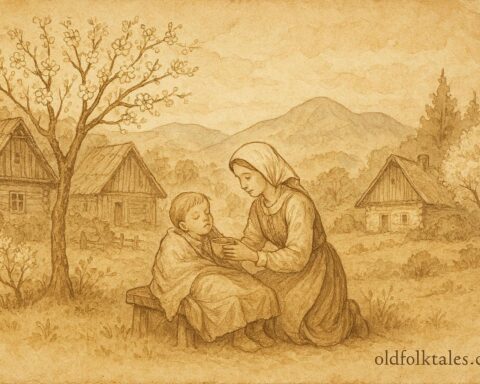
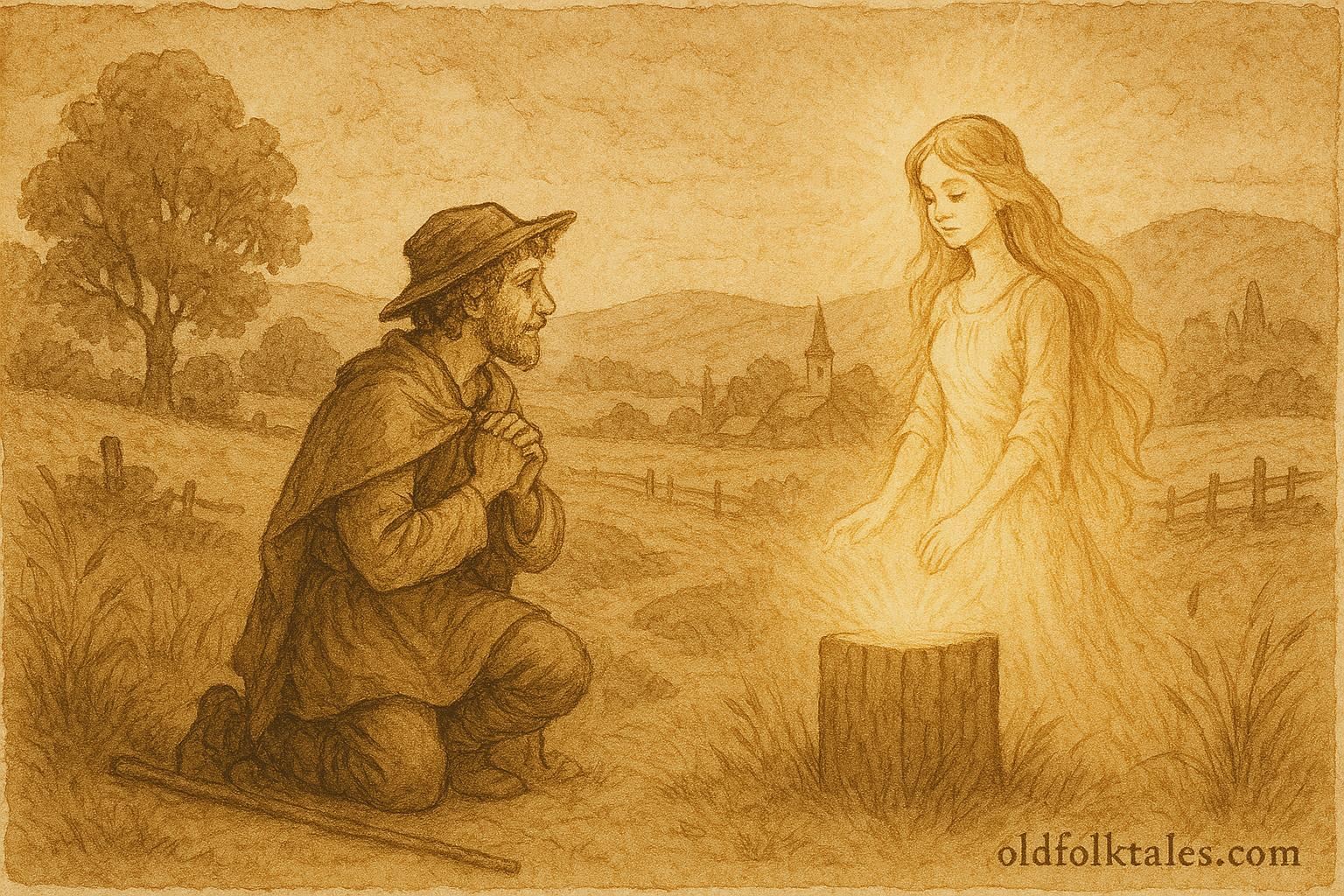
Moved by compassion, the shepherd lifted it gently and carried it to his cottage. “You poor thing,” he murmured, “who has wronged you so?” Each day, he placed the block by the fire, kept it warm, and whispered prayers over it. The wood seemed to grow lighter, almost breathing with him.
One night, as the shepherd prayed, the room filled with a soft glow. The block trembled, cracked, and suddenly, before his astonished eyes, the maiden stepped forth, alive, radiant, and free of the curse. Tears streamed down her face as she clasped her hands.
“Kind shepherd,” she said, “your goodness has broken the spell. I am the prince’s true bride, turned to wood by the queen’s jealousy.”
The shepherd, awed but joyful, promised to take her back to the palace.
When they arrived, the false bride and the queen were celebrating in the grand hall. But when the maiden entered, gasps filled the room. The prince rose from his throne, disbelief and joy mingling on his face. “It is you!” he cried, rushing to her side.
The spell of deception shattered in an instant. The impostor’s face grew pale, and she fled the hall. The queen trembled, knowing her wickedness could no longer be hidden. The king demanded the truth, and under his stern gaze, the queen confessed her deeds.
The prince, though wounded by betrayal, forgave her, for he had a merciful heart. But the false bride was banished, and the queen lived out her days in repentance, stripped of her power.
Soon after, the prince and the true maiden were wed once more, this time in joy and honesty. The people of the kingdom rejoiced, for light had triumphed over darkness, truth over deceit. The shepherd was honored as a hero, given a fine home and land near the palace, for it was his pure heart that restored what envy had destroyed.
And so, peace returned to the land. The Wooden Maiden lived happily beside her prince, never forgetting the shepherd’s kindness or the lessons of her suffering.
Moral Lesson
Truth and purity cannot be silenced by envy or deceit. No matter how deeply hidden or transformed, goodness will always find its way back into the light.
Knowledge Check
1. Who turned the maiden into wood and why?
The queen, driven by jealousy, used a sorceress’s magic to transform her son’s bride into a block of wood.
2. How did the shepherd help the Wooden Maiden?
By showing compassion, caring for the wooden block, and praying over it, he broke the curse and restored her human form.
3. What lesson does the prince’s forgiveness teach?
It shows that compassion and mercy heal even deep wounds caused by betrayal.
4. Why is the story culturally significant to Slovakia?
It reflects Slovak folk values of purity, humility, and the moral victory of good over evil.
5. What does the wooden transformation symbolize?
It represents how envy can imprison truth, yet sincerity and goodness can revive it.
6. What is the moral message of The Wooden Maiden?
Truth and goodness endure all trials, while deceit and jealousy destroy themselves.
Source: Adapted from Slovak Tales for Young and Old by Pavol Dobšinský (19th century), translated in Traditional Slovak Folktales (Cooper, 2001).
Cultural Origin: Slovakia