In the heart of ancient Hungary, in a land of rolling plains and vast northern forests, there lived a white mare whose gentle eyes held wisdom beyond her kind. For fourteen years she cared for a boy she had somehow born and nursed, this was no ordinary child, but the one called Fehérlófia, the Son of the White Mare.
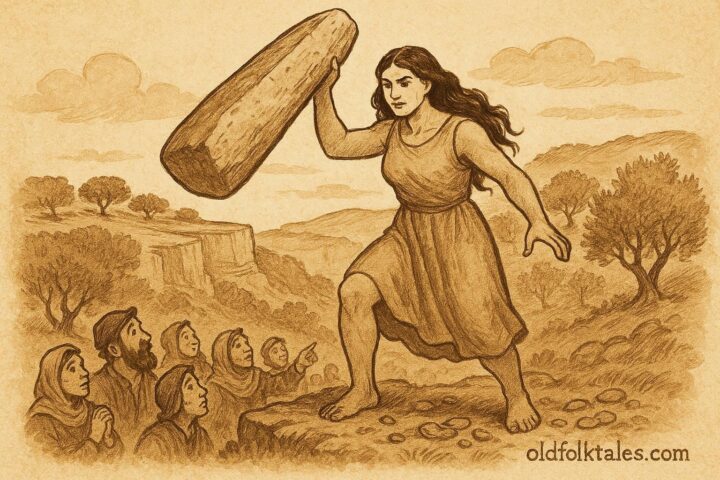
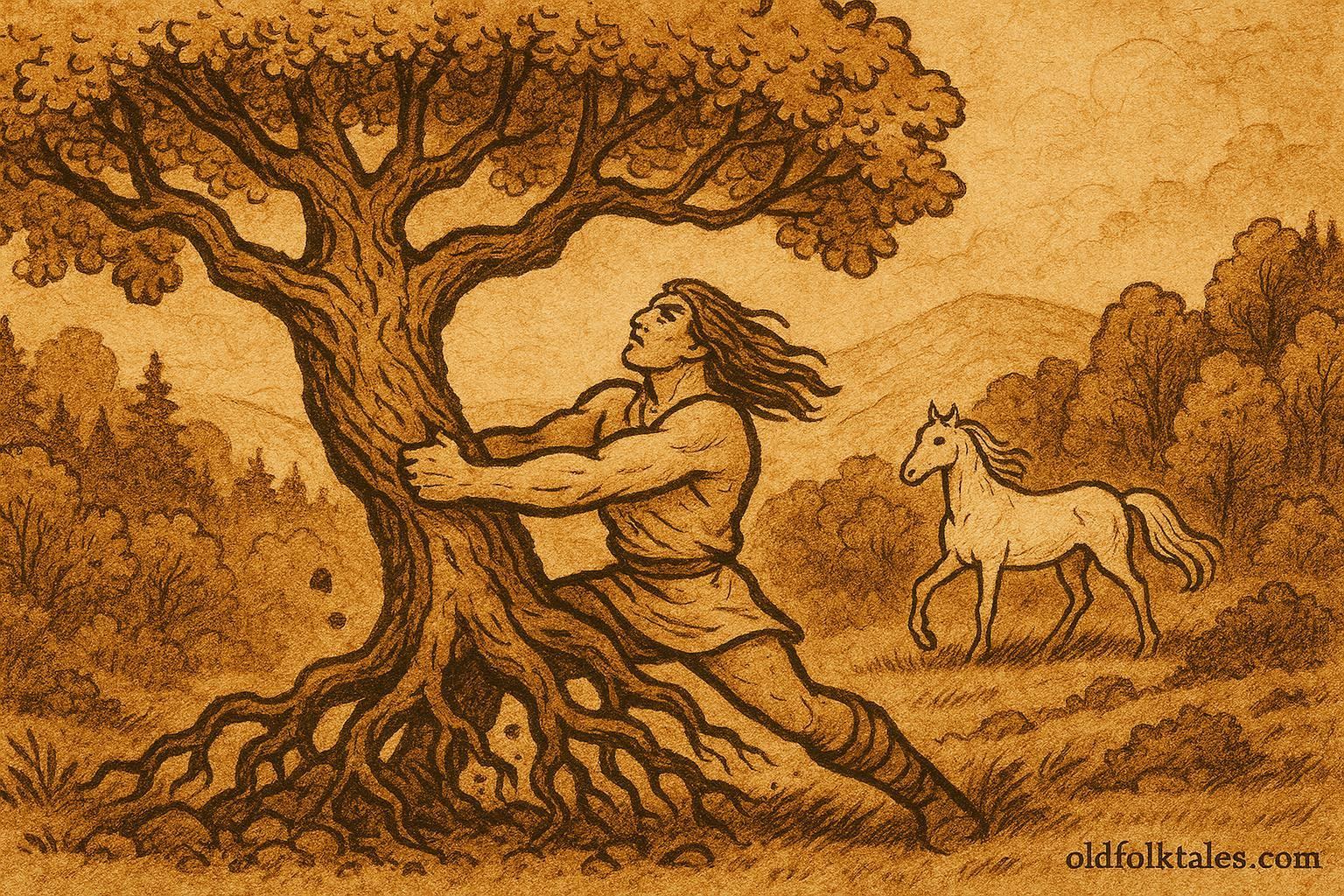
In those years, the mare and the boy dwelt beneath a towering oak, its roots deep and its limbs high. Each year the boy’s strength grew, for the mare’s milk nourished him and the wild land tested him. At last, on the fourteenth year, the boy reached forth and uprooted the great oak, nothing less than a signal that his time had come.
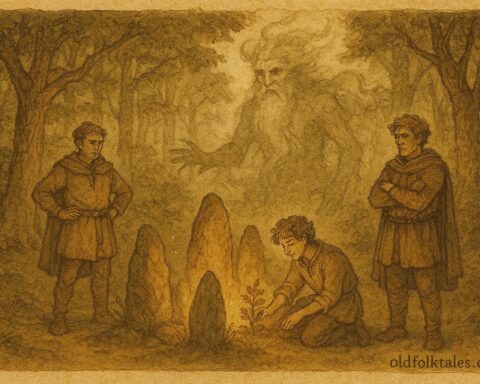
When the white mare died shortly after, the youth, grieved but resolved, set out into the world. He did not walk the familiar village lanes, but journeyed into unknown forests, over hills that seemed to touch the sky, and across rivers that sang of distant origins. There, in a secluded glade, he encountered three mighty young men: Fanyűvő (Tree‑Splitter), Kőmorzsoló (Stone‑Crusher), and Vasgyúró (Iron‑Bender). Each was equal in strength, and the four forged brotherhood.
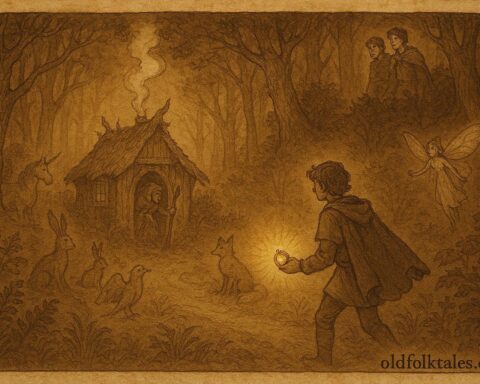
They built a simple hut in the forest, rough‑hewn logs, moss between the cracks, the sound of leaves whispering above. They made an arrangement: one stays home to tend the hearth and cook the meal, while the others set off to hunt or gather. The rhythm of the wild was their life; the scent of pine and damp earth, the crackle of the fire, the call of birds at dawn.
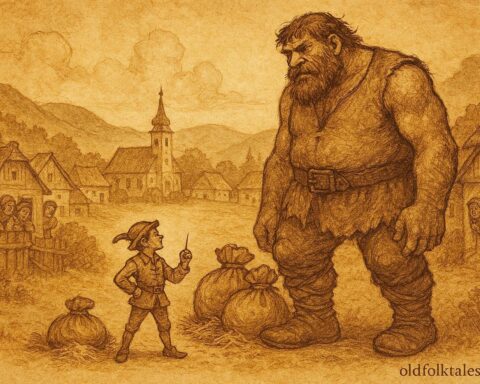
One day the three companions left Fehérlófia to guard the hearth and the cauldron of porridge. Into that quiet home crept a strange little man, Hétszűnyű Kapanyányimonyók, a dwarf of cunning. He burst in and savagely beat the three young men, stole their food and disappeared into the forest. When the three returned, beaten and humiliated, Fehérlófia confronted the dwarf. He challenged Hétszűnyű, grasped him by the beard and forced him to cling to a tree trunk, shaking it until the dwarf admitted his wrongdoing.
But the dwarf vanished, leaving the mark of his beard upon the wood. Fehérlófia and his friends discovered a deep pit at the edge of the forest, a yawning fissure that led into darkness unknown. Trusting their bond, the four descended into the under‑world beneath the earth. The tunnel was narrow at first, then open and echoing, as though the world above were a distant dream.
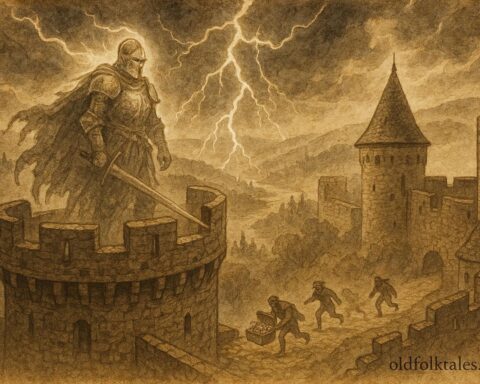
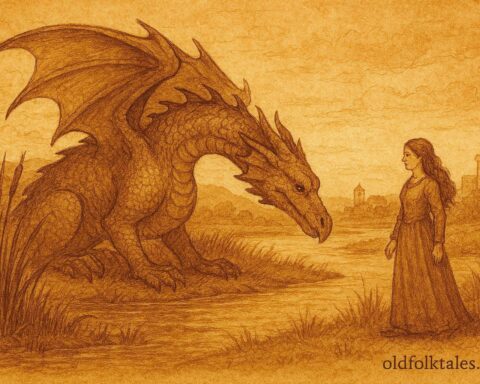
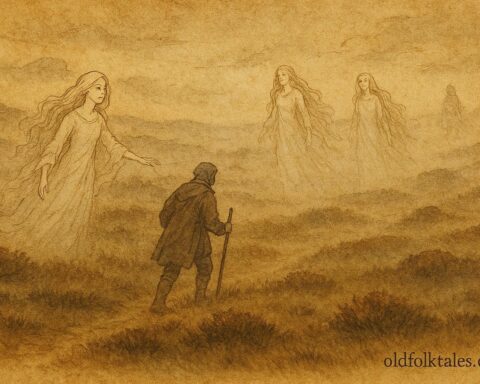
Deep beneath the surface, they entered three glittering castles, one of copper, one of silver, and one of gold, and there the three princesses were imprisoned, led away by mysterious forces that denied the light of day. With courage, Fehérlófia defeated the guardians of the under‑world: monsters of many heads, fierce and powerful. One by one he freed the princesses, guiding them upward through tunnels of stone and root until they emerged back into the sunlit world.
Emerging into the open air, the four companions were joined in marriage to the freed princesses. Life seemed full of promise, peace, and joy. Yet the story did not end in simple celebration. Fehérlófia, the stalwart hero born of a mare, had known loss, tested loyalty, conquered darkness, and proved that true strength is not just in the muscles but in the heart.
When the day came to reflect on what had passed, the companions learned that one among them had betrayed the trust, they left Fehérlófia to face the worst trials alone; yet he persevered, and at the end it was his name that would be remembered among the rings of fire and shadow, trees uprooted and dragons slain. Though the other men also gained their brides and accolades, the Son of the White Mare remained the steadfast champion whose origin in the white mare’s care and whose journey from roots and earth to the light above became legend.
The setting of this tale, Hungary’s wild spaces, deep forests, high skies, and hidden under‑worlds, evokes a time when humans and mythic beasts walked closer together. The white mare, the tree with its roots and branches, the pit into darkness, the castles of precious metals: these are the symbols of ancient power, of birth from nature, of descent into trial, of triumph and return.
And so the story of Fehérlófia travels across hearths and generations: a boy born of a mare, nurtured by milk, grown by earth, joined with mighty companions, challenged by evil, descended into darkness, rose again into light, and by his deeds secured not just his own destiny but the safety, hope and glory of the world around him.
Moral Lesson:
True strength stems not merely from physical power, but from loyalty, courage, and the willingness to serve when others falter. Even when our beginnings are humble or mysterious, it is our choices, in friendship, in trials, in the descent into darkness and the climb back into light, that define who we become.
Knowledge Check
-
Who is Fehérlófia and what is his origin?
Fehérlófia is the Son of the White Mare, a boy born and nurtured by a white mare, who uproots a tree after fourteen years of growth. -
Which companions does Fehérlófia meet and what do they represent?
He meets three strong youths, Tree‑Splitter (Fanyűvő), Stone‑Crusher (Kőmorzsoló) and Iron‑Bender (Vasgyúró), each representing a feat of strength tied to nature or metal. -
What role does the dwarf Hétszűnyű Kapanyányimonyók play in the tale?
The dwarf invades the hut, defeats the companions, steals their food, and within the story serves as the catalyst for Fehérlófia’s confrontation and descent into the under‑world. -
What symbolic layers are present in the story’s settings (tree, pit, castles)?
The great tree signifies primal nature and strength; the pit signifies the under‑world or deep trial; the castles of copper, silver, and gold signify ascending phases of value and rescue. -
What is the cultural origin of this folktale and how many variants are known?
The tale is of Hungarian origin, and scholars record as many as 64 variants across Hungary. -
What is the key lesson the story of Fehérlófia teaches?
The tale teaches that real heroism lies in steadfastness, service, loyalty and overcoming darkness,not just in raw strength or power alone.
Cultural Origin: Hungarian folktale, Hungary.