In ancient Ireland, when the hills were green and rivers sparkled like silver threads, there lived a noble king named Lir. He ruled his lands with wisdom and kindness, beloved by his people for his fairness and courage. King Lir had a family he cherished above all else: four children, whose beauty and innocence seemed to shine brighter than the morning sun. Their names were Fionnuala, Aodh, Fiachra, and Conn. Together, they brought joy and laughter to the royal halls, their voices like the sweet songs of the lark over the lakes.
Yet not all hearts in the palace were pure. Lir’s queen had passed, leaving him to marry again. His new wife, jealous and cruel, could not bear the children’s happiness or their closeness to their father. Her envy grew day by day, until it became a dark, burning desire to remove them from her life entirely. She consulted with dark magic, seeking a way to punish the children without harming the king, whose love and respect she feared.
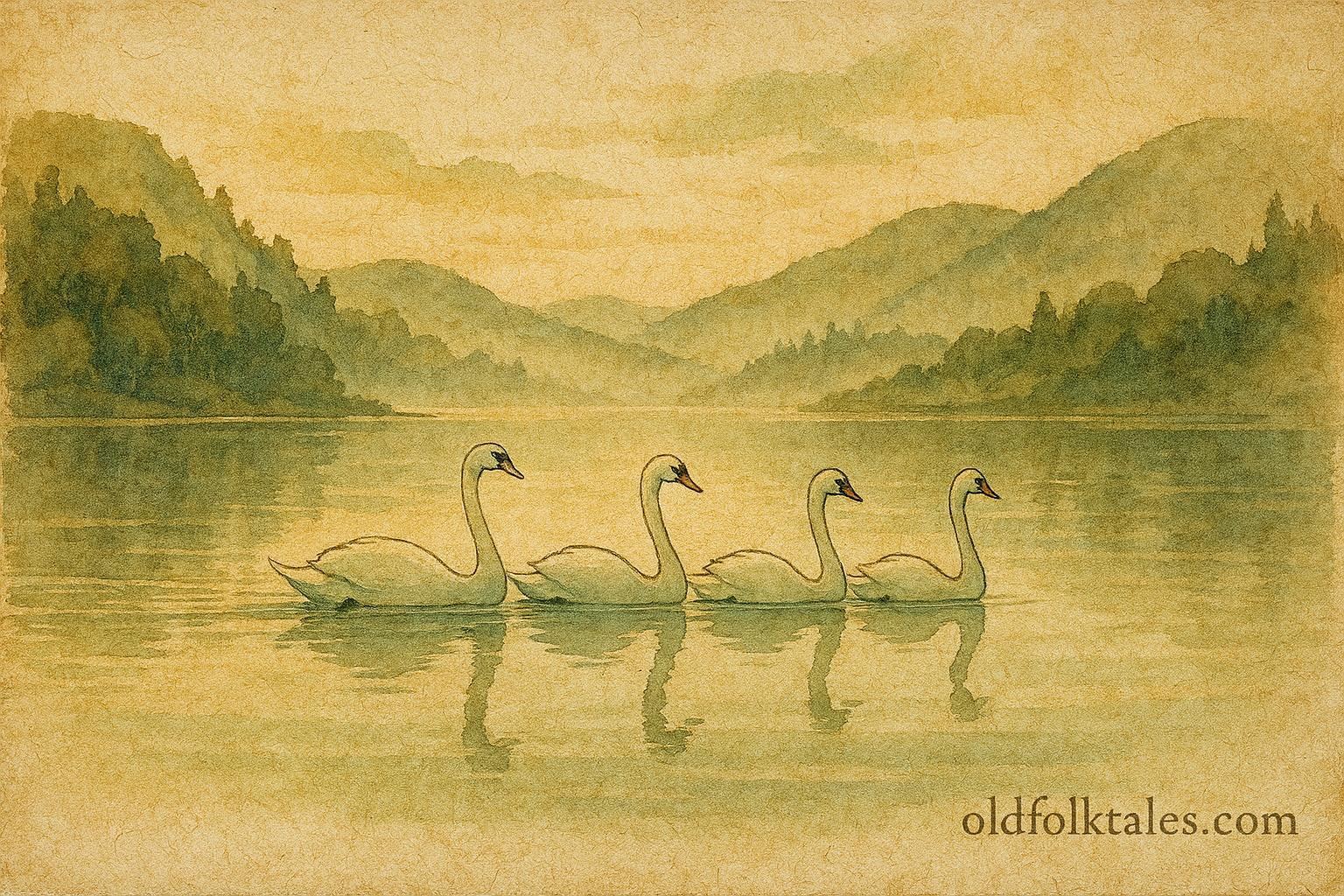
One fateful day, the stepmother’s scheme was revealed. She cast a terrible spell, transforming the four children into swans. Their golden hair became soft white feathers, their human voices replaced by long, mournful cries that echoed over the waters. The spell was cruel and exact: the children were to remain in this form for nine hundred years, wandering from lake to lake and across the seas, enduring exile far from the home they loved.
Despite their transformation, the children’s spirits remained unbroken. Though their bodies were those of swans, their hearts retained human understanding. They flew with grace over Ireland, across rivers and mountains, their cries mingling with the wind, carrying tales of sorrow and endurance to those who would listen. Each lake they rested upon reflected not just their image but the strength of their loyalty to one another. Fionnuala, the eldest, led her siblings with wisdom beyond her years. Aodh, Fiachra, and Conn followed, trusting in her guidance even when storms and harsh weather tested their courage.
Seasons turned, and the world changed around them. Kings rose and fell, forests grew dense, and lands were conquered and reshaped, yet the children endured. They faced biting winds, fierce storms, and hunger, yet they never strayed from one another, never lost hope that the spell would one day be broken. On calm days, they would glide across still waters, their reflections shimmering in the sunlight, reminding themselves of the human forms they had lost but would one day regain.
Over centuries, the people of Ireland came to know the legend of the swans. Farmers and travelers would hear the sound of their cries and speak of them in hushed tones, marveling at the beauty and sadness in their voices. Some said the swans carried messages of hope, and that those who treated the waters with respect might hear whispers of ancient wisdom in the songs.
Finally, after nine long centuries, the spell approached its end. The children arrived at a lake near a small church, where the land had been consecrated with holy water. The touch of faith and time combined to release the magic that had bound them for so long. Slowly, one by one, the swans transformed back into their human forms. Their white feathers melted into hair, their wings receded, and their voices returned, clear and melodious.
Though aged in wisdom far beyond human years, their spirits remained unbroken, and the bond of love that had carried them through centuries of suffering remained strong. They knelt by the water, giving thanks for the endurance that had allowed them to survive their trials and for the hope that had never left their hearts.
The story of the Children of Lir became a tale told throughout Ireland, passed from one generation to the next. It reminded all who heard it that love, loyalty, and hope could endure even the cruelest of curses. It taught that jealousy and envy, though powerful, could never truly destroy the strength of family bonds or the resilience of the human spirit.
Through storms and exile, the Children of Lir endured, not because of power or might, but because of their courage, their unity, and their unwavering hope. Their tale became a living legend, echoing across lakes, hills, and rivers, a testament to the enduring strength of love and patience in the face of adversity.
Thus, the Children of Lir remain immortal in Irish folklore, their story a song of endurance, a lesson in loyalty, and a shining example of the hope that sustains all through the darkest trials.
Moral Lesson
The story of the Children of Lir teaches that endurance, loyalty, and hope can sustain the human spirit through even the greatest trials. Jealousy may attempt to destroy, but love and unity endure, offering strength and eventual triumph over adversity.
Knowledge Check
1. Who are the Children of Lir?
Fionnuala, Aodh, Fiachra, and Conn, the children of King Lir, transformed into swans by their stepmother.
2. Why were they transformed into swans?
Their jealous stepmother used magic to curse them, aiming to remove them from her husband’s favor.
3. How long did the children remain in swan form?
Nine hundred years, wandering across lakes and seas.
4. What traits helped the children endure their exile?
Loyalty to one another, courage, hope, and resilience.
5. How was the spell finally broken?
The touch of holy faith and the passage of time released them near a consecrated lake.
6. What themes are central to this story?
Jealousy and envy, resilience, familial love, endurance, and the power of hope.
Source: Standish H. O’Grady, Silva Gadelica: The Conquest of Ireland by the English, 1892
Cultural Origin: Ireland