Along the rugged coasts of the Orkney and Shetland Islands, where the sea meets stone with unending force and the wind carries the cries of seabirds, the people have long told stories of selkies, mysterious beings who live as seals in the water and shed their skins to walk as humans upon land. These tales were spoken quietly, with respect and caution, for the sea was not merely a place of work and danger, but a living presence filled with memory and magic.
In one such tale, a fisherman lived alone near the shore, earning his living from the restless waters. He knew the tides well and watched the coastline closely, for it was said that selkies sometimes came ashore at night, especially beneath the pale glow of the moon. Though warned since childhood never to interfere with the fair folk of the sea, the fisherman carried both loneliness and curiosity in his heart.
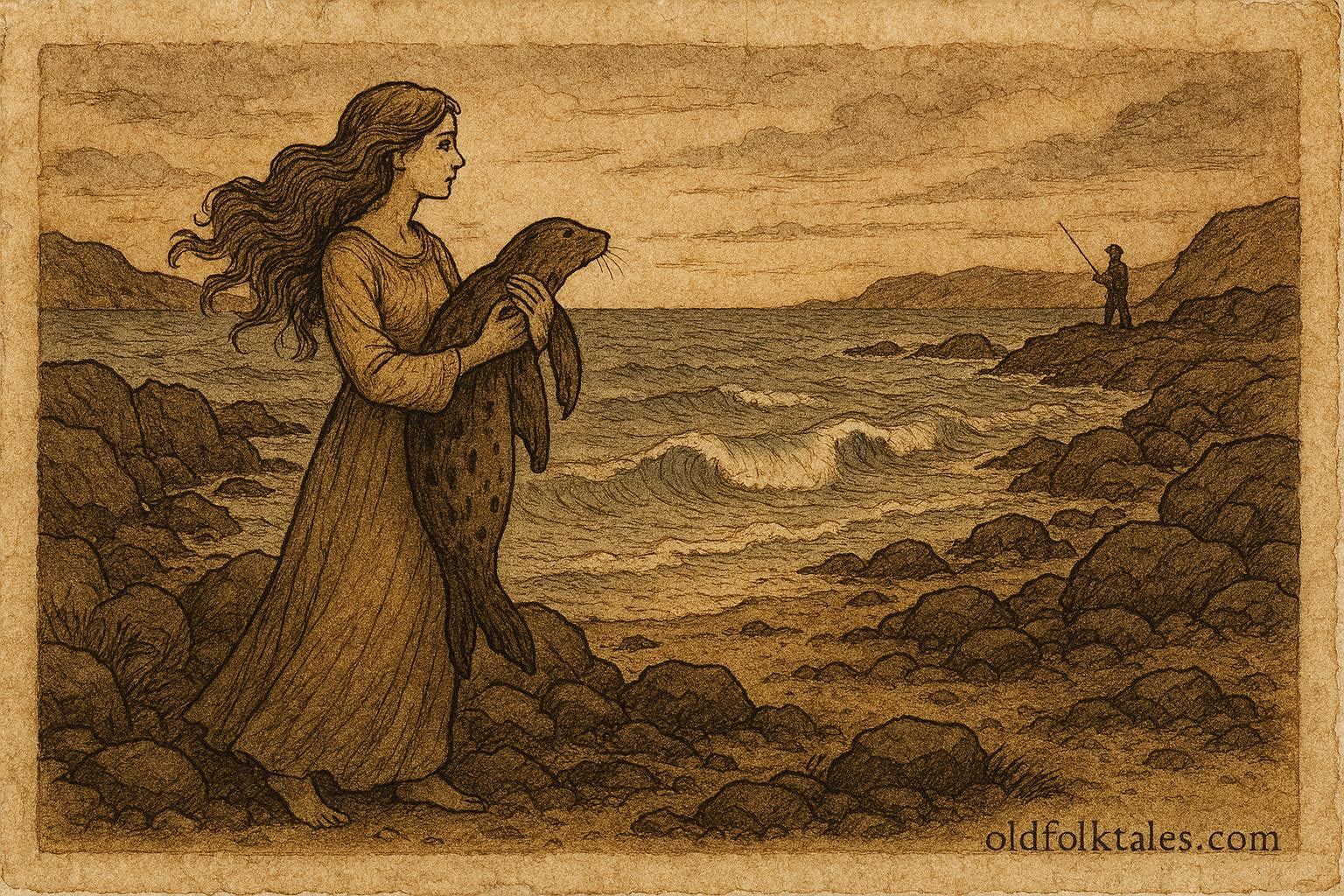
One evening, as the moon cast silver light upon the waves, he saw seals gathered upon a quiet stretch of shore. As he watched, one of them slipped from her sealskin and stood revealed as a woman. Her beauty was gentle rather than dazzling, marked by a calm sadness that seemed shaped by the sea itself. She moved along the sand with ease, as though she belonged to both worlds.
The fisherman, hiding among the rocks, acted upon a dangerous impulse. Knowing that a selkie without her skin could not return to the sea, he crept forward and took the sealskin, hiding it where she could not find it. When the woman returned and searched desperately for her skin, fear filled her eyes. At last, unable to escape, she followed the fisherman to his home.
Bound to the land without her sealskin, the selkie woman became his wife. Over time, she learned the ways of human life. She tended the home, walked the fields, and bore children. To those who saw her from a distance, she appeared content and dutiful. She cared for her family and fulfilled her role, yet there was always a quiet longing in her gaze.
Often, she would walk alone along the shore, staring out across the endless water. The sea called to her, not in words, but in memory and feeling. Though she loved her children, her heart remained divided. She belonged to the sea as deeply as she belonged to them, and this separation caused her silent pain.
Years passed, and the fisherman came to believe that she had accepted her life on land. He grew careless, forgetting the fear that had once driven him to hide the sealskin. One day, through chance or curiosity, the selkie woman discovered where her skin had been concealed.
The moment she touched it, she knew that her time on land had come to an end.
She did not rage or accuse. Instead, she gathered her children and spoke to them with tenderness and sorrow. She told them that she loved them, but that she could not deny her true nature any longer. The sea was her home, and without it, she was incomplete.
Then, taking up her sealskin, she returned to the shore. Before entering the water, she turned back one last time, her face filled with love and grief. With that, she slipped into the sea and disappeared beneath the waves.
From that day onward, the fisherman was left alone, haunted by loss and regret. It was said that sometimes seals would follow his boat, watching him with dark, knowing eyes. Among them, one seal lingered longer than the rest, as though remembering a life once lived upon land.
The selkie woman never returned to human life, for the sea had reclaimed her. Her children grew up knowing that their mother belonged to both worlds, and that love, when bound by captivity, cannot endure forever.
Thus, the tale was passed down through generations along the northern coasts, a quiet warning about desire, freedom, and the cost of denying one’s true nature.
Journey into the charm of British wit and Irish wonder through centuries of folk tradition
Moral Lesson
This folktale teaches that love cannot thrive without freedom. Attempts to possess or control another being, even in the name of affection, lead to sorrow. True belonging comes from honoring identity and respecting the bond between a being and their rightful home.
Knowledge Check
1. What is a selkie in Scottish folklore?
A selkie is a supernatural being that lives as a seal in the sea and can shed its skin to become human on land.
2. Why could the selkie woman not return to the sea at first?
Because the fisherman stole and hid her sealskin, which she needed to transform back.
3. What role does the sea play in the story?
The sea represents true home, identity, and freedom for the selkie woman.
4. Why does the selkie woman leave her human family?
She must return to the sea to reclaim her true nature and freedom.
5. What themes are central to The Selkie Bride folktale?
Freedom versus captivity, identity, longing, and the limits of love.
6. What lesson does the story offer about relationships?
That love cannot be sustained through force or possession, and freedom is essential to belonging.
Source: Walter Traill Dennison, Folklore of the Northern Counties (1893)
Cultural Origin: Orkney and Shetland Islands, Northern Scotland