In a distant land ruled by a powerful emperor, there stood a city of marble halls and golden towers, where wealth glittered loudly and status spoke before character. The emperor was a man of great authority, feared by rivals and admired by nobles, yet deeply proud of his lineage and position. He believed that greatness flowed only through noble blood and that wisdom was the natural inheritance of the powerful.
The emperor had one daughter, a young woman renowned not only for her beauty but also for her sharp mind and quiet judgment. Princes, dukes, and wealthy lords from near and far sought her hand, each boasting of riches, lands, or heroic deeds. Yet none pleased the emperor fully, for he wished not only a husband worthy of his daughter but a son-in-law who would glorify his throne.
Far from the palace, in a humble village, lived a poor young man with nothing to his name but a keen mind and a generous heart. He had no title, no fine clothes, and no wealth to boast of. What he possessed instead was a quick tongue tempered by kindness, and an understanding of people deeper than that of many learned men. Though poor, he helped his neighbors freely and never spoke with arrogance.
One day, word spread across the land that the emperor would test suitors for his daughter’s hand. Any man, noble or common, could present himself, but only one who passed the emperor’s trials would be chosen. The tasks, it was said, were impossible, designed to expose fools and flatterers.
Against the advice of villagers who feared ridicule and punishment, the poor young man decided to try his fortune. He believed that worth should be measured not by gold but by wisdom, and that humility could stand where pride always fell.
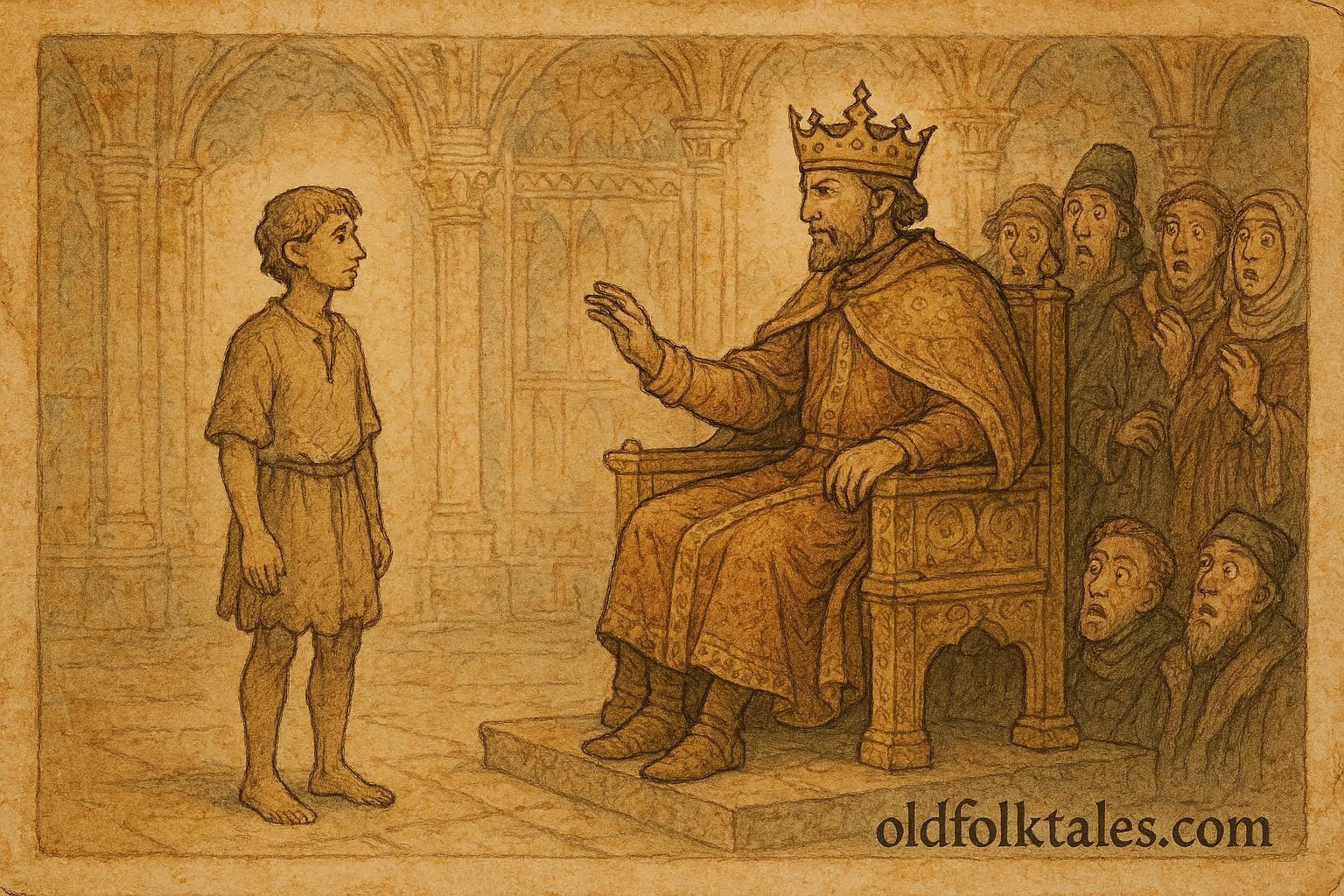
When he arrived at the palace gates, guards laughed at his worn clothes and modest bearing. Yet when asked his purpose, he answered calmly and respectfully, declaring his intent to compete for the princess’s hand. His confidence, free of arrogance, surprised them, and he was brought before the emperor.
The emperor looked upon him with thinly veiled contempt. Seeing no jewels, no servants, and no sign of noble birth, he assumed the young man was a fool. Still, amused by the boldness of a peasant, he allowed the trial to begin.
The first task was announced:
“Bring me something that is neither alive nor dead, neither given nor stolen, and yet of great value.”
The nobles murmured in confusion. Many left the court at once, unable to solve the riddle. The young man bowed and departed silently.
He returned the next morning carrying nothing in his hands. When questioned, he answered, “I bring you trust. It is not alive nor dead, cannot be stolen, and has value beyond gold, but only if freely given.”
The emperor was unsettled. Though he tried to dismiss the answer, he could not deny its truth. Reluctantly, he allowed the young man to proceed.
For the second trial, the emperor commanded:
“Spend the night in a room without fire, without clothing, and without sleep, yet arrive in the morning rested and unharmed.”
The nobles protested, claiming the task cruel and impossible. The young man merely bowed again.
That night, he sat quietly, reflecting rather than resisting. He kept his body still, conserved his strength, and used calm thought instead of fear. By morning, though tired, he stood unharmed before the emperor.
When asked how he succeeded, he replied, “I did not fight the night. I endured it.”
The court grew silent.
The final trial was meant to humiliate him completely. The emperor ordered:
“Come to my feast neither naked nor clothed, neither on foot nor on horseback, neither alone nor accompanied.”
The young man smiled faintly. At the appointed hour, he arrived wrapped loosely in a fishing net, riding a goat while one foot touched the ground, carrying a sparrow in his pocket.
The emperor was furious, yet powerless. Every condition had been met. His pride, wounded before the court, burned hotter than his anger.
At last, the emperor turned to his daughter. She had observed everything in silence, her respect for the young man growing with each challenge. When asked her will, she answered clearly:
“This man has shown wisdom without cruelty, strength without pride, and intelligence guided by kindness. I choose him.”
Bound by his word and exposed by his own tests, the emperor agreed. The poor young man became the emperor’s son-in-law, not through deception or force, but through merit.
In time, he proved to be a just advisor, one who listened before speaking and ruled without arrogance. Under his influence, the emperor himself softened, learning, too late perhaps, that true greatness is not inherited, but earned.
Moral Lesson
This folktale teaches that intelligence guided by humility is stronger than pride backed by power. True worth lies not in wealth or status, but in wisdom, compassion, and the courage to remain humble when tested.
Knowledge Check
-
Who is the main hero of The Emperor’s New Son-in-Law?
The hero is a poor but clever young man who relies on wit and humility rather than wealth. -
What qualities allow the hero to succeed in the emperor’s trials?
His intelligence, calm thinking, humility, and compassion help him overcome impossible tasks. -
Why does the emperor create impossible challenges?
To expose arrogance among nobles and test true worth beyond status and wealth. -
What role does the emperor’s daughter play in the story?
She observes wisely and ultimately chooses a husband based on merit and character. -
What is the central lesson of this Serbian folktale?
True value lies in inner wisdom and humility, not pride or noble birth. -
What cultural tradition does this story come from?
It originates from Serbian oral folklore emphasizing moral intelligence and fairness.
Source & Cultural Origin
Source: Vuk Stefanović Karadžić, Narodne srpske pripovijetke (1853)
Cultural Origin: Serbian folklore, Balkans