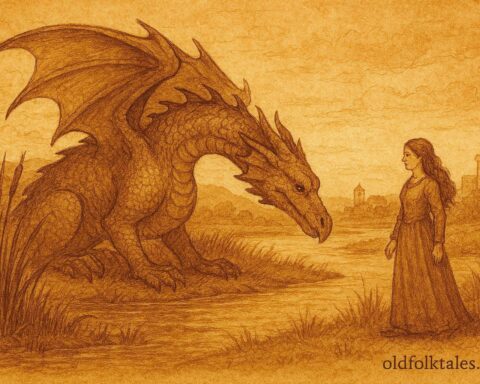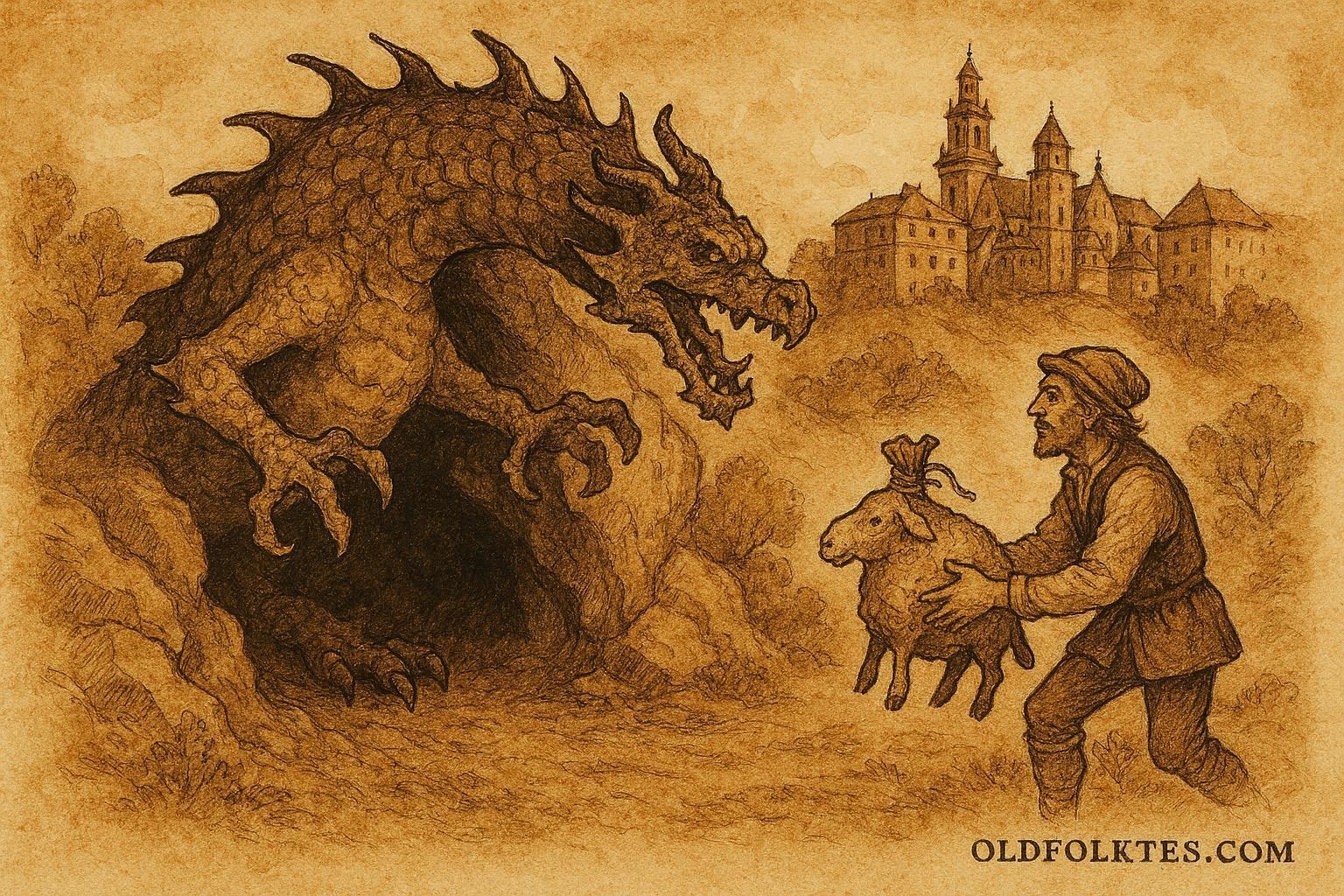
In the heart of Kraków, the royal city of Lesser Poland, the Vistula River wound through green meadows and cobblestone streets, reflecting the golden sunlight on its gentle ripples. On a hill overlooking the city stood the majestic Wawel Castle, its towers rising like sentinels of stone against the vast sky. From afar, the city seemed serene and orderly, but beneath the hill, deep in a dark and damp cavern, a terrible menace stirred: the Wawel Dragon, a creature of fire and scale, whose hunger and wrath brought fear to every corner of Kraków.
The dragon’s presence was no secret. Its roar thundered across the hills at dawn and dusk, shaking windows and frightening children from their beds. Smoke poured from its nostrils, curling into the sky like black serpents, and its fiery breath reduced barns and homes to ash. For years, the people of Kraków lived in terror. Shepherds abandoned their flocks, farmers left their fields, and the streets fell silent when the dragon prowled nearby.
Discover the moral heart and wild spirit of the north through timeless Nordic storytelling
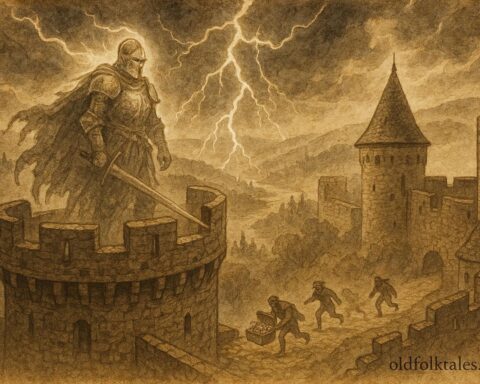
Many brave knights, eager to prove their valor, arrived in Kraków, armed with swords, shields, and shining armor. They sought to vanquish the beast and win the city’s gratitude, or perhaps the hand of the king’s daughter. Each knight tried to storm the dragon’s lair beneath Wawel Hill, swinging swords and shouting challenges. But the dragon was cunning and fierce. It dodged their attacks with terrifying speed, curled around its hoard of bones and treasure, and countered with fire so hot that steel melted and armor scorched. One by one, the knights fled in defeat, their pride shattered and their bodies singed.
Amidst the despair, the people of Kraków whispered of a solution beyond strength, a way to outthink the monster rather than fight it. Among them was Skuba, a humble shoemaker who lived in a small workshop near the edge of the city. His hands were calloused from cutting leather, stitching soles, and hammering nails, but his mind was sharp, full of cleverness and invention. He observed the dragon carefully from afar, noting its habits, the rhythm of its movements, and the way it devoured its prey.
Skuba understood that the dragon’s strength lay in its size and flames, but its weakness lay in its greed and carelessness. If one could trick the dragon into eating something it did not expect, something that would trouble it without harming anyone else, the city might finally be free.
The shoemaker prepared his plan with meticulous care. He purchased a large sheep from the market, its wool thick and soft, and hollowed it carefully. Inside, he stuffed a mixture of sulfur and tar, substances known for their fiery and explosive reaction when consumed. The sheep appeared plump and healthy, as if it had been fattened for a feast. Skuba stitched the wool back together with skill, ensuring that nothing betrayed the trap within. He rolled the sheep toward the entrance of the dragon’s cavern late in the afternoon, when the sun cast long shadows across the hills and the city seemed to hold its breath.
The dragon emerged at that very moment, scales glimmering in the fading light, smoke drifting from its nostrils. Its eyes glowed like embers as it sniffed the air hungrily, sensing the meal Skuba had prepared. With one massive gulp, the beast devoured the sheep whole. Almost instantly, it began to roar in agony, thrashing its enormous tail and shaking the cavern walls. Fire erupted uncontrollably from its mouth, and smoke filled the sky above Wawel Hill.
Panicked, the dragon fled from its lair, careening down the slopes of the hill and into the Vistula River. It drank deeply, churning the water into frothy waves, hoping to quench the burning inside. Yet the mixture of sulfur and tar worked faster than the dragon could manage. Its eyes rolled, smoke poured from its ears, and finally, the dragon collapsed, defeated and unable to rise again.
The people of Kraków, who had watched from a safe distance, erupted in celebration. They shouted Skuba’s name, lifted him upon their shoulders, and praised his courage and cleverness. For the first time in many months, the city knew peace. The royal court rewarded the shoemaker with gold, jewels, and lands, but he remained humble, returning each evening to his small workshop to continue his quiet craft. His triumph reminded the people that even the simplest among them could perform heroic deeds when armed with intelligence, patience, and courage.
From that day forth, the Wawel Dragon became a legend, its story told to children at bedtime, inscribed in manuscripts, and sung in the market squares. It was a tale not only of terror and triumph, but of wisdom over brute force, cleverness over recklessness, and the power of the ordinary person to change the fate of a city.
And so, Kraków prospered, safe beneath the watchful eyes of Wawel Castle, and the story of Skuba, the clever shoemaker, endured for generations as a reminder that true strength often lies not in sword or shield, but in the sharpness of the mind.
Step into the enchanted forests and mystical realms of the Slavic imagination
Moral Lesson
Wisdom and cleverness are often more powerful than strength alone. Even the humblest person can achieve greatness through intelligence, courage, and ingenuity.
Knowledge Check
-
Who defeats the Wawel Dragon in the folktale?
A humble shoemaker named Skuba, who uses wit rather than weapons.
-
What method does Skuba use to defeat the dragon?
He stuffs a sheep with sulfur and tar, tricking the dragon into consuming it.
-
Why do the knights fail to defeat the dragon?
Their strength and weapons are ineffective against the dragon’s cunning and fiery power.
-
What cultural region is this folktale from?
Lesser Poland (Małopolska), specifically the city of Kraków.
-
What symbolic lesson does the dragon represent?
The dragon symbolizes overwhelming challenges that require intelligence, not brute force, to overcome.
-
How does the story emphasize social class and wisdom?
The humble shoemaker, an ordinary citizen, succeeds where knights and nobles fail, showing that wisdom can surpass status and strength.
Source: Oskar Kolberg, Lud, jego zwyczaje, sposób życia, mowa, podania, przysłowia… 1840s–1860s
Cultural Origin: Lesser Poland (Małopolska), Kraków region