In a quiet Hungarian village nestled along the rolling plains and forested hills, there lived a young hero named Miklós. Known for his cleverness and unwavering courage, he had long dreamed of heroic deeds. The villagers often spoke of a princess held captive in a distant enchanted castle, a place shrouded in mystery, guarded by creatures both fearsome and magical. The princess’s plight had weighed heavily on the hearts of the people, for she was beloved not only for her beauty but for her kindness and wisdom.
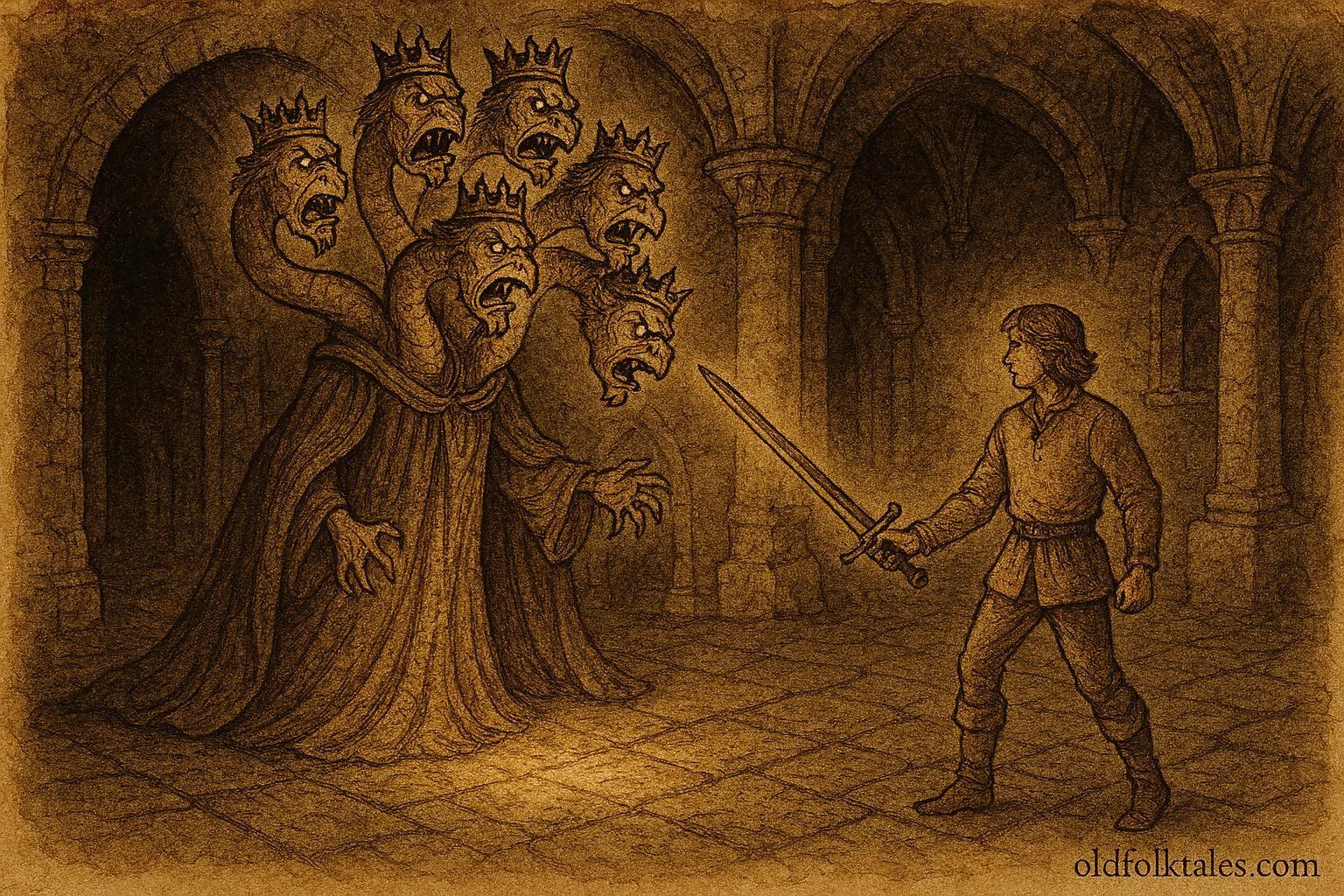
The castle of the princess was ruled by the Seven‑Headed Fairy King, a monstrous being whose seven heads each bore their own cunning and danger. Each head spoke in a different voice, each guarded a different chamber, and each challenged any would-be rescuer with riddles, illusions, and deadly tests. The Fairy King’s reputation was such that many knights and warriors had ventured forth and never returned.
Yet Miklós was not deterred. Guided by tales of the land and the wisdom of the village elders, he set forth with only his sword, his wits, and a heart unshaken by fear. Before leaving, his mother placed a small charm around his neck, a gift meant to protect him from magical influence, and whispered, “Remember, my son, courage without cleverness is only half the shield you need. Trust your mind as much as your arm.”
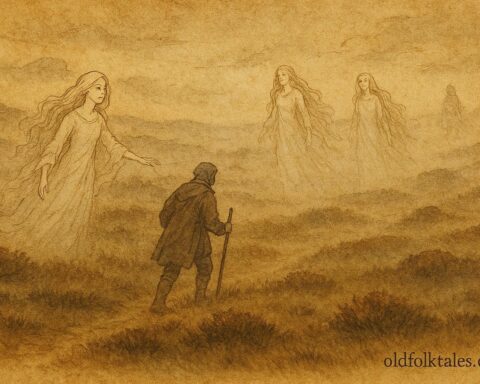
Miklós journeyed across meadows dotted with wildflowers, through forests thick with pine and oak, and over streams whose waters sparkled like silver in the afternoon sun. Along the way, he encountered signs of the Fairy King’s dominion: a tree twisted unnaturally with leaves of gold, a deer that vanished when approached, and birds that sang in seven distinct notes, each more haunting than the last.
At dusk, he reached the castle of the Seven‑Headed Fairy King, a fortress of black stone, vines, and glimmering windows that seemed to watch like eyes. He drew a deep breath, gripping his sword, and stepped through the gates. The air inside was heavy with enchantment; shadows moved where none should, and soft laughter echoed from corridors with no apparent source.
The first head appeared almost immediately. Its voice was like crashing waves, booming across the hall: “Who dares enter my domain?” Miklós bowed respectfully. “I am Miklós of the village below the hills. I come to rescue the princess and restore peace.”
The first head sneered, “Many have said such words. None have succeeded. To pass, you must solve my riddle: ‘I am born in darkness, but vanish in light. What am I?’”
Miklós thought carefully, recalling lessons from the elders. “A shadow,” he answered confidently. The head roared in anger but parted, allowing him to proceed to the next chamber.
In the second hall, a head with eyes like burning coals demanded a test of strength. It conjured illusions of collapsing floors and swinging blades. Miklós observed calmly, noting the patterns in the head’s movement. Using agility and clever timing, he avoided each trap, proving that courage and intelligence together were stronger than brute force alone.
The third head whispered secrets of fear, conjuring visions of villagers in peril, of flames consuming the land, and of failure. Miklós’s heart quaked, yet he remembered his mother’s charm and the stories of heroes past. Steeling himself, he ignored the illusions and pressed onward, proving that resilience of heart is as vital as skill of hand.
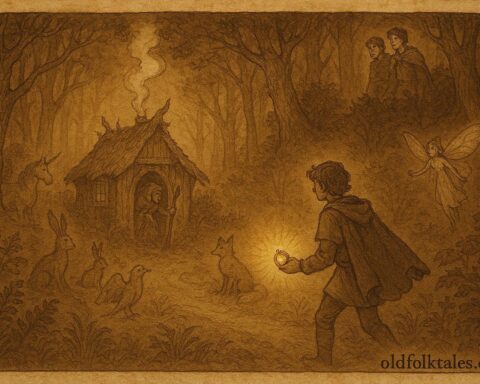
With each challenge, Miklós grew wiser. He found magical helpers along the way: a small firebird that revealed hidden paths, a talking fox who gave cryptic advice, and a wandering minstrel who sang of courage and cleverness. These companions, brief but crucial, aided him in deciphering illusions, avoiding deadly traps, and overcoming seemingly impossible obstacles.
By the time he reached the sixth head, Miklós had learned the rhythm and nature of the Fairy King’s cunning. Each head was not merely a monster but a guardian of wisdom and courage, each testing a different aspect of the hero’s spirit: wit, valor, endurance, compassion, observation, and humility.
The seventh and final head was the most fearsome of all, with scales like molten silver and eyes that pierced the soul. “To defeat me,” it said, “you must show that your courage is more than strength, your wisdom more than knowledge, your heart more than desire.”
Miklós paused. He realized that brute force alone could never succeed here. He spoke, “I do not seek power or glory. I seek only to free the princess and restore justice to the land. My strength is my heart, my mind, and my purpose.”
The head laughed, not in mockery but in recognition. A golden light enveloped the hall, and the seven heads merged into one gentle visage. The Fairy King bowed. “You have proven yourself worthy, Miklós. Not through sword alone, but through the wisdom of thought, courage of heart, and humility of spirit.”
With a final gesture, the enchantments binding the princess were lifted. She stepped forward, radiant and relieved. “Thank you, brave Miklós,” she said. “Your courage has restored hope and peace.”
Together, they left the castle, walking through the forest and meadows as dawn broke. Birds sang in seven harmonious notes, and the villagers welcomed them with joy and celebration. Miklós’s tale became legend: a story of cleverness over brute strength, of moral courage, and the triumph of good over evil.
Even the Seven‑Headed Fairy King’s castle became a symbol, not of fear, but of trials that test the worth of a hero. For generations, parents told their children that wisdom, courage, and integrity together can overcome even the most fearsome challenges.
Moral Lesson
The story of Miklós and the Seven‑Headed Fairy King teaches that true heroism combines courage, intelligence, and moral integrity. Challenges may appear impossible, but perseverance, insight, and humility lead to triumph. Brute strength alone cannot defeat evil; wisdom and heart are just as crucial in overcoming life’s trials.
Knowledge Check
-
Who is Miklós?
A clever and courageous young hero from a Hungarian village who seeks to rescue a captive princess. -
What is the Seven‑Headed Fairy King?
A monstrous being with seven heads, each guarding a different challenge in his enchanted castle. -
How does Miklós overcome the Fairy King’s trials?
Through a combination of courage, intelligence, moral integrity, and the aid of magical helpers. -
What types of trials does the Fairy King create?
Riddles, illusions, traps, and tests of fear, strength, wit, and humility. -
What themes are central to the story?
Good versus evil, hero’s journey, courage, cleverness, and moral integrity. -
What is the cultural origin of the tale?
Hungarian national folklore, preserved from 19th-century village storytellers.
Source: Traditional folktale recorded in Hungarian collections from the 19th century, preserved from village storytellers
Cultural Origin: Hungary (Hungarian national folklore)