In the rolling countryside of central Portugal, where olive groves stretched across sun-warmed hills and sheep paths wound between stone walls, there stood a village older than memory. Its houses were built of rough granite, its church bells worn smooth by centuries of ringing, and its people shaped by the land they worked. Here, the days followed the rhythm of the seasons, and the nights carried the weight of stories passed down through generations. Among these stories, none was spoken of more cautiously than that of the Moura Encantada of the Hidden Well.
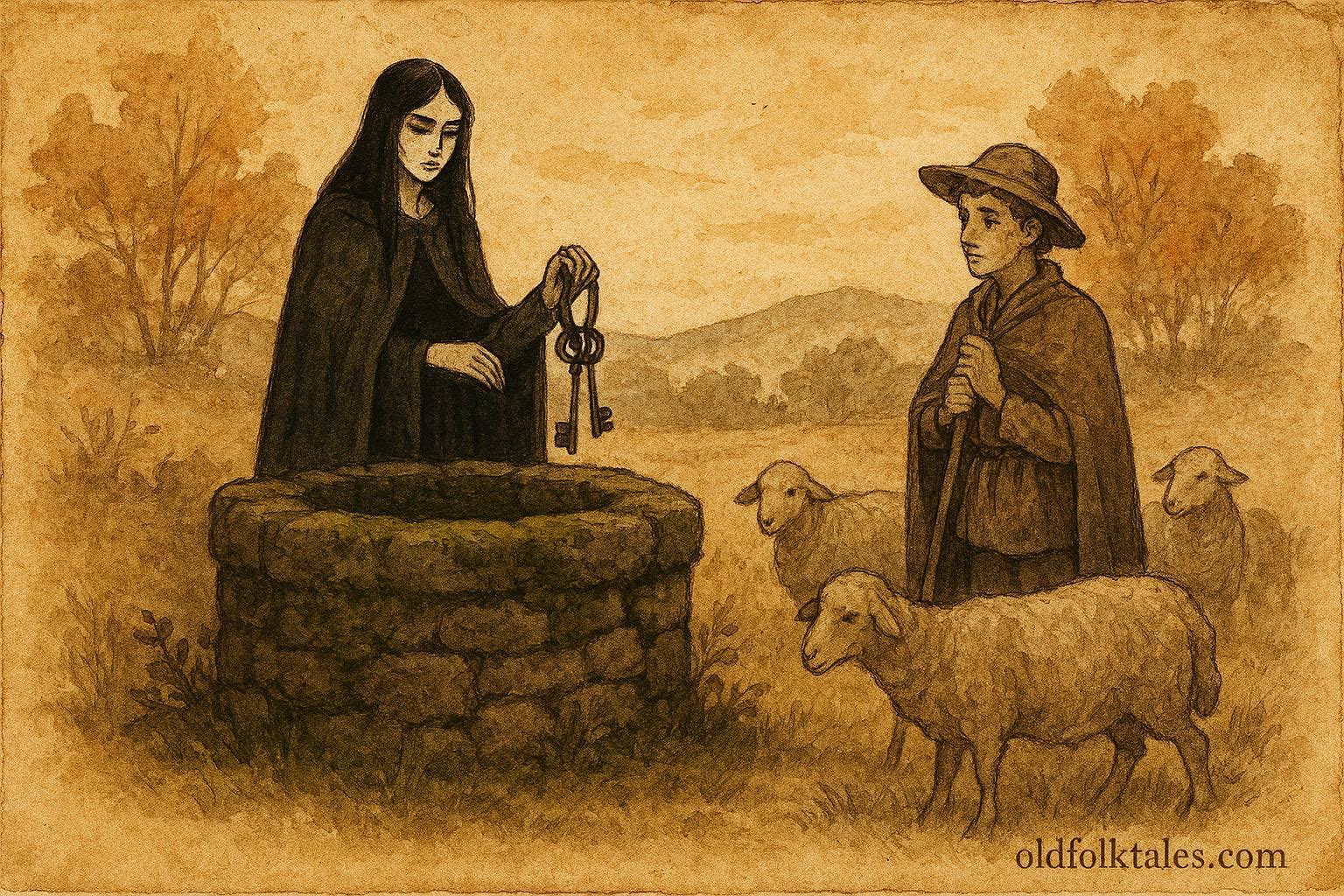
Beyond the village fields, where cultivated land gave way to scrub and wild grass, there lay an ancient stone well. It was half swallowed by earth and moss, its rim cracked and darkened by time. No one remembered who had built it, only that it existed long before the village itself. Children were warned not to go near it, and shepherds crossed themselves when passing close, especially at dawn or dusk.
For it was said that the well was guarded by a Moura Encantada, an enchanted woman bound by an ancient curse.
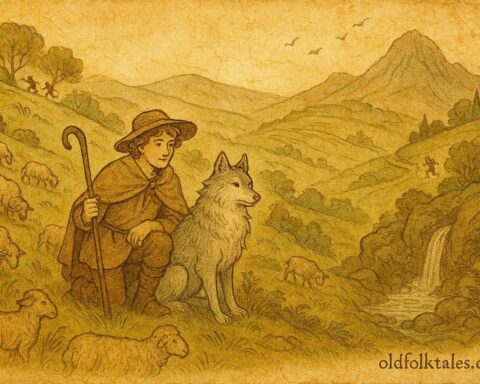
One summer morning, as the first light crept over the hills, a young shepherd named Tomé led his flock toward the higher grazing grounds. He was quiet by nature, more observant than talkative, and content in the company of animals and open sky. That day, one lamb strayed from the path, wandering toward a thicket of brush near the old well.
Tomé followed, calling softly, until he stood at the edge of the forgotten place.
The air there felt different, cooler, heavier. The birds had fallen silent. As he bent to retrieve the lamb, he sensed another presence. When he looked up, he saw her.
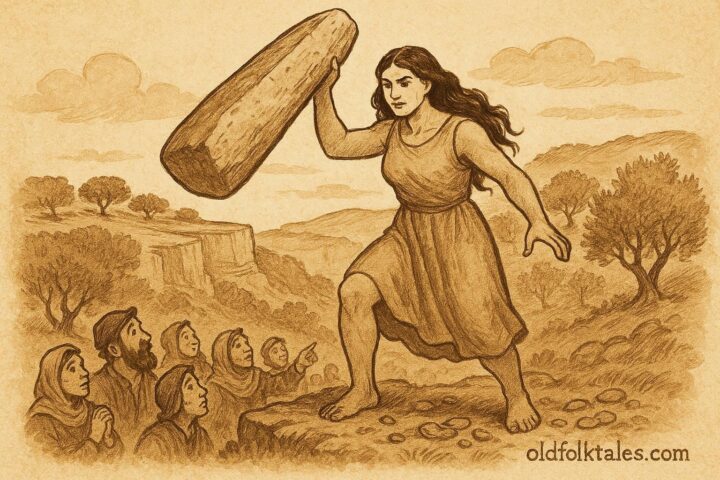
She stood beside the well, tall and still, her dark hair braided with ribbons that caught the light. Her clothing was neither peasant nor noble, but something older, richly colored, edged with patterns unfamiliar yet strangely familiar to the land. Her eyes were dark and steady, reflecting both kindness and sorrow.
She did not speak at first.
Tomé froze, fear rising in his chest, but he did not run. The woman watched him carefully, as though measuring his heart rather than his strength. At last, she spoke, her voice low and clear, like water echoing through stone.
She told him she was a Moura Encantada, bound to the well by a curse laid upon her in ancient times, when foreign rulers and lost kingdoms shaped the land. By day she remained unseen, but at dawn and dusk, the moments when worlds touched, she could appear.
She offered Tomé a choice.
Beneath the well, she said, lay hidden treasure: gold, jewels, and knowledge older than the village itself. If he could help break her enchantment, he would be rewarded beyond measure. But the task required strict obedience to sacred rules.
He must return at dawn the next day. He must do exactly as instructed. Above all, he must keep silence, no matter what he saw, heard, or felt. One word spoken out of fear, curiosity, or greed would bind him forever to the enchanted realm beneath the well.
Tomé listened, his heart pounding. He had heard stories of Mouras Encantadas since childhood, of shepherds tempted by wealth, of men who vanished, of promises broken by careless tongues. Yet he saw no malice in her eyes, only longing and restraint.
He agreed.
That night, sleep came fitfully. Visions of gold shimmered in his mind, but so did images of stone closing around him, of voices calling his name from darkness. At dawn, before the village stirred, he returned to the well.
The Moura was waiting.
She instructed him to lower a rope into the well and descend without hesitation. The stone walls were cold beneath his hands, and the darkness pressed close. Strange whispers echoed around him, voices that mocked, pleaded, and tempted. Shapes flickered at the edge of his vision.
He remembered the rule: silence.
At the bottom, he found a chamber carved from living rock. Gold lay scattered like fallen leaves. Ancient symbols marked the walls. At the center stood the Moura, no longer bound to the well’s edge but radiant, almost human in her relief.
She told him the final trial was near. As he ascended, he would hear voices, perhaps those of loved ones, perhaps his own fears given sound. He must not answer. He must not speak. Not even to cry out in warning or triumph.
As Tomé climbed, the voices came.
They called his name in his mother’s voice. They begged him to stop, to turn back, to explain what he had found. His throat burned with the need to respond. The rope shook, as though the stone itself tested him.
Still, he remained silent.
At last, he reached the surface. The morning light washed over him, and the voices faded like mist. Behind him, the well grew still.
The Moura appeared once more, no longer bound to the place. Her sorrow had lifted, replaced by calm gratitude. The curse was broken, not by force or wealth, but by restraint and respect.
She thanked him, warning that others would come seeking what he had refused to claim too quickly. Then, as the sun rose fully, she vanished, and the well sank deeper into shadow.
Tomé returned to the village unchanged in appearance, but wiser in spirit. He did not boast. He did not search for treasure. He lived as before, but with a deeper reverence for silence and promises.
And the villagers say that the well still exists, waiting for those who believe courage lies not in speaking, but in knowing when not to.
Moral Lesson
True integrity is tested not by strength or desire, but by restraint. Silence, patience, and respect for sacred promises protect the soul from temptation and ruin.
Knowledge Check
-
What is a Moura Encantada in Portuguese folklore?
An enchanted woman bound by a curse, often guarding hidden treasure or sacred places. -
Where does this story take place?
In rural central Portugal near an ancient stone well. -
What rule is most important in breaking the curse?
Maintaining absolute silence during the trials. -
What happens if the rule is broken?
The person risks becoming trapped forever in the enchanted realm. -
What does the hidden well symbolize?
Forbidden knowledge, temptation, and spiritual testing. -
Who collected this folktale?
Teófilo Braga in Contos Tradicionais do Povo Português.
Source: Teófilo Braga, Contos Tradicionais do Povo Português, 1883
Cultural Origin: Portuguese rural folklore (central and northern Portugal), with Moorish cultural influence