In the heart of medieval Catalonia, surrounded by rolling hills and fortified stone walls, stood the town of Montblanc. Its narrow streets echoed with the sounds of daily life, blacksmiths hammering iron, merchants calling out their wares, and church bells marking the hours of prayer. Yet beneath this rhythm of ordinary existence lay a deep and growing fear, for a terrible dragon had made its lair near the town and brought misery upon its people.
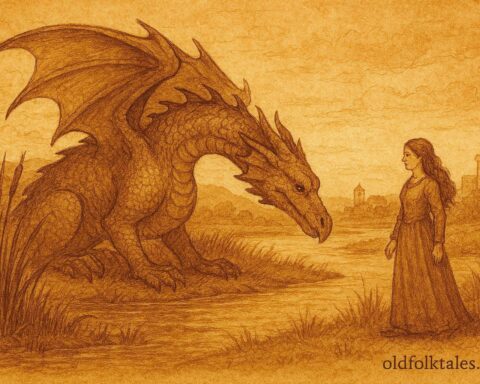
The dragon lived in a cave beyond the fields, where scorched earth and broken stones bore witness to its presence. Its scales were dark and thick as armor, its wings vast enough to cast shadows over entire fields, and its breath was said to burn hotter than a forge. Whenever it emerged, livestock vanished, crops were destroyed, and the air itself seemed to tremble with dread. The people of Montblanc lived in constant terror, knowing that no wall or weapon could stand against such a beast.
Step into the enchanted forests and mystical realms of the Slavic imagination
At first, the townsfolk tried to defend themselves. Armed men ventured out, prayers on their lips and weapons in hand, but none returned. The dragon was relentless, and its hunger grew. Soon, it demanded something far worse than animals or crops, it demanded human lives.
Desperate to save the town, the elders and rulers of Montblanc made a grim decision. To appease the dragon and prevent further destruction, they would offer it a human sacrifice. Each day, lots would be drawn, and the chosen victim would be sent beyond the gates to face the beast. Tears flowed freely as families gathered to watch their loved ones depart, knowing there was no return.
Day after day, the town’s sorrow deepened. Mothers wept, fathers bowed their heads in helplessness, and the church filled with prayers for deliverance. Yet the dragon continued to come, and the sacrifices did not end its terror, they only delayed it.
One morning, as the sun rose pale over the stone towers of Montblanc, the unthinkable occurred. When the lots were drawn, the king’s own daughter was chosen.
The princess was known throughout the town for her kindness and grace. She had walked among the people, offering comfort during the dark days of fear, and had prayed fervently for her people’s salvation. When her fate was revealed, silence fell over the square. The king, torn between love and duty, was overcome with grief, yet he could not defy the lot without condemning others in her place.
With dignity and courage, the princess accepted her fate. She dressed simply, without jewels or finery, and asked only for time to pray. When she was led beyond the gates of Montblanc, the townspeople watched with broken hearts, believing they were witnessing the final tragedy of their suffering.
As the princess stood alone near the dragon’s lair, the wind stirred her cloak, and the land lay eerily still. She prayed quietly, entrusting her life to God and asking for mercy for her people. It was then that a rider appeared on the horizon.
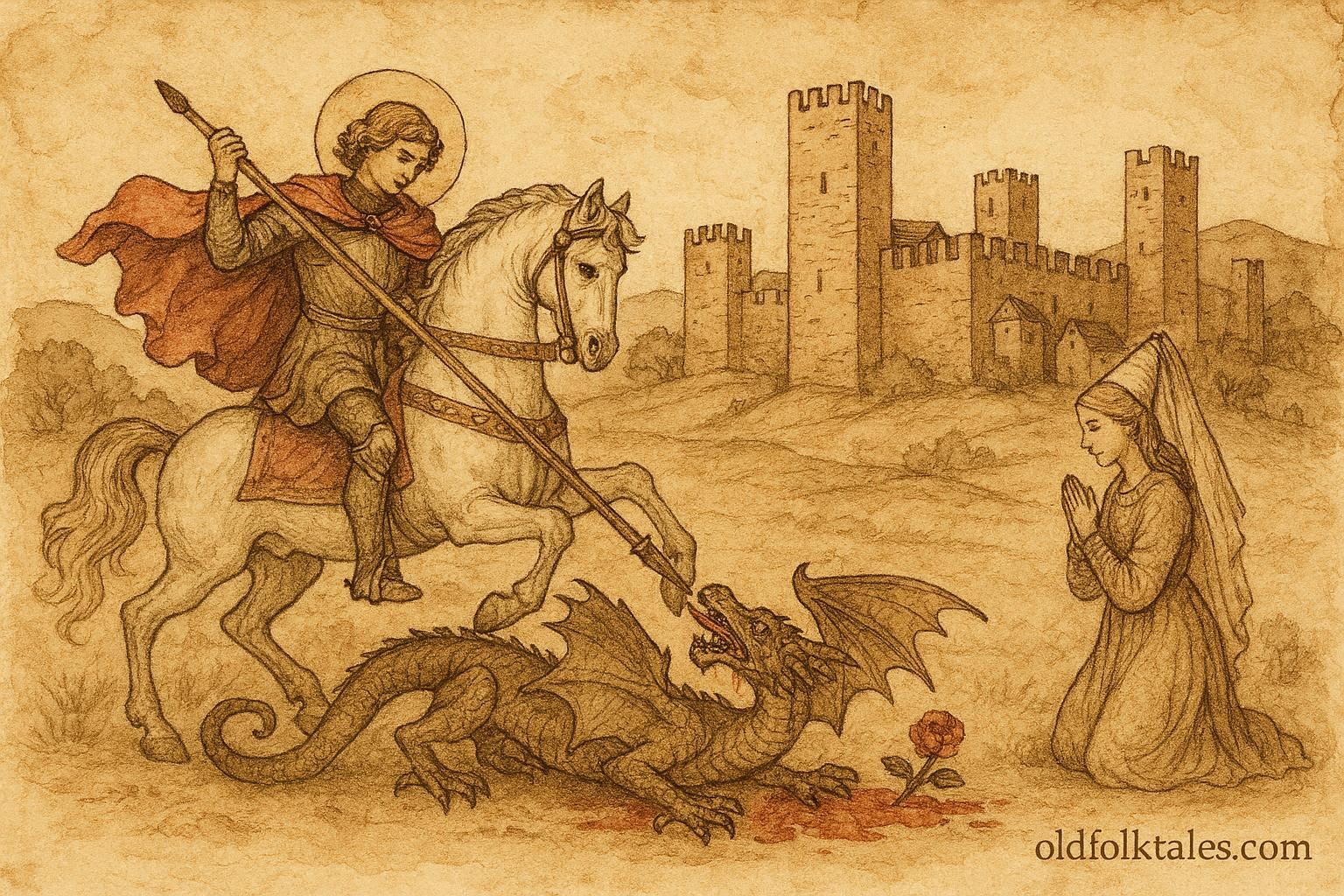
He was clad in armor that bore the marks of many journeys, and he rode a white horse that moved with calm strength. This was Saint George, a knight of faith and courage, known for his devotion and unwavering belief in justice. Drawn by divine purpose, he had come to Montblanc at the very moment hope seemed lost.
Saint George approached the princess and learned of the dragon’s reign of terror. Seeing her courage and the innocence she represented, he vowed to confront the beast. The princess pleaded with him to flee, knowing the dragon’s power, but Saint George stood firm, placing his trust not in strength alone, but in faith.
When the dragon emerged from its lair, the earth shook beneath its weight. Flames flickered from its jaws, and its roar echoed across the hills. Saint George raised his lance and charged forward, calling upon God as he rode. The clash between saint and dragon was fierce and terrible. The dragon struck with its tail and claws, while Saint George dodged and pressed on, unwavering in his resolve.
At last, with a final thrust guided by divine will, Saint George pierced the dragon. The beast let out a final roar before collapsing to the ground, its terror ended. The land fell silent, and the princess stood unharmed, scarcely believing what she had witnessed.
As the dragon lay defeated, its blood flowed into the earth. From that very spot, a miracle occurred: a rosebush sprang forth, bearing a single, brilliant red rose. Saint George plucked the rose and offered it to the princess, a symbol of life restored, sacrifice redeemed, and hope renewed.
Together, they returned to Montblanc. When the townspeople saw the dragon slain and the princess safe, joy erupted throughout the town. Bells rang, prayers were answered, and tears of sorrow turned into tears of gratitude. The reign of fear had ended, replaced by peace and renewed faith.
From that day forward, the red rose became a lasting symbol in Catalonia, representing courage, sacrifice, and the triumph of good over evil. The story of Saint George and the dragon was passed down through generations, reminding all who heard it that faith and bravery can overcome even the greatest darkness.
Moral Lesson
The tale of the Dragon of Montblanc teaches that faith, courage, and self-sacrifice can defeat even the most overwhelming evil. When the innocent are protected and bravery is guided by belief and compassion, renewal and hope can bloom from even the darkest moments.
Knowledge Check
-
Q: What threatens the town of Montblanc in the folktale?
A: A fearsome dragon that demands human sacrifices. -
Q: Why is the king’s daughter chosen as a sacrifice?
A: She is selected by lot, showing that no one is spared from suffering. -
Q: Who confronts and slays the dragon?
A: Saint George, a knight guided by faith and courage. -
Q: What blooms from the dragon’s blood?
A: A red rose, symbolizing sacrifice, renewal, and hope. -
Q: What themes does the story emphasize?
A: Good versus evil, faith, bravery, and protection of the innocent. -
Q: Where does this legend originate?
A: Catalonia, Spain.
Source: Legenda Aurea (Golden Legend) by Jacobus de Voragine; Catalan oral tradition, c. 1260 (widely circulated in Spain by the 14th century)
Cultural Origin: Catalonia, Spain