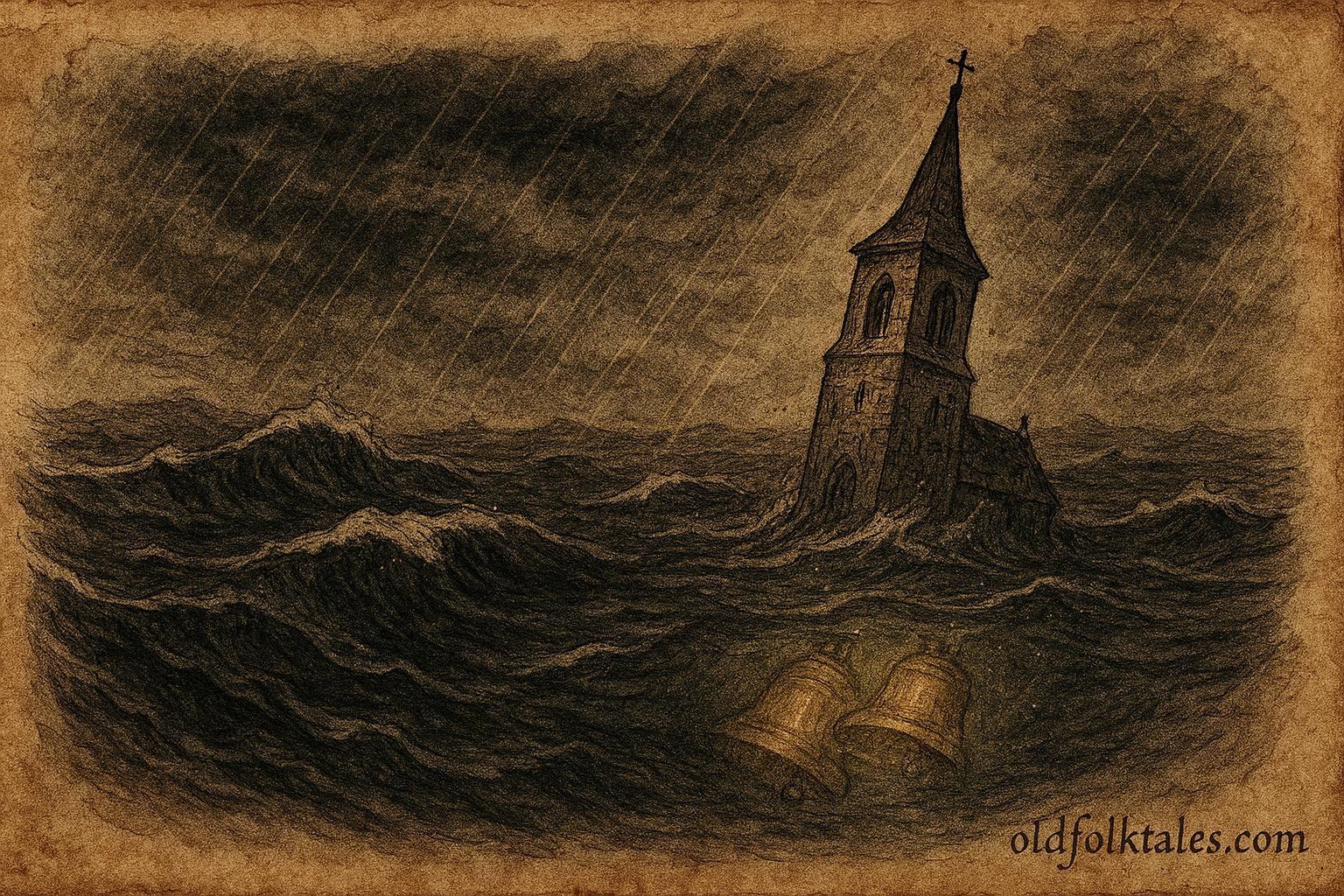
Long before dikes tamed the waters and maps fixed the shape of the land, the Zuiderzee was a restless inland sea, shifting with tide and storm. Along its edges stood villages built on faith as much as on earth, small communities of fishermen, farmers, and traders who lived between blessing and danger, knowing the sea could give life one season and take it the next.
In one such village, whose name has faded from memory, the church stood at the center of all things. Its stone tower rose above the thatched roofs, and within it hung bells of fine bronze, cast to carry their sound across fields and water alike. They rang for prayer, for weddings, for mourning, and for warning when storms approached. Their voices marked the hours of labor and rest, binding the people together in time and faith.
Yet as the years passed, the village prospered, and with prosperity came forgetfulness.
The people grew careless. Some spoke of pride, others of neglect. The poor were turned away more often than before. Holy days were shortened for trade, prayers rushed or skipped entirely. Fishermen ignored the old signs of weather. Repairs to sea walls were delayed, deemed too costly or unnecessary. The bells still rang, but fewer listened.
Elders warned that the sea noticed such things. They reminded the villagers that land reclaimed from water was never truly owned, only borrowed. But their voices were drowned out by laughter, coin, and the creak of full storehouses.
Then came the storm.
It rose not suddenly, but with dreadful patience. The sky darkened, the wind pressed low, and the sea withdrew in an unnatural silence, exposing mudflats where water should have been. Birds fled inland. Dogs howled. Still, many villagers slept, trusting the walls and their own good fortune.
When the waters returned, they came with fury.
Waves smashed against the dikes, weakened by years of neglect. The sea broke through in multiple places, pouring into the fields and streets. Houses collapsed. Boats were torn from their moorings. People fled toward the church, believing its tower would stand when all else failed.
Inside, the bells began to ring, not by human hand, but by the violent shaking of the tower as water surged around it. Their sound was wild and unceasing, echoing through wind and rain like a final call.
By dawn, the village was gone.
Where homes had stood, there was only water. The church tower had vanished beneath the waves, its bells silenced at last. Survivors, washed ashore miles away, spoke in broken voices of walls of water, of cries swallowed by the sea, of bells ringing until the moment they disappeared.
The Zuiderzee closed over the ruins, smoothing its surface as though nothing had ever been there.
Years passed. New villages rose farther inland. The old one became a warning spoken quietly, especially to children and newcomers. Fishermen avoided casting their nets in certain places, claiming the waters there were too deep, too still.
Then, on a stormy night, a sound was heard.
It was faint at first, carried on the wind between thunderclaps. A low, distant tolling, measured, solemn, unmistakable. Church bells.
Men stepped from their homes. Women crossed themselves. The sound came not from land, but from the sea.
On holy nights, Christmas Eve, Easter dawn, or during fierce storms, the bells were heard again. Always distant, always muffled, as if ringing through water and time itself. They never rang in joy, only in warning and remembrance.
Some said the bells called the drowned to prayer. Others believed they rang to remind the living of what had been lost. Fishermen swore that when the bells sounded, the sea grew restless, and nets returned empty if cast in greed.
No one ever found the village again. Attempts to locate its ruins failed; currents shifted, depths changed. The sea guarded its secret.
But the bells remained.
Even centuries later, when the Zuiderzee was tamed and renamed, when dikes rose higher and land was reclaimed, old sailors insisted that on certain nights, if the wind was right and the heart humble, one could still hear them, ringing from beneath the waters, calling not to the drowned, but to the living.
Moral Lesson
The Sunken Bells of the Zuiderzee warn that prosperity without humility invites ruin. When communities neglect faith, duty, and compassion, even the strongest foundations may be reclaimed by forces long endured but never conquered.
Knowledge Check
-
Q: What are the Sunken Bells of the Zuiderzee?
A: Legendary church bells said to ring from a submerged village beneath the sea. -
Q: Why was the village swallowed by the sea?
A: Due to sin, neglect, and disregard for faith and responsibility. -
Q: When are the bells said to be heard?
A: On stormy nights or holy days. -
Q: What do the bells symbolize?
A: Divine warning, remembrance, and moral accountability. -
Q: Where does this legend originate?
A: The Zuiderzee region of the Netherlands. -
Q: What lesson does the story teach?
A: Humility and vigilance are essential for survival and harmony.
Source: Maritime folklore and regional legends, c. 14th–15th century CE
Cultural Origin: Zuiderzee region (Netherlands)