There once lived a king who ruled over a prosperous land of fields, forests, and orderly towns. His treasuries were full, his halls shone with polished stone, and his name carried weight far beyond his borders. Yet for all his wealth and authority, the king was a man deeply concerned with how he was regarded, by his court, by neighboring rulers, and especially by his own children.
The king had three daughters. Each was different in temperament, yet all were raised in comfort and educated in the manners of the court. As the king grew older, thoughts of legacy weighed heavily on his mind. He wished to know not only how his kingdom would endure, but how he himself was valued by those closest to him.
One day, seated upon his throne and surrounded by courtiers, the king summoned his daughters before him.
“My children,” he said, his voice echoing through the hall, “tell me how much you love me.”
The eldest daughter stepped forward first. She was graceful and confident, accustomed to speaking pleasing words. Bowing deeply, she declared, “Father, I love you more than gold.”
The courtiers murmured their approval. Gold was the measure of wealth, the foundation of power and prestige. The king smiled, pleased by her answer.
The second daughter followed. With equal elegance, she said, “Father, I love you more than precious stones and jewels.”
Again, the hall stirred with admiration. Jewels were rare, beautiful, and prized above most earthly things. The king nodded, his pride swelling further.
At last, the youngest daughter came forward.
She was thoughtful and quiet, known more for her insight than for flattery. She considered the question carefully before speaking. Then, in a clear and steady voice, she said, “Father, I love you as much as salt.”
Silence fell across the hall.
The king’s face darkened. Salt? Compared to gold and jewels, salt seemed plain and common, used daily by servants and cooks, not displayed in crowns or coffers. The courtiers exchanged uneasy glances, unsure whether they had heard correctly.
The king rose from his throne, anger flashing in his eyes. “Salt?” he repeated. “Do you dare compare your love for me to something so ordinary?”
The youngest daughter did not retreat. “Yes, Father,” she said calmly. “Without salt, life itself loses its savor.”
But the king would not listen. His pride had been wounded, and his ears closed to wisdom. Interpreting her words as mockery or insult, he declared that she had shamed him before his court.
In his wrath, the king cast his youngest daughter out of the palace. She was stripped of her fine clothing and sent away with nothing but the garments she wore. The doors of the castle closed behind her, and no one dared speak on her behalf.
The girl did not curse her father, nor did she beg for mercy. With quiet resolve, she left the kingdom and set out into the wider world.
Time passed.
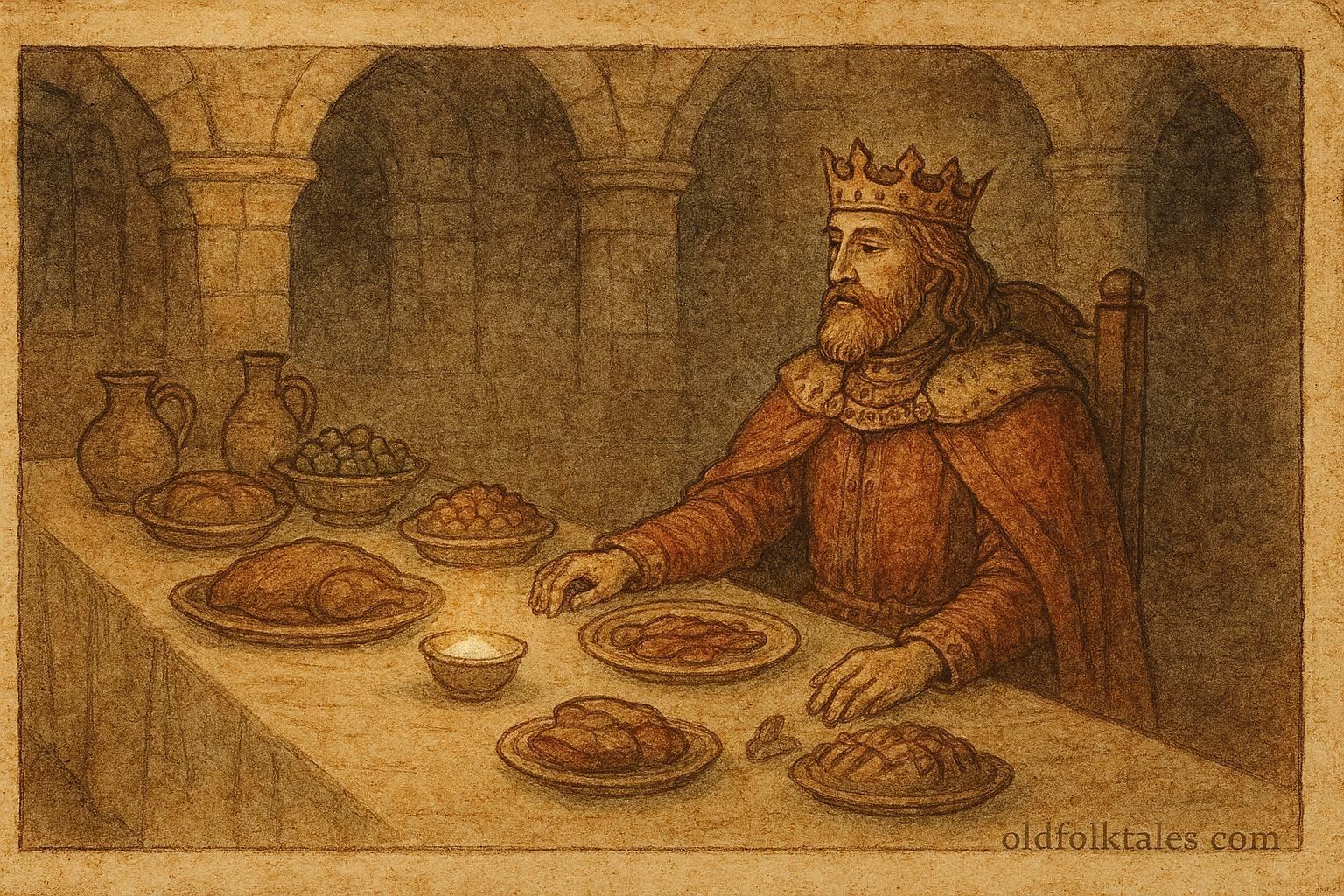
The king continued to rule, and life at court went on as before. His two elder daughters remained by his side, surrounding him with flattering words and luxurious comforts. Feasts were held in the grand hall, tables laden with the finest meats, breads, and sauces.
Yet something was wrong.
Though the dishes were prepared with care, they tasted dull and empty. No matter how rich the ingredients, the food brought no pleasure. Cooks tried new recipes, spices, and methods, but nothing satisfied. The king found himself pushing plates aside, growing increasingly frustrated.
“What is wrong with this food?” he demanded one evening.
The head cook trembled as he replied, “Your Majesty, we have prepared everything as commanded.”
After much confusion and whispered discussion, the truth emerged.
Salt had been removed from the royal kitchens.
In his anger toward his youngest daughter, the king had forbidden salt from being used in his household, declaring it unworthy of his table. Now, faced with tasteless meals day after day, he began to understand what had been missing, not only from his food, but from his judgment.
Without salt, even the finest feast was hollow.
The realization struck him with the force of regret. He remembered his daughter’s words, spoken calmly and without pride. Slowly, painfully, he saw the wisdom he had rejected. Salt was humble, unseen, and essential. It preserved food, gave it life and flavor, and sustained both rich and poor alike.
Ashamed, the king ordered salt restored to the kitchens. At once, the food regained its taste, and with it came the bitter knowledge of his mistake.
Determined to make amends, the king sent messengers throughout the land to search for his youngest daughter. After long effort, she was found living simply, having learned to endure hardship with patience and dignity.
When she returned to the palace, the king descended from his throne to meet her. Before the court, he admitted his pride and folly. He asked for her forgiveness and acknowledged that her love, though modestly spoken, had been the truest of all.
The daughter forgave him, not triumphantly, but with compassion.
From that day forward, the king ruled with greater humility, remembering that true worth is often quiet and easily overlooked. And salt, once despised, was honored at his table as a symbol of wisdom, necessity, and sincere love.
Moral Lesson
The Salt Is Pricier Than Gold teaches that true value is not found in glitter or grand words, but in what sustains life and meaning. Humility and wisdom often speak plainly, and those who dismiss them risk learning their lesson through regret.
Knowledge Check
-
What question does the king ask his daughters?
He asks them how much they love him. -
How do the elder daughters express their love?
They compare their love to gold and precious jewels. -
What does the youngest daughter compare her love to?
She says she loves her father like salt. -
Why does the king banish his youngest daughter?
He is offended and believes her answer is disrespectful. -
How does the king realize his mistake?
He discovers that food is tasteless without salt. -
What is the main lesson of the folktale?
True worth lies in necessity and sincerity, not appearance or wealth.
Source: Božena Němcová, Národní báchorky a pověsti (1857)
Cultural Origin: Czech folklore