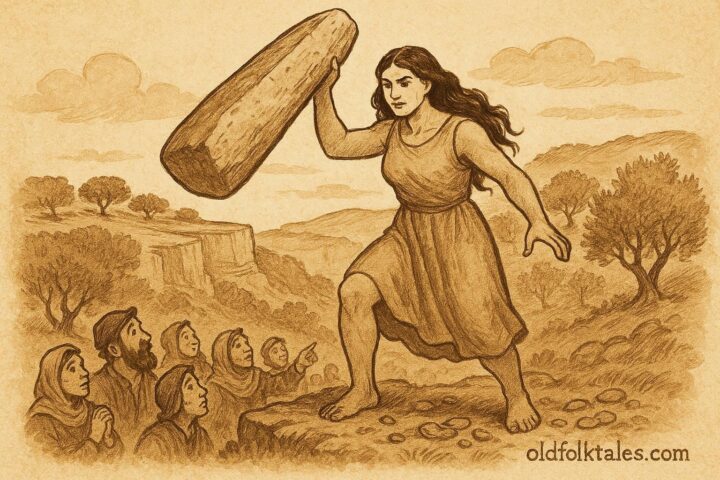
In the rolling hills and deep valleys of Schwyz, centuries ago, a time of tension and oppression weighed heavily upon the people. Lords and foreign rulers demanded obedience and tribute, their laws pressing down on the villagers like an iron hand. It was in these uncertain times that the story of Stauffacherin, the wise and courageous wife of Werner Stauffacher, was told. She was no ordinary woman: shrewd, brave, and deeply committed to justice, she became a guiding light in the hearts of her people.
Her home, modest yet sturdy, overlooked the valley where her husband, Werner, worked alongside the villagers to maintain peace and order. But the shadow of tyranny crept closer with each passing day, and whispers of rebellion and courage reached Stauffacherin’s keen ears. She listened to the villagers’ fears, studied the movements of the oppressors, and reflected carefully upon what could be done.
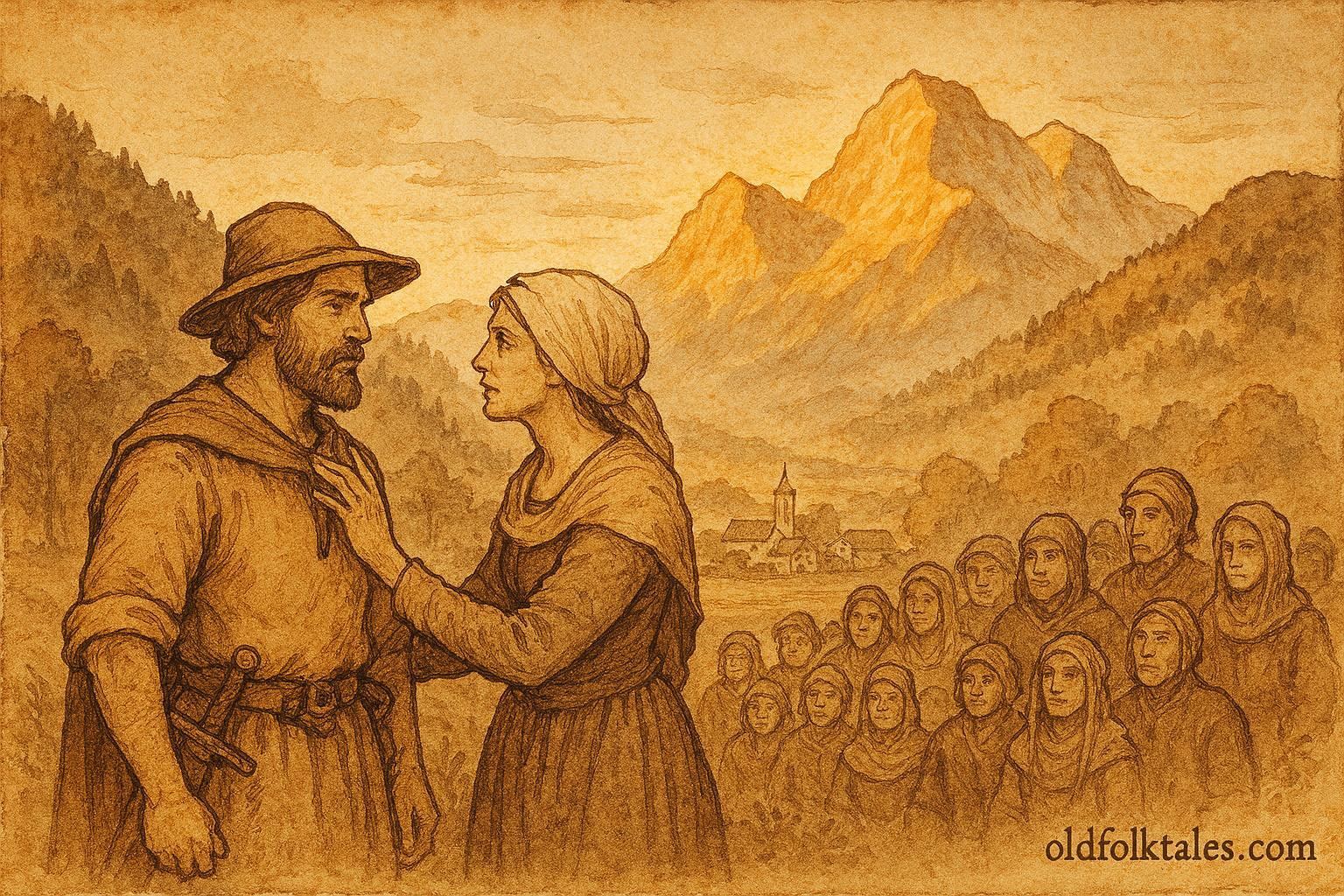
One evening, as the sun sank behind the forested hills and the sky glowed amber, she spoke to her husband with a firmness that startled even him. “Werner,” she said, her voice calm but resolute, “we cannot remain silent. The people are weary, the oppressors cruel, and the time to act is now. We must inspire courage in the hearts of our neighbors. Only together can we form a bond strong enough to resist the yoke of tyranny.”
Werner, a man of action but less of counsel, knew the weight of her words. Her insight, her understanding of the villagers’ hearts, and her quiet strength gave him confidence. Stauffacherin urged him not just to speak of rebellion, but to rally the people around a promise: an oath of unity and mutual defense that could stand against oppression. “The strength of men is limited,” she reminded him, “but when guided by wisdom and the hearts of women and men alike, it can shape the destiny of our land.”
Inspired by her guidance, Werner gathered the local leaders of Schwyz, urging them to pledge loyalty not to foreign lords but to one another, a pact rooted in trust, honor, and justice. It was Stauffacherin’s careful counsel that tempered their words, ensuring the oath reflected courage without recklessness, unity without discord. The elders and villagers felt the weight of her wisdom, and her voice, soft but compelling, echoed through the valley, bolstering hearts where fear had dwelled.
Stories say that Stauffacherin did not simply speak from behind closed doors. She accompanied her husband to gatherings, offering counsel, listening to fears, and inspiring hope. She reminded men of their moral duty, and she reminded women that courage could take many forms. Her presence strengthened the bonds of the early Confederacy, nurturing the principles of mutual aid and democratic unity that would grow into the foundation of Switzerland.
Through her courage, wisdom, and moral clarity, Stauffacherin became a symbol of partnership and leadership. The villagers remembered her guidance as essential: without her counsel, the oath that bound the cantons of Schwyz, Uri, and Unterwalden might never have been forged, and the earliest steps toward the Old Swiss Confederacy might have faltered.
Long after the events themselves, tales of Stauffacherin were preserved in chronicles like the White Book of Sarnen, around 1470, and later dramatists like Friedrich Schiller brought her story to wider audiences in the 1800s. She was celebrated not for physical heroics, but for insight, courage, and steadfastness, the quiet yet unyielding force behind great deeds.
Even today, in the hills and valleys of central Switzerland, storytellers recount her legacy as a reminder that leadership is not only measured by armies or swords, but by wisdom, courage, and the ability to inspire unity. Stauffacherin teaches that true strength is shared, that partnership shapes destiny, and that the moral guidance of the wise can alter the course of history.
Moral Lesson
Stauffacherin demonstrates that courage, wisdom, and partnership are vital in shaping collective destiny. True leadership inspires others and ensures that unity and justice can prevail against oppression.
Knowledge Check
-
Who was Stauffacherin?
She was the wise and courageous wife of Werner Stauffacher, guiding early resistance against oppression in Schwyz. -
What role did Stauffacherin play in the formation of the Old Swiss Confederacy?
She advised and inspired the oath of unity among local leaders, fostering collective resistance and democratic values. -
What themes are central to the story?
Courage, partnership, leadership, and the foundations of collective governance. -
What cultural region does the legend originate from?
Central Switzerland, particularly Schwyz. -
How did Stauffacherin influence her husband and the villagers?
Through wise counsel, moral guidance, and inspiration, ensuring unity and careful planning in resistance. -
What moral lesson does Stauffacherin convey?
True strength lies in wisdom, courage, and partnership; leadership is measured by the ability to unite and inspire others.
Source: First recorded in the White Book of Sarnen (~1470) and later reinterpreted by Friedrich Schiller (1804).
Cultural Origin: Central Switzerland, particularly Schwyz.