In a kingdom bordered by forests and mountains, where stone roads wound through fields of wheat and wildflowers, there lived a king whose rule had long been just and steady. His people respected him, for he judged fairly and protected the poor as well as the powerful. But in his later years, a great misfortune befell him: the king was struck blind. Darkness closed over his eyes, and no healer, priest, or learned scholar could restore his sight.
From distant lands came physicians bearing salves and potions, prayers and charms, but none availed him. At last, an aged traveler arrived at the palace gates and spoke of a remedy known only in legend: the Living Water, hidden far beyond the borders of the kingdom. This water, drawn from enchanted springs guarded by fearsome trials, was said to heal any wound and restore what had been lost. But few who sought it ever returned.
The king summoned his three sons and spoke to them with a heavy heart. “Whoever brings me the Living Water shall inherit my crown,” he declared. “But know this, many dangers lie along the way, and not all who set out will return.”
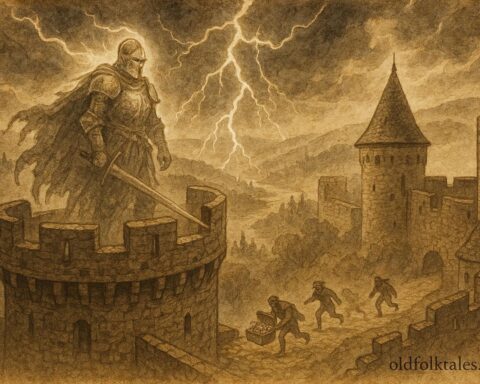
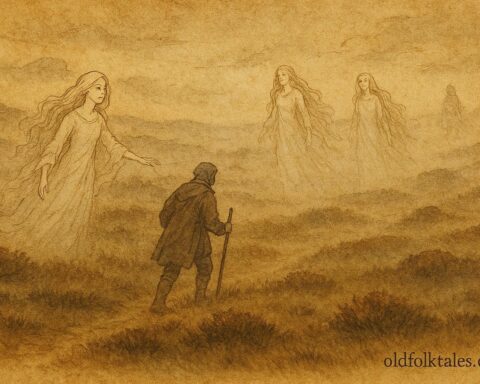
The eldest son, proud and confident, set out first. He wore fine armor, carried a sharp sword, and rode a strong horse. He trusted in his strength and rank, believing no obstacle could bar his path. As he journeyed deeper into the wilderness, he came upon an old man sitting by the roadside. The man warned him of dragons, enchanted wells, and paths that punished arrogance. The eldest brother laughed, dismissed the warning, and rode on. Soon after, he reached a place where the road split near a dark well. Ignoring the signs of danger, he leaned too close, and the earth gave way beneath him. He vanished, trapped by the magic of the land.
When no word came, the second son departed. He was clever and cautious, but impatient. Like his brother, he encountered strangers along the road, animals who spoke, old women who warned him, guardians who tested his humility. Each time, he brushed them aside, focused only on the prize. When he reached the well and the lair of the dragons beyond, his cleverness failed him. Like the first, he disappeared, undone by his refusal to listen and show kindness.
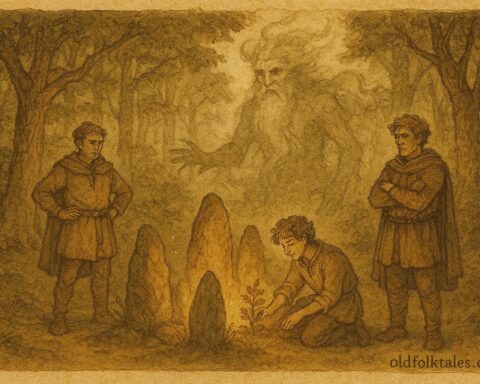
At last, the youngest son asked his father’s blessing. He did not boast of strength or cunning. He set out quietly, armed only with his sword, his horse, and a heart open to the world. Along the road, he shared bread with beggars, freed trapped animals, and listened carefully to every warning given. When he met the same old man, he bowed respectfully and thanked him for his guidance. The man told him which paths to take, how to approach the enchanted wells, and how to survive the dragons’ trials.
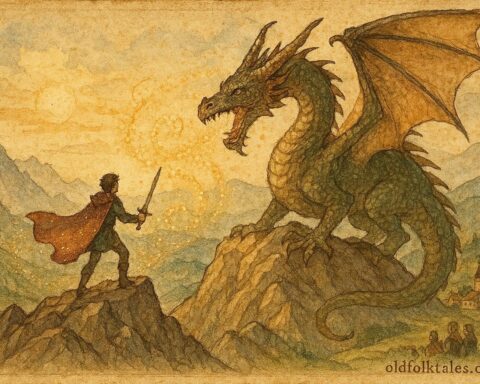
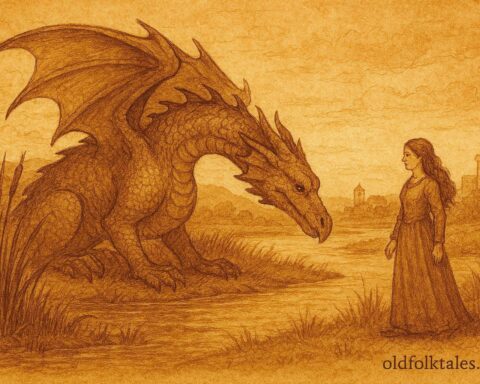
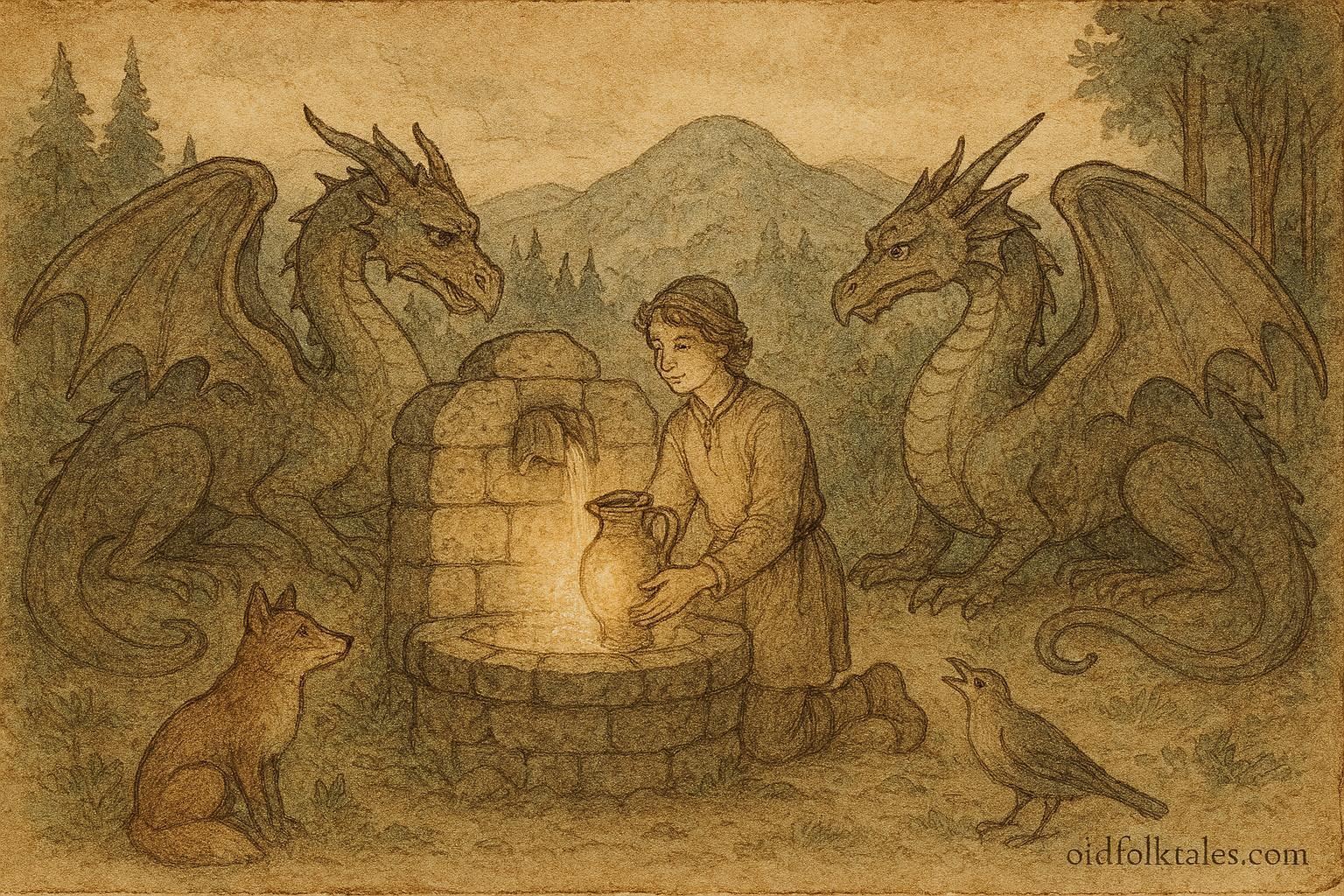
When the youngest brother reached the dragon-guarded springs, he did not rush into battle. He followed the instructions given, acting with patience and care. Through courage guided by humility, he overcame the trials and filled his vessel with the Living Water. On his return journey, he rescued his brothers, restoring them from their enchanted imprisonment.
But when they neared the kingdom, envy took hold of the elder brothers’ hearts. They betrayed the youngest, stole the Living Water, and left him for dead. Believing him lost, they returned to the palace and presented the water to their blind father. Yet when the king washed his eyes, his sight returned only partially. Something was wrong.
The youngest brother survived and reached the palace in time. When the truth was revealed, the Living Water worked fully, restoring the king’s sight completely. Justice was done, the treachery exposed, and the youngest son, pure in heart and deed, was named heir.
Thus the kingdom learned that healing comes not only from magic, but from compassion, patience, and moral purity.
Moral Lesson
True power lies not in strength or cleverness alone, but in kindness, humility, and respect for wisdom. Compassion opens paths that pride cannot cross.
Knowledge Check
-
Q: What is the Living Water in Bulgarian folklore?
A: A magical healing water capable of restoring sight and curing all wounds. -
Q: Why do the elder brothers fail in the quest?
A: They ignore warnings, act arrogantly, and lack compassion. -
Q: How does the youngest brother succeed?
A: By showing kindness to strangers, respecting guidance, and acting with humility. -
Q: What creatures guard the Living Water?
A: Dragons, enchanted wells, and magical guardians. -
Q: What theme does the brothers’ betrayal represent?
A: The danger of envy and moral corruption. -
Q: What cultural values does this folktale emphasize?
A: Compassion, perseverance, respect for wisdom, and moral purity.
Source: Bulgarian Folk Tales, collected by Kuzman Shapkarev (1891).
Cultural Origin: Western and Central Bulgaria, Bulgarian oral tradition.