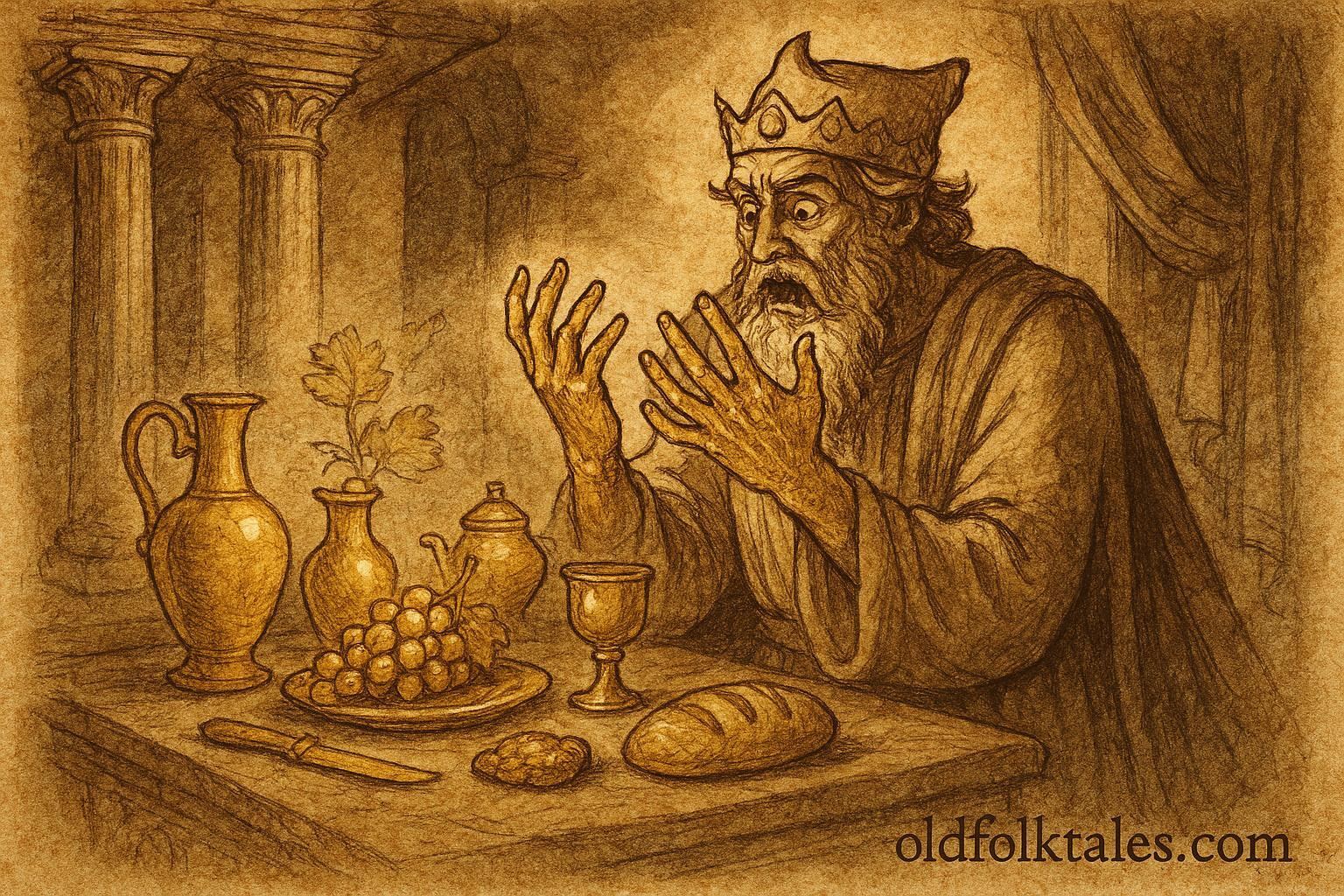
In the sun-baked lands of Phrygia, where rolling hills shimmered beneath wide skies and rivers cut patiently through fertile valleys, there ruled a king whose name would be remembered long after his kingdom faded into dust. His name was Midas, a man of great authority and great appetite, for power, for luxury, and above all, for gold.
Midas was not born cruel, nor was he foolish by nature. He governed his people with fairness and maintained peace within his borders. His halls were orderly, his laws clear, and his armies loyal. Yet within his heart burned an unquiet desire. He measured success not by wisdom or harmony, but by possession. Gold, to Midas, was the highest proof of worth. It gleamed with permanence, promised security, and commanded respect.
His palace reflected this belief. Columns were gilded, vessels shone, and tapestries glittered with golden thread. Merchants traveled far to trade with him, for Midas prized wealth above all gifts. Though he possessed more riches than many kings combined, satisfaction remained just beyond his grasp.
It was said that one evening, as twilight settled over his gardens, servants discovered an old, weary man asleep among the rose bushes. His beard was tangled with leaves, his clothes stained with wine, and his breathing slow but steady. Some would have driven him away, but Midas, curious and cautious, ordered the stranger brought inside.
The man was Silenus, companion and tutor to Dionysus, god of wine, ecstasy, and divine madness. For ten days, Midas treated him as an honored guest, offering food, drink, music, and rest. Silenus spoke freely, telling stories of gods and distant lands, and the king listened with fascination.
On the eleventh day, Dionysus himself appeared, radiant and terrible in equal measure. The air trembled with his presence, and vines curled where his feet touched the ground.
“You have shown kindness to one dear to me,” the god said. “Name your reward.”
Midas did not hesitate.
“Grant me this,” he said eagerly. “That whatever I touch shall turn to gold.”
A silence followed.
Dionysus regarded him carefully, his gaze piercing. “Are you certain?” he asked. “Gifts of gods often carry weight beyond expectation.”
But Midas, blinded by desire, nodded. “I am certain.”
With a slow gesture, Dionysus granted the wish.
At once, Midas felt power surge through him. He reached for a branch, gold. He touched a stone, gold. Even the dust beneath his feet shimmered and hardened. Laughter burst from him, loud and triumphant.
“I am the richest man alive!” he cried.
He returned to his palace in delight, brushing his hands against walls and columns, watching them transform. Servants stared in awe. The very air seemed to glow with promise.
But joy, like gold, is heavy when held too tightly.
When hunger came, Midas reached for bread. It hardened into gold. Wine froze in his cup, glittering and useless. Panic stirred as realization crept in. No matter how carefully he tried to eat, all nourishment turned to metal.
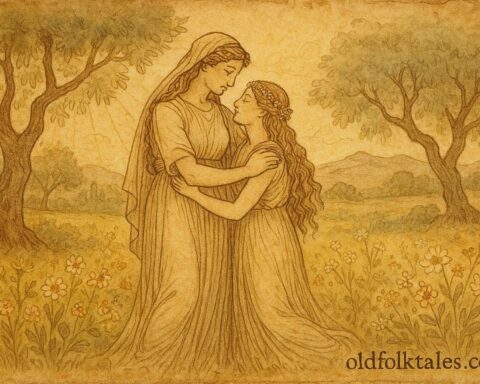
Worse still, when his daughter, his most beloved treasure, ran to greet him, he embraced her without thinking. In an instant, warmth vanished. She stood frozen, transformed into a statue of shining gold.
A cry tore from his throat.
The palace, once radiant, became a prison. Gold surrounded him, beautiful, silent, lifeless. The wealth he had craved mocked him from every surface.
Desperate and broken, Midas fell to his knees and called out to Dionysus.
“Take this gift away!” he pleaded. “I was blind. I did not understand.”
The god appeared once more, his expression stern but not without mercy.
“You have learned,” Dionysus said. “Go now to the river Pactolus. Wash yourself in its waters, and the power will leave you.”
Midas obeyed at once. He plunged into the river, and as he bathed, the golden power flowed from his body into the water, staining its sands forever. When he emerged, his touch was human again.
He returned home and embraced his daughter, flesh restored, life renewed.
From that day forward, Midas turned away from wealth and lived more simply, having learned that desire without restraint leads not to happiness, but to ruin.
Moral Lesson
This myth teaches that unchecked greed blinds wisdom. True wealth lies not in possession, but in balance, love, and moderation. What appears as a blessing may become a curse when desire outweighs understanding.
Knowledge Check
-
Which god grants Midas his wish?
Dionysus, god of wine and divine ecstasy. -
What wish does Midas make?
That everything he touches turns to gold. -
Why does the gift become a curse?
Because it destroys his ability to eat and harms those he loves. -
How is Midas freed from the golden touch?
By washing in the river Pactolus. -
What does the myth criticize?
Greed and excessive desire for wealth. -
What lesson does Midas learn?
True happiness comes from moderation and wisdom.
Source: Ovid, Metamorphoses, c. 8 CE
Cultural Origin: Ancient Greece (Phrygian–Greek tradition)