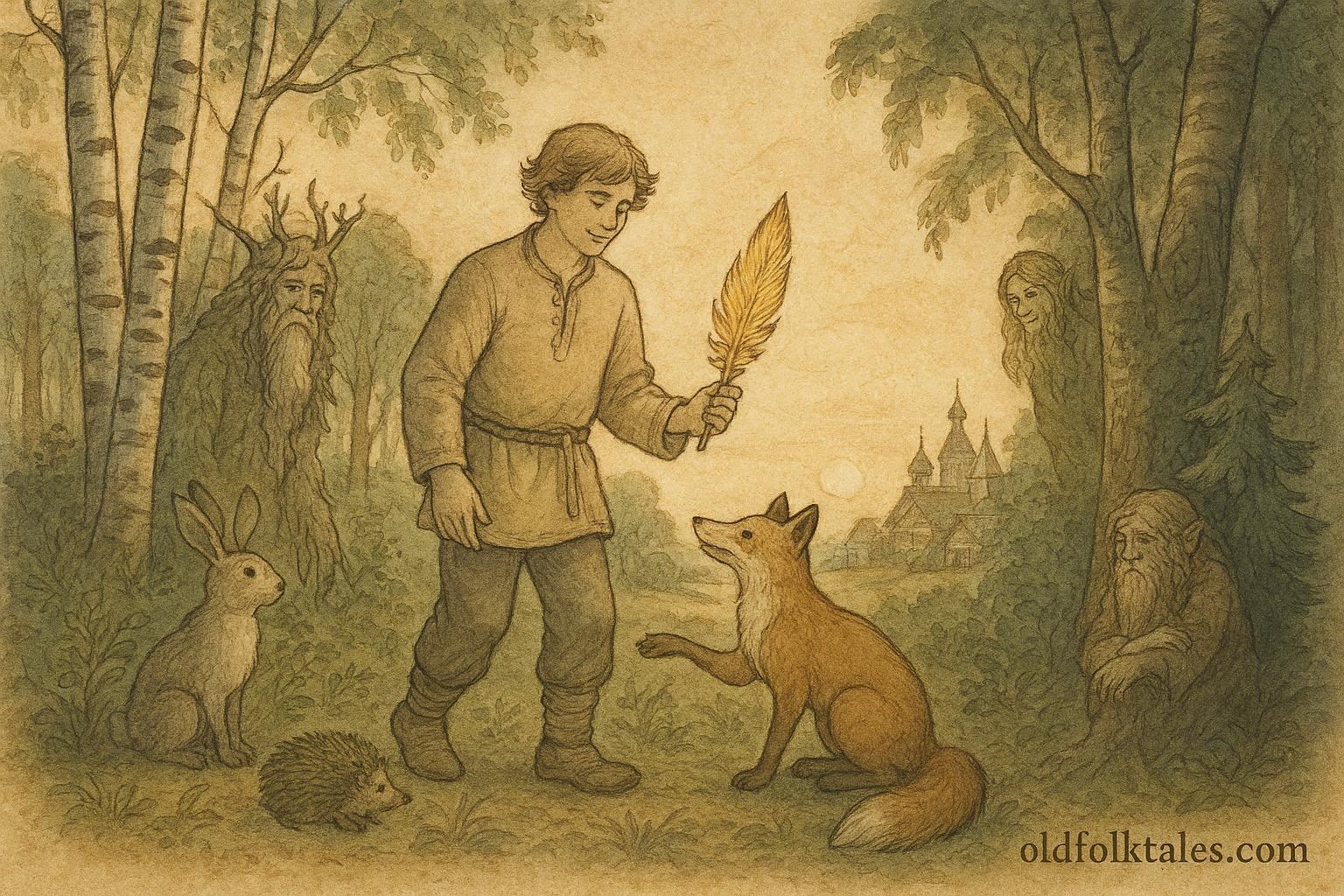
In a quiet village nestled between silver streams and dense birch forests, there lived a peasant family with three sons. The eldest was clever in learning, the second prudent in trade, but the youngest, Ivan, was considered a fool. His hair tumbled untidily over his forehead, his coat was often patched, and his speech carried a slow, measured simplicity. Neighbors whispered at the market and the well: “That boy will never amount to anything.”
Yet those who mocked him did not know that the world often favors hearts untouched by pride.
Ivan’s Place in the Family
From dawn to dusk, Ivan worked alongside his brothers, performing menial chores that even the youngest could manage. He fed the chickens, mended fences, and carried water from the river. He was gentle with animals, patient with children, and generous with any traveler who knocked at the family door.
His brothers, in contrast, schemed and argued. They hoarded small treasures, boasted of clever deals, and mocked Ivan at every opportunity. “You’ll bring ruin on the family yet,” they would say. “Why give your last loaf to a passing beggar? Why speak kindly to strangers? You are a fool, Ivan.”
Ivan would only smile and nod. “Perhaps,” he said, “but we shall see what tomorrow brings.”
The Call to Adventure
One day, the tsar’s herald arrived at the village square. The king sought a suitor for his daughter, the princess, whose beauty was known across the land. A challenge was proclaimed: any man who could perform a series of tasks deemed impossible, or recover a magical item, would earn the princess’s hand. Many attempted the challenge; many failed.
The two elder brothers immediately set off, confident in their cleverness and worldly skill. Ivan, however, was sent last. His mother and father feared for him but did not forbid his journey. His spirit, humble and steady, carried him forward, trusting in fate more than force.
The First Trials
Ivan’s path led him through forests tangled with thorns, across rivers swollen with spring melt, and over hills where wolves and bears roamed. Along the way, Ivan encountered beings and situations that tested his humility, kindness, and patience.
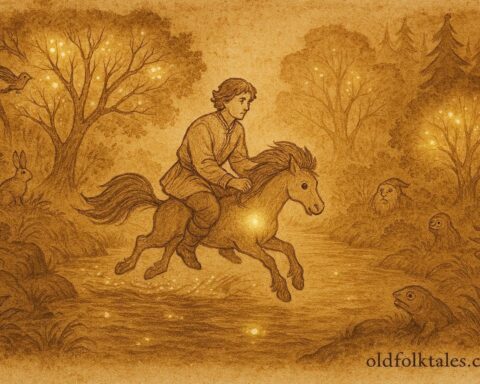
He met a fox caught in a trap, and without hesitation, he freed it. “Run safely,” he whispered. The fox nodded, as if it understood words spoken with sincerity.
A merchant traveling too quickly along the muddy path slipped and spilled his wares. Ivan helped him gather the goods, refusing any coin the man offered. “A blessing is enough,” he said.
At night, Ivan slept under the open sky, listening to the wind in the birch branches, feeling the earth beneath him, and trusting that the world would provide for him.
Encounters With the Supernatural
Many Russian folktales include magical guidance, and Ivan’s was no exception. Deep in the forest, he came upon a hut that moved upon chicken legs. The old woman inside, a witch known to some as Baba Yaga, was feared far and wide. She eyed Ivan with sharp suspicion.
“Why have you come, foolish boy?” she rasped.
Ivan bowed. “I seek only to do what is right and follow the path fate gives me,” he replied.
Baba Yaga tested him with impossible tasks: carrying water in a sieve, sorting seeds in the dark, tending to a fire that refused to burn. Each time, Ivan succeeded, not through strength, but through patience, humility, and cleverness guided by respect.
At last, the witch nodded. “You are not clever in the ways men measure, yet you are clever in the ways that matter,” she said, gifting him a small token: a magical whistle that would summon aid in the most desperate of times.
The Elder Brothers’ Downfall
Meanwhile, Ivan’s elder brothers, relying on speed, pride, and cunning, faced the same trials. They demanded the assistance of others, cheated where they could, and mocked the forest’s creatures. In every attempt, their arrogance and impatience led to failure. They became lost, caught in snares, or ensnared by spells they could not undo.
Ivan’s journey, by contrast, moved steadily forward. His humility allowed the forest itself, and the creatures within, to assist him when the need was greatest.
The Heroic Feat
Eventually, Ivan reached the tsar’s palace. The final challenge awaited: to retrieve the golden feather of a magical bird that nested atop a perilous cliff. Many brave men had tried and failed, falling to rocks or swept away by wind.
Ivan did not rush. He approached the cliff quietly, calling upon every act of kindness he had done along his journey. The fox returned, guiding him along hidden paths; the freed merchant offered safe passage across a turbulent river; the birds he had protected fluttered close, warning him of loose stones.
At last, Ivan reached the nest and retrieved the feather. The wind howled, but he descended safely, feather in hand.
Triumph Through Humility
The tsar, astonished by Ivan’s success, welcomed him into the court. His elder brothers arrived soon after, bruised, ashamed, and humiliated. The tsar granted Ivan his bride, the princess, and bestowed wealth and lands upon him. Ivan, however, did not boast. He treated his new role with care, continuing to show kindness and humility to all.
In the village, stories spread of Ivan the Fool, who was wise because he remained simple, generous, and faithful to fate. The villagers no longer laughed at his simplicity, for it had brought prosperity and honor.
Lessons Along the Way
Ivan’s story endures because it is more than a tale of luck. It demonstrates the power of moral virtue in a world that often prizes cleverness and force. The journey shows that kindness is never wasted, humility can unlock doors that pride cannot, and even the simplest heart may change the course of destiny.
In Russian tradition, the tale of Ivan the Fool emphasizes that the world itself rewards honesty, generosity, and courage that is quiet rather than boastful.
Moral Lesson
True wisdom often appears foolish to those blinded by pride or greed. Humility, kindness, and trust in fate can triumph over cleverness rooted in arrogance. Fortune and happiness favor those who act with sincerity rather than show.
Knowledge Check
-
Why is Ivan called “the Fool”?
Because he is perceived as simple-minded and naive by his family and neighbors. -
What traits help Ivan succeed?
Humility, kindness, patience, and trust in fate. -
How do animals and magical beings assist Ivan?
They repay acts of kindness and guide him through impossible tasks. -
Why do Ivan’s elder brothers fail?
Arrogance, impatience, and reliance on cleverness without virtue. -
What is the central theme of the story?
True wisdom and virtue can triumph over pride and superficial cleverness. -
What does Ivan’s success teach about social hierarchy?
That even the lowly or mocked can achieve greatness when guided by moral virtue.
Source: Traditional Russian folktales, collected in the 19th century by Alexander Afanasyev and others, mid-19th century
Cultural Origin: Russian peasant storytelling tradition