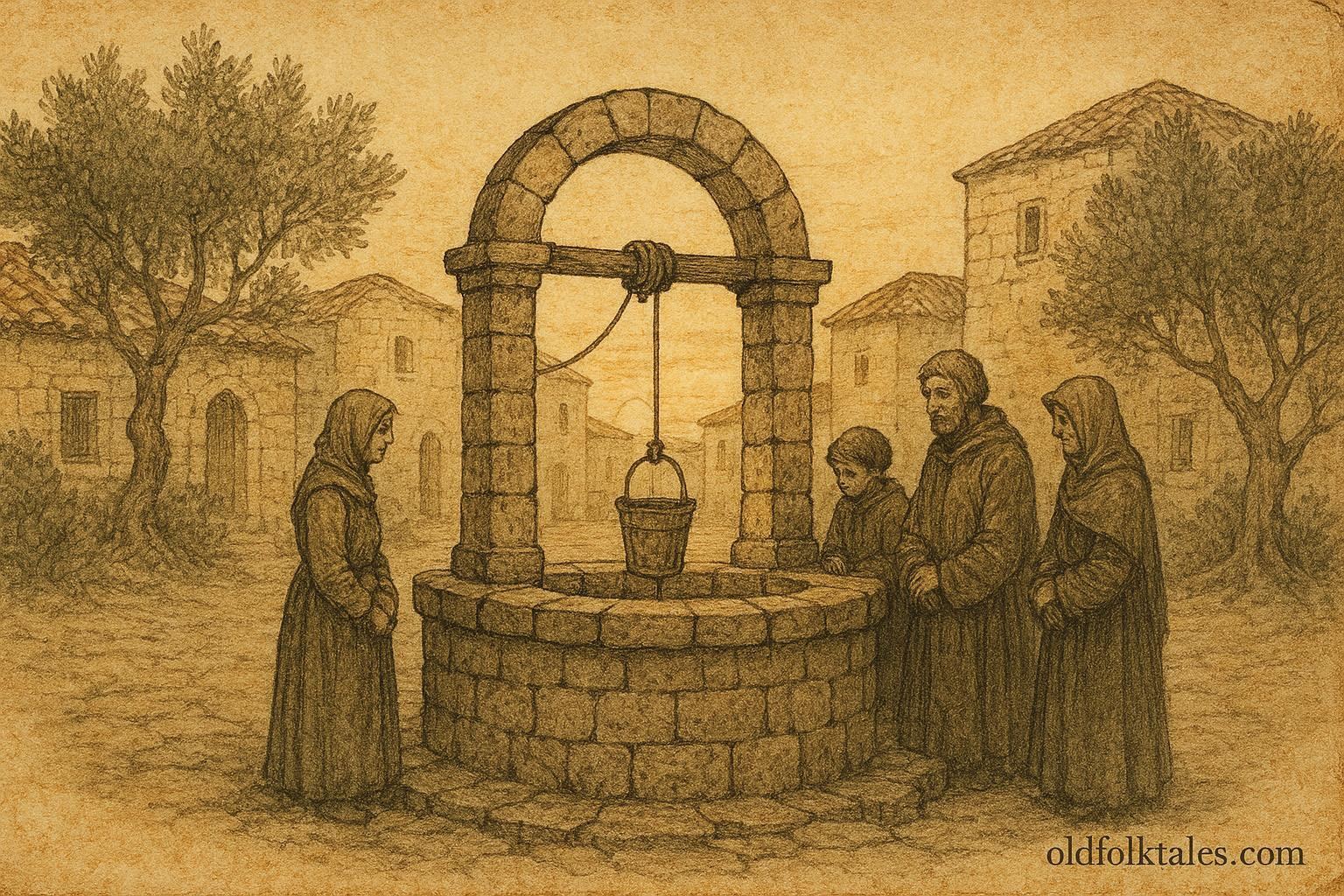
Long before roads were paved and church bells measured the hours, there stood a village in the heart of Malta where stone houses clung together as if for warmth, and life revolved around a single well. This well, cut deep into limestone and rimmed with centuries of rope marks, was older than memory itself. It was said that the first villagers dug it with bare hands, guided by prayer and desperation, trusting that water, like truth, would rise if sought with sincerity.
The well stood in a small square between olive trees and a modest chapel. Its stones were smooth and pale, worn by generations of palms. Women gathered there at dawn, lowering buckets into its cool darkness. Children played nearby, their laughter echoing against the stone walls. Men paused there at sunset, washing dust from their hands before returning home. To all appearances, it was an ordinary well.
Discover the moral heart and wild spirit of the north through timeless Nordic storytelling
But the elders knew otherwise.
They whispered that the well listened.
Not to idle chatter or careless words, but to the weight beneath a question, the honesty in a heart, the intent behind a voice. They said the well answered only those who spoke truthfully, and only when the question was asked with humility. To lie before it was useless. To mock it was dangerous.
At first, the well’s voice revealed itself quietly. A farmer who had lost his mule asked, with genuine sorrow and no accusation, where the animal had gone. From the depths came a low, steady voice, neither male nor female, telling him the mule had wandered toward the dry valley beyond the fig groves. The farmer found it there, alive but trapped.
A mother, grieving the loss of a silver brooch passed down from her own mother, asked the well if it had been stolen. The voice replied that the brooch lay beneath her own hearthstone, where it had fallen unnoticed. She returned home and found it exactly so.
Word spread.
Soon, people came not just with lost items, but with doubts and suspicions. A man asked whether his neighbor had cheated him in a land deal. A woman asked if her husband’s long hours away were honest labor or secret betrayal. Each time, the well answered, but only when the questioner spoke plainly, without twisting the truth or hiding selfish intent.
The village prospered in those days. Theft declined. Lies were fewer. People measured their words carefully, knowing that truth carried weight. The well, it seemed, was not merely a source of water, but a mirror held up to the community itself.
Yet human nature bends easily toward temptation.
As months passed, some villagers began to see the well not as a guide, but as a tool. They learned that questions shaped carefully, truthful in words but selfish in spirit, could still draw answers. A merchant asked whether a rival would fail in business, not out of concern but to profit from it. A young man asked whether his inheritance would come sooner than expected. A group of villagers gathered to ask questions for amusement, daring one another to test the well’s patience.
The answers grew shorter. The voice, once steady, became distant.
An old woman named Marija, who had lived her entire life beside the square, warned them. She had been a child when her grandmother first told her the story of the well, that it was bound by a covenant with the people, sustained by collective honesty. “Truth is not entertainment,” she said. “And blessings are not endless.”
They laughed at her.
The breaking point came during a year of drought. Crops failed, tempers flared, and suspicion returned to the village like a sickness. One night, several villagers gathered in secret. They planned to use the well to expose every hidden wrongdoing, to name names, to shame and punish.
At dawn, they crowded around the well. One by one, they asked questions, not to restore harmony, but to accuse. Voices overlapped. Accusations were framed as inquiries. Truth was demanded without respect.
Silence followed.
The bucket descended. It struck water as always, but when they called out, the well did not answer. They tried again. Louder. Angrier.
Nothing.
Days passed. The well still gave water, but never again a word. No matter how humbly one asked. No matter how honestly.
The village was forced to face itself without the well’s guidance. Disputes had to be settled by conversation. Lost items were found, or not, through patience. Trust had to be rebuilt without supernatural certainty.
Only then did they understand.
The well had not gone silent out of cruelty, but out of balance. It had spoken when truth served the community. It fell silent when truth became a weapon.
And so, Il-Bir li Jkellem became Il-Bir li Jiskot, the well that listens, but no longer speaks.
Explore the warmth and wit of Mediterranean storytelling, where love and wisdom intertwine
Moral Lesson
Truth is a gift meant to heal, not to control. When honesty is abused for gain or cruelty, even the greatest blessings may withdraw. A community survives not by uncovering every secret, but by using truth with restraint, humility, and care.
Knowledge Check
1. What is the role of the speaking well in Maltese folklore?
The speaking well serves as a supernatural symbol of truth, rewarding honesty and humility while punishing exploitation.
2. Why does the well eventually fall silent?
The well stops speaking because villagers abuse its power, using truth to accuse, profit, and harm others.
3. What cultural values does the well represent?
It reflects Maltese values of community responsibility, moral restraint, and respect for shared blessings.
4. Is Il-Bir li Jkellem a warning or a moral guide?
It is both, a guide when respected, and a warning against greed and misuse of truth.
5. How does the story emphasize collective responsibility?
The well’s silence affects everyone, showing that community actions have shared consequences.
6. Where does this folktale originate?
The story originates from central Maltese village folklore, documented in modern folklore collections.
Source: From Folklore of the Maltese Islands by Ġorġ Mifsud Chircop (1996)
Cultural Origin: Central Maltese villages, Malta