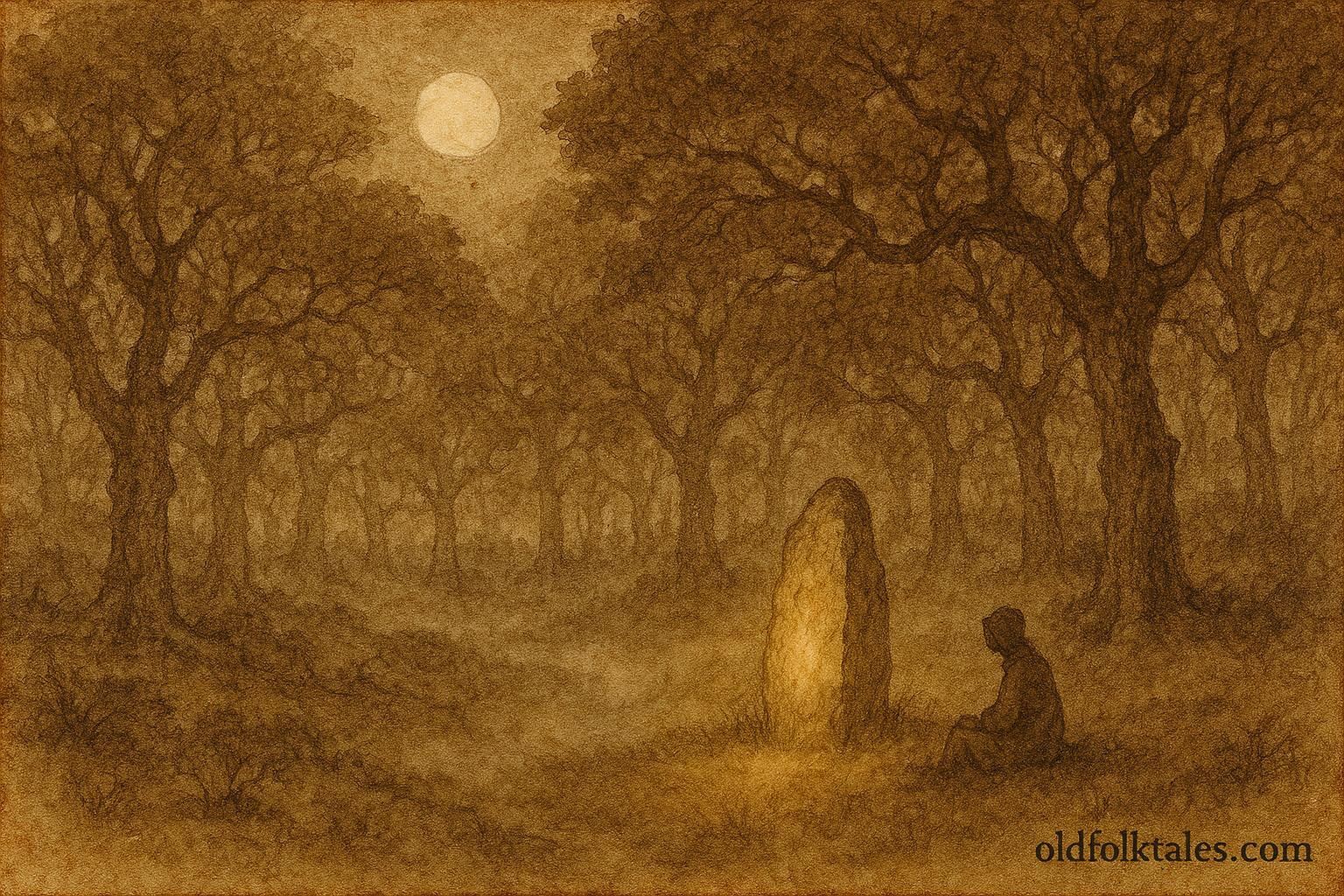
High in the mist-wrapped hills of Sintra, where ancient forests cling to stone and moonlight settles softly on moss and granite, there lies a solitary rock unlike any other. It stands apart from paths and dwellings, half-hidden among cork oaks and wild ferns, as though placed deliberately by unseen hands. By day it appears ordinary, weathered, silent, and unmoving. But when night falls and the world grows still, the people of Sintra say the stone begins to speak.
This belief is old, older than the palaces that crown the hills and older than the roads winding up from the lowlands. Shepherds, woodcutters, and monks once passed near the stone at dusk and warned one another not to linger unless their hearts were calm and their intentions pure. For the stone, they said, does not answer every voice, only those who know how to listen.
Long ago, in a small settlement at the forest’s edge, lived a man named Tomé. He was neither poor nor wealthy, but restless of spirit. He asked questions constantly, of neighbors, of priests, of travelers passing through Sintra on their way to Lisbon. Yet no answer ever satisfied him. He sought certainty, quick truth, and clear direction, and grew impatient when wisdom came slowly or wrapped in silence.
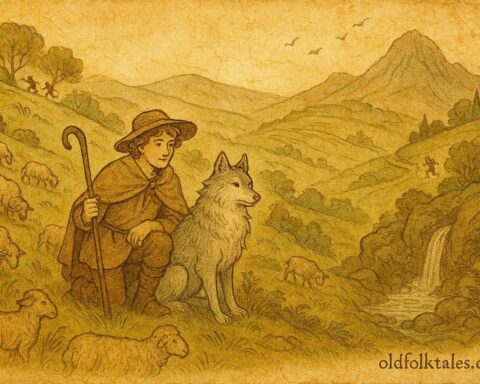
One winter evening, Tomé heard an old shepherd speak of the stone that whispered truths at night.
“It does not shout,” the shepherd warned, his voice low. “It does not explain itself. It speaks only when it chooses, and only to those who wait.”
Tomé felt a spark of excitement. Here, at last, was something that promised answers without effort, knowledge drawn directly from the land itself. That very night, as fog drifted through the hills, he wrapped himself in a cloak and set out toward the forest.
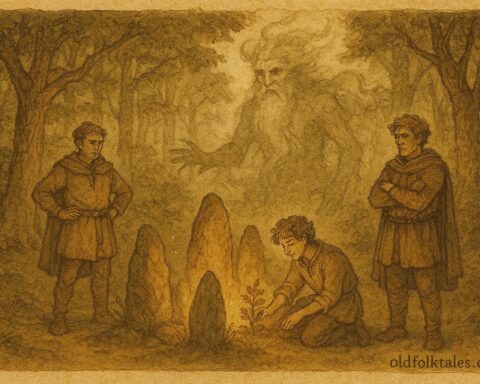
The path grew narrow as he climbed. Roots crossed the ground like twisted veins, and the air smelled of damp earth and leaves. When he reached the clearing, the stone stood before him, pale in the moonlight, its surface etched with cracks like age-old scars.
Tomé waited.
At first, there was only silence, the rustle of branches, the distant call of an owl. He leaned closer and pressed his ear to the stone.
“Speak,” he said. “Tell me what I wish to know.”
The stone remained still.
Growing irritated, Tomé demanded answers. He asked of fortune, of hidden truths, of the future that seemed always just beyond his grasp. His voice rose, sharp and impatient, cutting through the night.
Then the ground beneath him shifted.
A sudden pain struck his head as he stumbled backward, falling against the roots of a tree. Dazed and frightened, Tomé fled the clearing, convinced the stone had cursed him. By morning, word spread of his misfortune, and villagers nodded grimly. He had not listened. He had demanded.
Seasons passed, and Tomé’s life did not improve. His impatience followed him everywhere. He spoke too quickly, judged too harshly, and learned too little. The memory of the stone haunted him, not with fear, but with the sense of a door closed by his own hand.
Years later, an old woman named Inês made her way into the hills. She was known in the village for her quiet manner and thoughtful silences. When others argued, she listened. When questions were asked, she answered only after reflection.
On a spring night, guided by nothing more than curiosity and respect, Inês approached the stone. She did not touch it. She did not speak. She simply sat nearby, breathing with the forest, allowing the night to unfold.
Hours passed.
At last, a whisper rose, not loud, not clear, but gentle, like wind brushing stone.
Inês did not strain to understand. She let the sound pass through her, steady and calm. When she returned home at dawn, she carried no prophecy, no spoken secret. Yet her words afterward were wiser, her judgments kinder, her understanding deeper.
Those who sought her counsel found clarity, not because she claimed knowledge, but because she listened as the stone had taught her to do.
And so the people of Sintra say the stone still speaks, though few hear it. It does not answer questions shouted into the dark. It offers no truth to those who demand certainty. Instead, it teaches what the hills have always known: wisdom belongs to those who wait.
Moral Lesson
True wisdom is not taken by force or impatience; it is received through stillness, humility, and the art of listening.
Knowledge Check
1. Where is the Talking Stone located?
In the forested hills of Sintra, Portugal.
2. When does the stone whisper truths?
At night, when the surroundings are quiet and still.
3. Why does Tomé fail to receive wisdom?
Because he demands answers instead of listening patiently.
4. How does Inês approach the stone differently?
She waits silently without expectations or demands.
5. What does the stone symbolize in Portuguese folklore?
Sacred knowledge rooted in the land and revealed through humility.
6. What lesson does the stone teach the community?
That patience and listening lead to understanding, while impatience brings misfortune.
Source: Portuguese oral legends, ethnographic folklore notes, c. 1890
Cultural Origin: Sintra region, Portugal