In a small Russian village, where the wooden houses leaned against the forest edge and the fields stretched green as far as the eye could see, lived a boy named Ivan. He was a simple peasant, unremarkable to the villagers in appearance or skill. Yet in Ivan’s heart was a quiet bravery, a willingness to act where others hesitated. And in a twist of fate, it would be that very simplicity that guided him to extraordinary adventures.
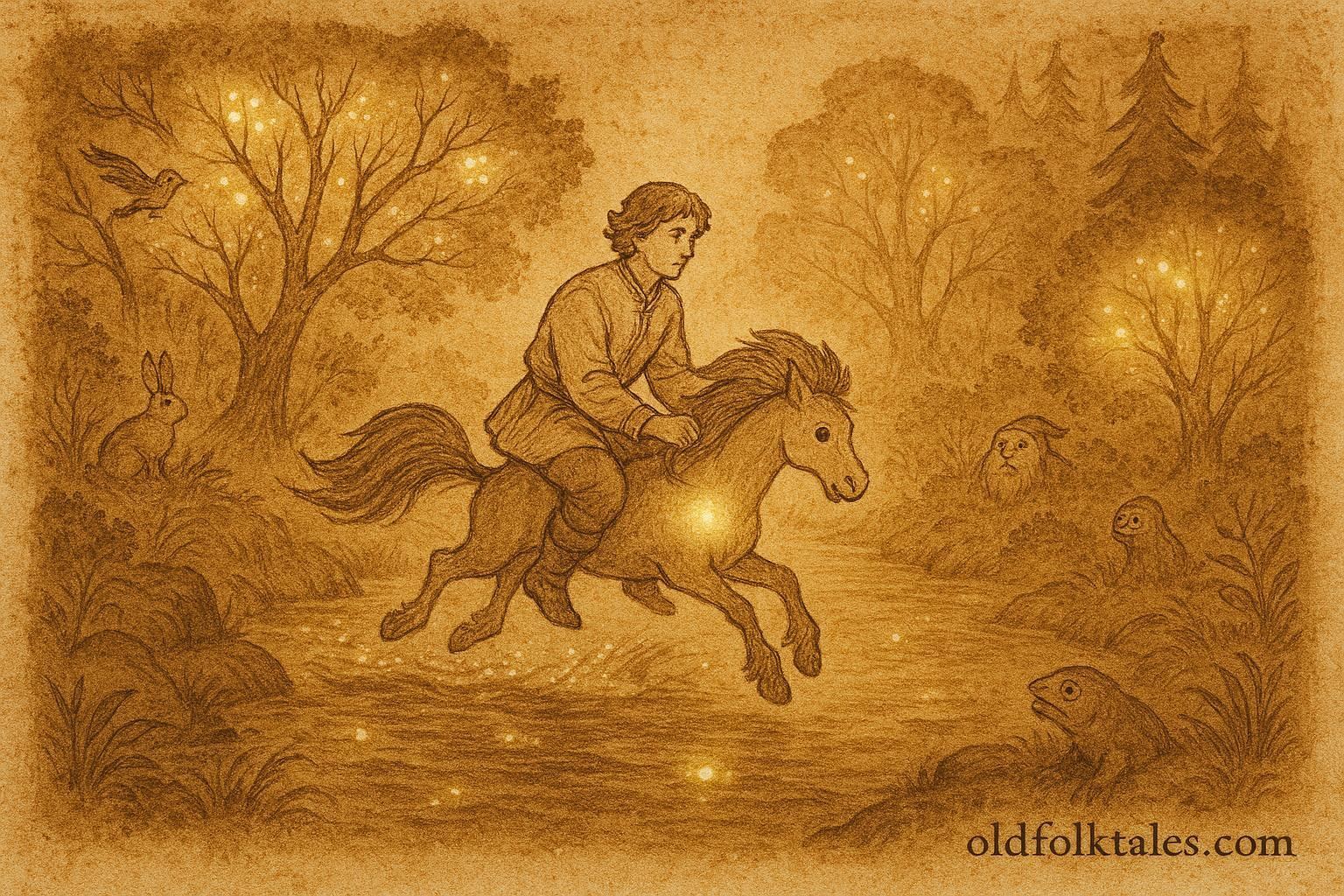
One day, while wandering near a meadow by a forest, Ivan spotted a curious horse. Not an ordinary horse, for it was small and humpbacked, with a coat glimmering like morning dew. Its eyes were intelligent, almost human, gleaming with mischief and knowing. Ivan approached cautiously, but the horse bowed its head in greeting.
“I am yours, Ivan,” it seemed to say, “and I will help you in ways no one could imagine.”
Thus began the remarkable bond between the boy and his magical companion, the little humpbacked horse.
The first test came swiftly. Ivan’s father, a stern man with little patience for idleness, ordered him to perform a task seemingly impossible: to catch a golden stag in the forest, an animal rumored to vanish at the slightest hint of human pursuit. Others had tried for years, but no one succeeded.
Guided by his magical friend, Ivan moved silently through the undergrowth. The little horse whispered directions, its small hooves clicking softly against mossy ground. When Ivan attempted a shortcut or acted hastily, the horse stopped him with a gentle nudge. By evening, with cunning patience, Ivan trapped the golden stag in a hidden glade, and the villagers were astonished.
News of his feat reached the court, where a grand princess had been sought for a worthy suitor. But before Ivan could even dream of such matters, he faced greater challenges. The king demanded that anyone who wished to marry the princess must complete trials of strength and intelligence—tasks designed to thwart even the cleverest of men.
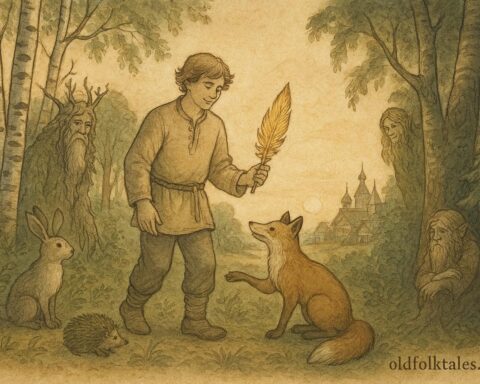
The first challenge was to bring back a rare, magical feather from the Firebird, a creature of such dazzling light that those who looked upon it too long were blinded by wonder. Ivan mounted his little humpbacked horse, who galloped with magical speed. The forest blurred past, rivers leapt beneath them as if the horse commanded nature itself. When the Firebird perched atop the tallest pine, Ivan remained calm. The horse whispered, “Wait for the right moment.” At the perfect instant, Ivan plucked a single feather without disturbing the bird.
The second challenge was more dangerous: retrieve water from a hidden mountain spring guarded by an enchanted serpent. Many knights had failed before, turned back by the beast’s venomous gaze. But Ivan’s horse guided him cleverly. Together, they created a distraction: the little horse leapt and twirled in dazzling patterns, confusing the serpent while Ivan filled a vessel with the crystalline water. Not a drop spilled.
With each task, Ivan’s fame grew. Jealous suitors whispered, “No boy, no peasant, should triumph over the court’s chosen nobles.” But Ivan, humble and determined, relied not on brute strength but on friendship, cunning, and the magical guidance of his small companion. The princess herself, hearing of the boy who completed these impossible trials, was intrigued by his courage and wisdom.
Yet the final trial was the most perilous. A cunning rival, hoping to end Ivan’s journey, plotted treachery. He secretly instructed the king to demand Ivan bring the magical treasure of the distant underworld, a hoard of gold and jewels guarded by spirits and riddled with dangerous enchantments. Many men had ventured into the underworld, never to return.
But Ivan was not alone. The little humpbacked horse carried him across rivers that burned like molten silver, over mountains that cracked beneath moonlight, and through forests that whispered warnings in ancient tongues. When spirits appeared to bar his way, Ivan spoke calmly, listening to their riddles and answering with honesty and cleverness. The spirits, impressed by his courage and heart, allowed him to pass.
Finally, Ivan returned, carrying the treasure and completing every trial set before him. The court erupted in astonishment. The princess smiled warmly, recognizing that his achievements were not born of wealth or privilege, but of loyalty, bravery, and an unshakeable bond with his magical friend.
But the story does not end in mere triumph. Ivan’s tale became legend because of the lessons it carried: that true friendship can overcome insurmountable obstacles, that intelligence and patience often triumph over force, and that destiny rewards those who act with courage tempered by wisdom.
As for the little humpbacked horse, it remained Ivan’s faithful companion, a reminder that magic often resides not in grand weapons or titles, but in small, unexpected allies who see the world with insight beyond human eyes.
Moral Lesson
The Little Humpbacked Horse teaches that loyalty, cleverness, and humility are as powerful as strength and fortune. True success comes not from arrogance or brute force but from courage, wisdom, and the steadfast friendship of those who guide and support us.
Knowledge Check
1. Who is the protagonist of the story?
Ivan, a humble peasant boy whose courage and cleverness carry him through extraordinary challenges.
2. What magical companion aids Ivan?
A small, humpbacked horse with intelligence, magical abilities, and insight to guide him through perils.
3. What types of trials must Ivan complete?
He must capture magical creatures, retrieve enchanted objects, and survive dangerous encounters requiring wit and bravery.
4. What is the main theme of the folktale?
Friendship, loyalty, cleverness over brute strength, and perseverance through adversity.
5. How does the story reflect Russian folklore?
It features magical helpers, heroic quests, enchanted creatures, and moral lessons rooted in 19th-century Russian oral tradition.
6. What is the ultimate reward for Ivan?
The hand of the princess, recognition of his courage, and triumph over jealous rivals, all achieved through skill and wisdom, not social status.
Source: Written by Pyotr Yershov, 1834.
Cultural Origin: Russian folklore, 19th century.