In the stony heart of Bosnia and Herzegovina, where steep mountains cradle deep river valleys, the emerald waters of the Neretva carve their way through the ancient town of Mostar. For centuries, the river has divided and connected, nourished and threatened, shaped both land and life. Across its current rises a great stone bridge, arched, elegant, and enduring.
But in the songs of Herzegovinian oral tradition, recorded in the 1930s by Milman Parry and Albert Lord, there lives a legend about its making. It is not merely the story of stone and mortar.
It is the story of a choice.
The River That Divided the Town
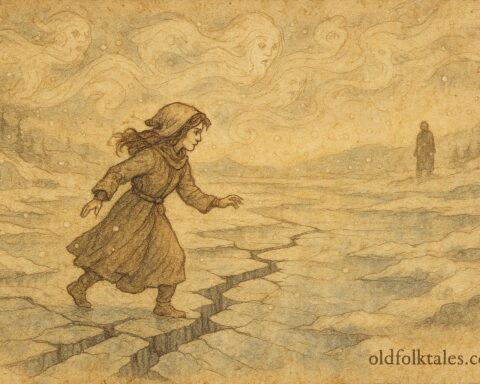
Before the bridge stood, the Neretva was both blessing and barrier. In spring, it swelled with mountain meltwater, roaring between cliffs. In winter, icy winds swept down its banks. Boats could cross, but not safely in every season. Lives were risked. Trade was hindered.
The people of Mostar longed for permanence, a crossing that would stand firm against flood and storm.
So they resolved to build a bridge of stone.
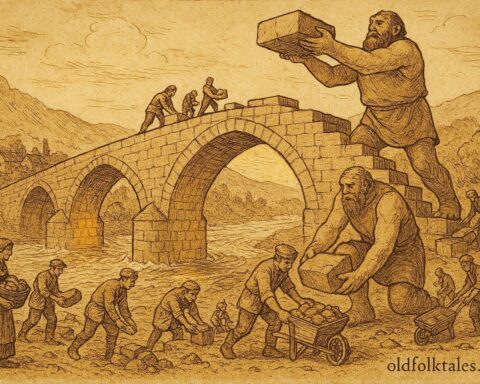
Master masons were summoned. Workers gathered from surrounding villages. Blocks of pale limestone were quarried and hauled to the river’s edge.
The foundations were laid.
But the Neretva did not yield easily.
The Bridge That Would Not Stand
Each time the workers raised a section of the arch, disaster followed.
One night, stones shifted and collapsed into the current.
Another week, scaffolding buckled without wind.
Whispers spread quickly among the laborers.
“The river resists us.”
“There is a spirit beneath these waters.”
Old men recalled ancient tales: rivers are alive. They guard their depths. To build upon them requires acknowledgment, perhaps even sacrifice.
Fear seeped into the workforce.
What if the river demanded blood?
The Murmur of Sacrifice
In nearby villages, legends were told of bridges secured by human offering, of walls strengthened by lives sealed within stone. The idea was not unfamiliar to Balkan folklore. Fear lends power to such stories.
Soon, the suggestion arose openly.
“If the river spirit is angered,” one man said, “it must be appeased.”
The implication was clear.
A life for a bridge.
The proposal unsettled many, yet none spoke boldly against it. Superstition thrives where uncertainty grows.
All eyes turned toward the master masons.
Among them was a young builder, skilled, observant, and devoted to his craft.
He had spent years learning the balance of stone, the patience of mortar, the art of the arch.
He listened as older men debated sacrifice.
And he felt something stronger than fear rise within him.
Conviction.
The Young Mason’s Stand
“We will not spill blood for stone,” he said quietly.
Some scoffed.
“Then how will the bridge stand?”
He answered not with argument, but with action.
He examined the foundations again, carefully this time. He studied the river’s flow, the pressure against the supports, the weaknesses in alignment.
He noticed that haste had guided earlier attempts. Measurements were rushed. Stones imperfectly shaped. Mortar insufficiently cured before weight was added.
“The river is not angry,” he said at last. “It is strong. We must be stronger, not through sacrifice, but through skill.”
The words carried risk.
To oppose superstition publicly was to challenge generations of belief.
Yet he stood firm.
Craft Over Fear
Work resumed under his guidance.
The foundation stones were reset, deeper and more carefully anchored. Each block was shaped precisely to lock with its neighbor. Mortar was allowed to settle fully before the next layer rose.
The young mason insisted on patience.
“Let the arch grow slowly,” he told them. “Stone honors balance.”
Days turned into weeks.
The river roared beneath the scaffolding, but the structure held.
When storms came, the workers watched anxiously from the banks.
The arch did not fall.
When floodwaters swelled, pressing against the pillars, the stones did not shift.
Confidence replaced dread.
The men who once whispered of sacrifice now spoke of technique and endurance.
The Bridge Stands
At last, the final keystone was set.
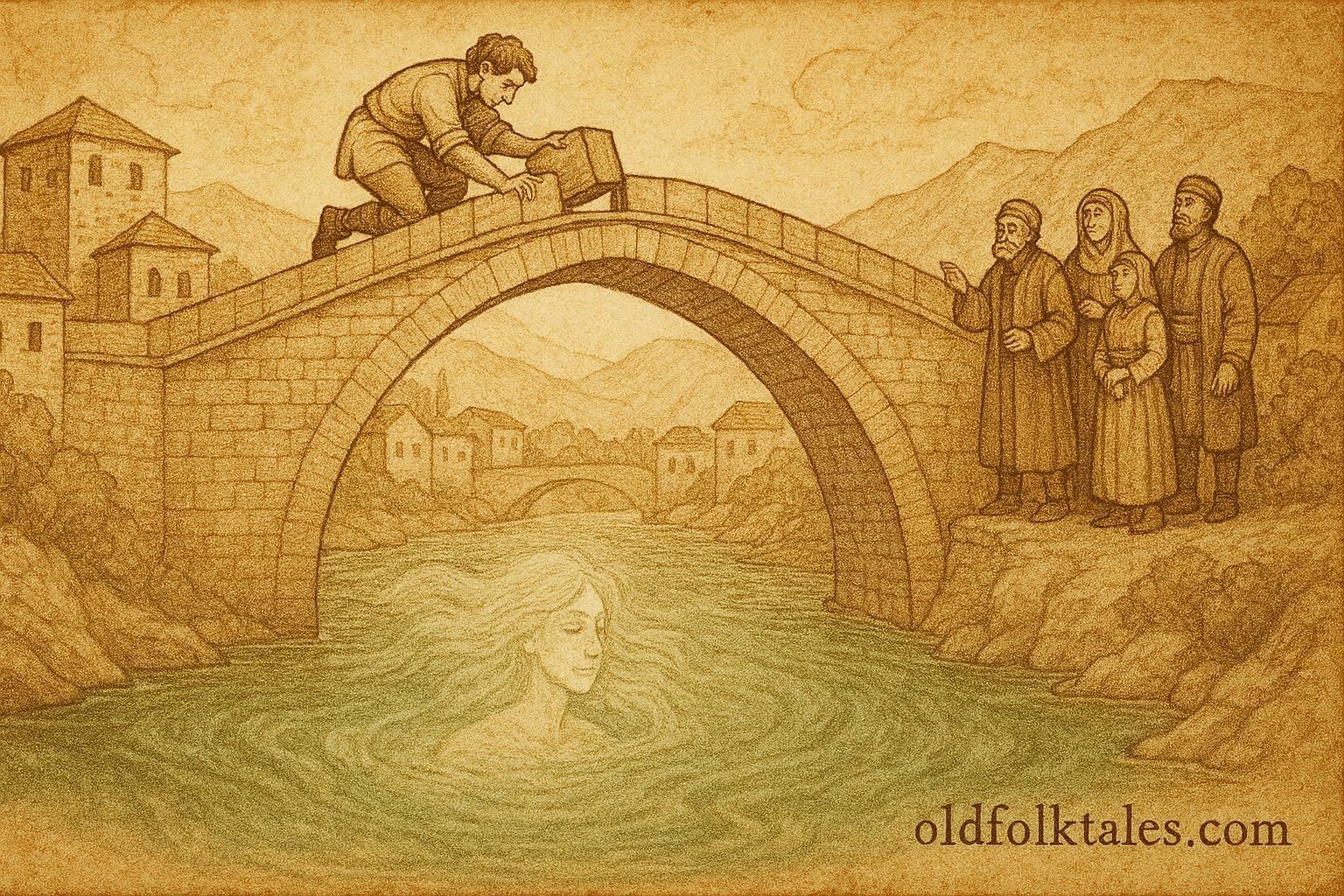
The arch stretched gracefully from one bank to the other, a single curve of pale stone above green water.
The people gathered.
Some waited for collapse.
None came.
The bridge stood firm against wind, against current, against time.
The river flowed beneath it, not defeated, but respected.
The young mason did not claim glory. He merely placed his tools aside and stepped back.
The village understood.
It was not blood that secured the bridge.
It was unity, devotion, and craftsmanship.
The Meaning of the Bridge
In the Herzegovinian oral epic tradition, bridges symbolize connection, not only between shores, but between people.
The river spirit in this legend reflects fear of the unknown. The call for sacrifice represents the temptation to solve uncertainty through violence or superstition.
The young mason embodies moral courage.
He does not deny the river’s power. He studies it. He respects it. He responds with skill rather than fear.
Thus, the bridge becomes more than stone.
It becomes proof that unity and conviction can overcome inherited dread.
Moral Lesson
The Bridge Builder of Mostar teaches that courage guided by wisdom triumphs over superstition. Fear may demand sacrifice, but faith in skill, patience, and unity builds what endures.
Knowledge Check
1. Where does this folktale originate?
Herzegovina and Bosnia, within South Slavic oral epic tradition.
2. What problem do the builders face?
The bridge repeatedly collapses, leading to fears of a river spirit’s anger.
3. What solution do some villagers propose?
Human sacrifice to appease the spirit.
4. How does the young mason respond?
He rejects bloodshed and relies on craftsmanship and careful engineering.
5. What theme defines the legend?
Courage over superstition and unity over fear.
6. Who recorded South Slavic oral epics in the 1930s?
Milman Parry and Albert Lord.
Source: South Slavic oral epic recordings collected by Milman Parry & Albert Lord (1930s).
Cultural Origin: Herzegovinian/Bosnian oral epic tradition.