High above the city of Zagreb, on the wooded slopes of Medvednica Mountain, stand the weathered ruins of Medvedgrad. Built of pale stone and overlooking the plains below, the fortress has watched centuries pass, wars, kingdoms, and quiet seasons of snow. But long after its walls fell silent, a legend lingered. It is the story of the Black Queen, a ruler remembered not for mercy, but for pride.
This tale, told in the Zagreb region and recorded in 19th-century Croatian historical-folklore writings, warns that no throne stands higher than justice.
Discover Polish, Russian, Ukrainian, and Belarusian folktales where magic and morality meet
The Fortress Above the City
In earlier centuries, Medvedgrad stood strong and imposing. Its towers commanded the valleys. Its gates guarded the mountain passes. From its ramparts, rulers could look down upon villages, fields, and roads winding toward Zagreb.
Within these walls, it is said, lived the Black Queen.
She was called “black” not for her garments alone, though she favored dark velvet and heavy jewels, but for the severity of her rule.
She possessed beauty, intelligence, and wealth. Yet none of these were tempered by compassion.
And that was her downfall.
A Ruler Without Mercy
The Black Queen demanded obedience without question.
Taxes were increased beyond fairness. Peasants climbing the mountain path brought grain and livestock, leaving with little for their own families. Servants moved silently through cold stone halls, fearful of displeasing her.
Punishments were swift.
A careless word might lead to imprisonment. A disputed debt could result in confiscation. Stories spread of harsh judgments delivered from the great hall, where candles flickered against the fortress walls.
The Queen believed fear ensured loyalty.
But fear only ensured silence.
Pride in Stone
From the highest tower, the Black Queen would gaze toward Zagreb and the surrounding lands. She believed no power could rival her authority. The fortress walls seemed eternal. The mountain beneath her felt immovable.
When advisors cautioned moderation, she dismissed them.
“When you stand above all,” she said, “you answer to no one.”
It was a dangerous thought.
For mountains may seem eternal, but they are shaped by forces unseen.
Whispers of Warning
Villagers below began to speak in hushed tones. They did not call openly for rebellion; the Queen’s reach was long. Instead, they prayed quietly for relief.
Storms gathered often around Medvednica in those days. Thunder rolled across the ridge. Lightning struck near the fortress towers.
Some said it was coincidence.
Others said it was warning.
Within the fortress, unease grew. Servants whispered of strange sounds in the corridors at night. The Queen dismissed such talk as superstition.
She trusted stone more than conscience.
The Fall
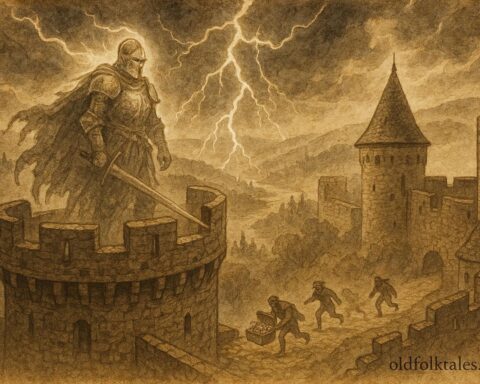
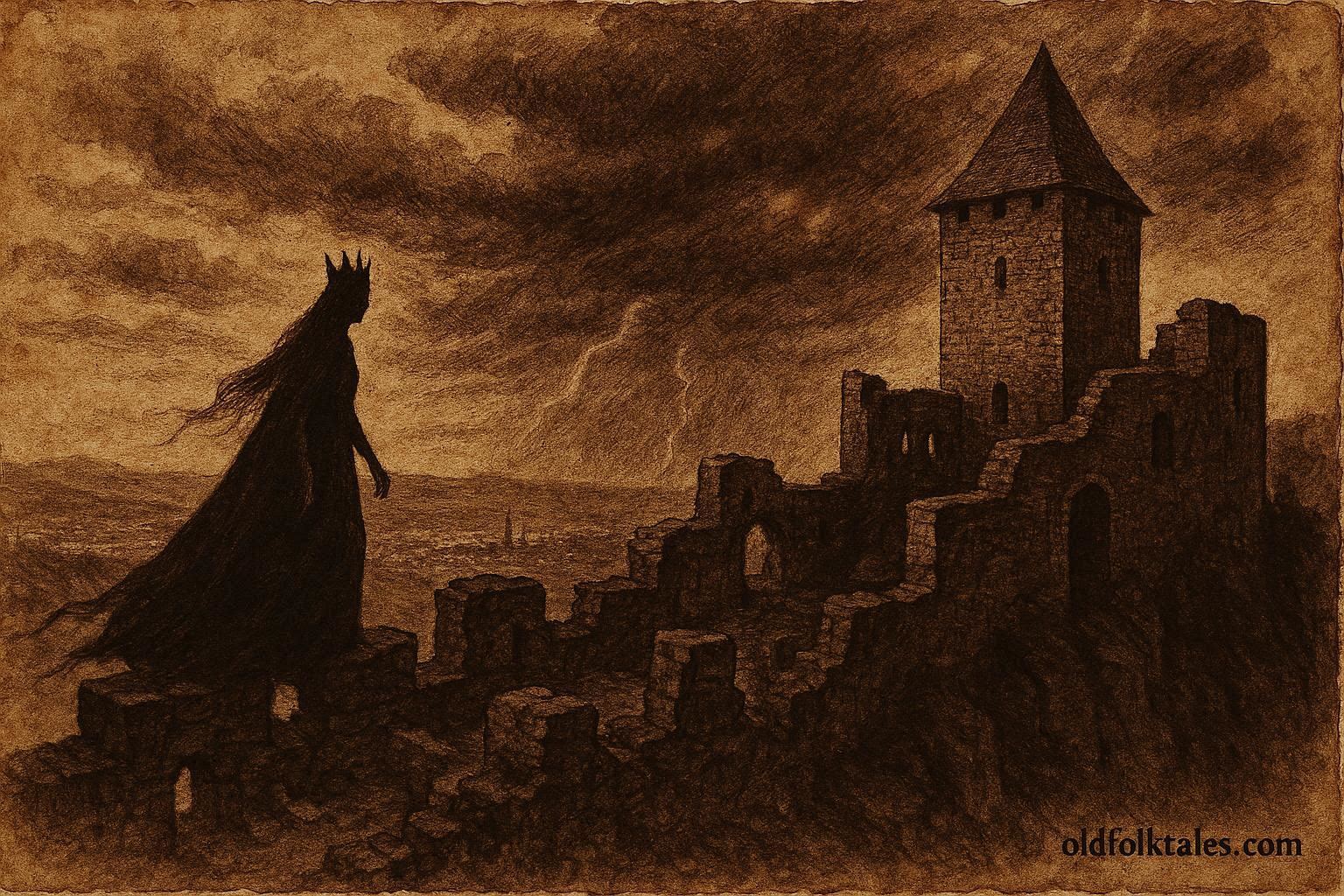
One evening, as a fierce storm swept across the mountain, the Queen stood again at her high tower.
Wind tore at her dark cloak. Rain lashed the battlements.
Lightning struck close—so close that the fortress walls trembled.
Whether by divine judgment, fate, or the simple consequence of time and storm, the fortress suffered great damage that night. Parts of the stronghold crumbled. Fire broke out in lower chambers. Chaos spread where rigid order had once prevailed.
The Black Queen’s power fractured as swiftly as stone under lightning.
Legends differ in detail: some say she perished in the storm; others say she fled and was never seen again.
But all agree on one thing.
Her reign ended suddenly.
And not by her own command.
The Restless Spirit
After the fortress fell into ruin, villagers avoided the mountain at dusk.
Travelers spoke of a shadowy figure moving along broken walls.
On quiet nights, when wind slips through empty archways, some claim to hear footsteps on ancient stone.
They say the Black Queen’s spirit remains bound to Medvedgrad, restless, wandering the very towers where she once stood in pride.
No longer does she look down upon the city with dominance.
Now she lingers among ruins—reminder rather than ruler.
The Meaning of the Black Queen
In Zagreb’s regional folklore, the Black Queen represents unchecked pride and authority without compassion. Her fortress symbolizes earthly power, strong yet ultimately fragile.
The storm that ends her rule reflects divine or moral justice. Whether understood as supernatural judgment or natural consequence, the message is clear: power detached from fairness collapses under its own weight.
Her haunting presence transforms her from tyrant into warning.
The mountain remembers.
And so do the people.
Moral Lesson
The Black Queen of Medvedgrad teaches that pride invites downfall. Authority without mercy cannot endure. True strength lies not in fear, but in justice.
Knowledge Check
1. Where is Medvedgrad located?
On Medvednica Mountain above Zagreb, Croatia.
2. Why was she called the Black Queen?
For her harsh rule and severe character.
3. What traits led to her downfall?
Pride, cruelty, and lack of compassion.
4. How does the legend say her reign ended?
During a destructive storm that damaged the fortress.
5. What is said about her spirit?
It haunts the ruins of Medvedgrad.
6. What central theme does the story convey?
Pride before downfall and inevitable justice.
Source: 19th-century Zagreb oral legend; documented in Croatian historical-folklore writings (late 1800s).
Cultural Origin: Croatia (Zagreb region; Medvednica Mountain folklore).