Beneath the ancient stones of Salamanca, in the shadow of the Church of San Cebrián, whispers of secrets and shadows lingered long before the city’s grand plazas were filled with students and scholars. For generations, the townsfolk spoke in hushed tones of a hidden cavern where the Devil himself was said to have taught forbidden arts to those daring enough, or foolish enough, to seek them.
This is the story of ambition, temptation, and the peril that comes with seeking knowledge beyond mortal bounds.
Discover Polish, Russian, Ukrainian, and Belarusian folktales where magic and morality meet
The Secret School
In the early 17th century, Salamanca was already a renowned seat of learning. Scholars from across Spain and beyond gathered to study theology, law, and the arts. Yet hidden beneath the city’s churches and cloisters, older tales persisted, stories of knowledge that could not be sanctioned, powers that could not be controlled.
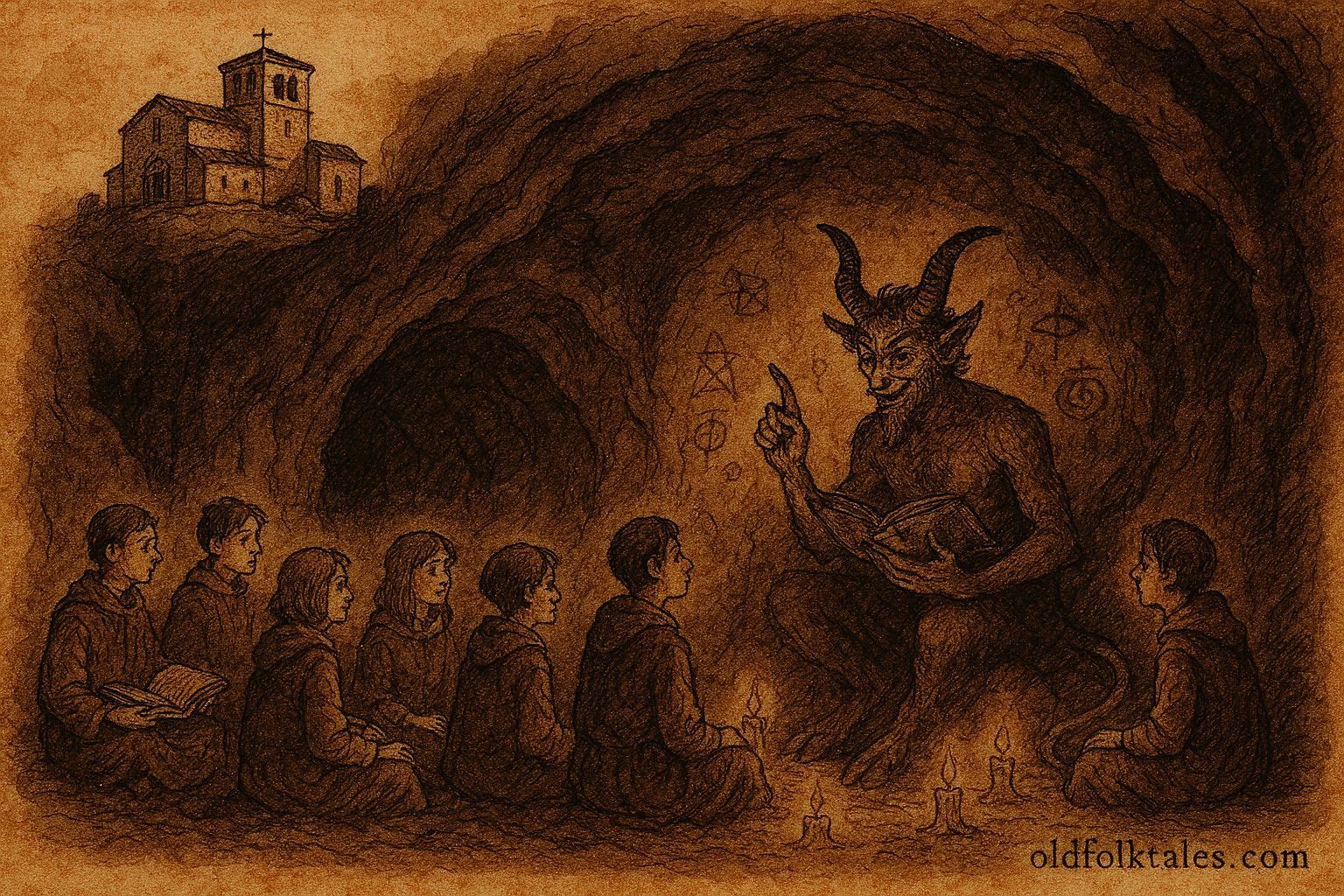
Beneath the Church of San Cebrián, a secret cave lay concealed. Locals said that at night, the Devil appeared there, offering instruction to a select few. Seven students were chosen, drawn not by invitation but by ambition. They came seeking mastery of arts forbidden by the Church: alchemy, necromancy, and mysteries of the heavens that mortals were not meant to touch.
The Devil, according to legend, demanded payment. It was never a simple fee, but a debt measured in loyalty, obedience, and, ultimately, the soul itself. The students studied, experimenting with secrets that could bend the natural order. Candles flickered in the damp cavern, inscriptions glimmered in phosphorescent ink, and whispers echoed from walls that seemed alive with knowledge.
The Pact
Six of the students completed their lessons and delivered the payments demanded by their infernal tutor. They emerged from the cave richer in knowledge and, as stories claimed, in worldly fortune, but ever watchful, for the Devil is patient.
The seventh, however, was driven by pride and greed. He coveted all he had learned and sought to escape the debt he owed. He studied late into the night, memorizing incantations and formulas, hoping to outwit his teacher.
But the Devil’s patience is endless, and his rules are absolute. One moonless evening, the seventh student refused to present the due offering. The cavern trembled. Flames danced unnaturally along the walls. Shadows writhed like living creatures. In a single, terrible instant, the student was claimed, dragged into darkness from which no mortal returned.
The Warning
From that night onward, the cave became a symbol of perilous ambition. Scholars and townsfolk alike spoke of the lesson taught by the fate of the seventh student: knowledge, especially that which tempts the soul, carries consequences. The Devil, though a figure of terror, was also a teacher, offering power to those willing to pay its price.
The legend persisted in local lore and found mention in literature. Miguel de Cervantes referenced it in El coloquio de los perros (1613), cementing the cave’s association with both hidden wisdom and moral hazard. The Enchanted Cave of Salamanca became shorthand for the dangerous allure of secrets humans were not meant to possess.
Temptation and Morality
The story’s power lies not only in its supernatural elements but in its reflection of human nature. Ambition drives progress, yet unchecked ambition can lead to ruin. The students in the cavern sought knowledge without restraint, and while some paid their dues, others attempted to evade justice, only to be consumed by the very forces they sought to command.
In Salamanca, the tale served as a warning to those who might overreach. It reminded students that learning, however noble, must be balanced with humility and ethical responsibility. Knowledge is a gift, but it is also a test. To seek mastery without regard for moral limits is to invite peril.
The Cave’s Legacy
Even centuries later, the Church of San Cebrián stands over the site where the cavern is said to lie. Scholars, tourists, and locals pass above, unaware of the shadows beneath, yet the story endures. The Enchanted Cave is invoked in conversation, in literature, and in cautionary tales told to apprentices and young students.
Its legend intertwines ambition and morality, teaching that the pursuit of knowledge is inseparable from the responsibility it demands. The Devil may offer secrets, but the cost is eternal vigilance, or, for the reckless, a soul lost to darkness.
The Enchanted Cave of Salamanca endures as both myth and moral compass, a reminder that the search for wisdom must be guided by integrity as well as curiosity.
Moral Lesson
The Enchanted Cave of Salamanca teaches that ambition and the pursuit of forbidden knowledge come with consequences. True wisdom requires ethical responsibility; unchecked desire for power or secrets can lead to ruin. Knowledge without moral restraint is a dangerous path.
Knowledge Check
1. Where is the Enchanted Cave located?
Beneath the Church of San Cebrián in Salamanca, Castile and León, Spain.
2. Who taught forbidden knowledge in the legend?
The Devil instructed seven students in forbidden arts such as alchemy and necromancy.
3. What happened to the student who failed to pay his debt?
He was claimed by the Devil and lost forever, serving as a cautionary tale.
4. Which famous author referenced the legend?
Miguel de Cervantes, in El coloquio de los perros (1613).
5. What themes are central to this Salamanca folktale?
The cost of ambition, temptation, knowledge and morality.
6. What lesson does the story teach about learning?
That the pursuit of knowledge must be balanced with ethical responsibility, or one risks ruin.
Source: Miguel de Cervantes, El coloquio de los perros (1613), referencing local legend.
Cultural Origin: Salamanca, Castile and León, Spain.