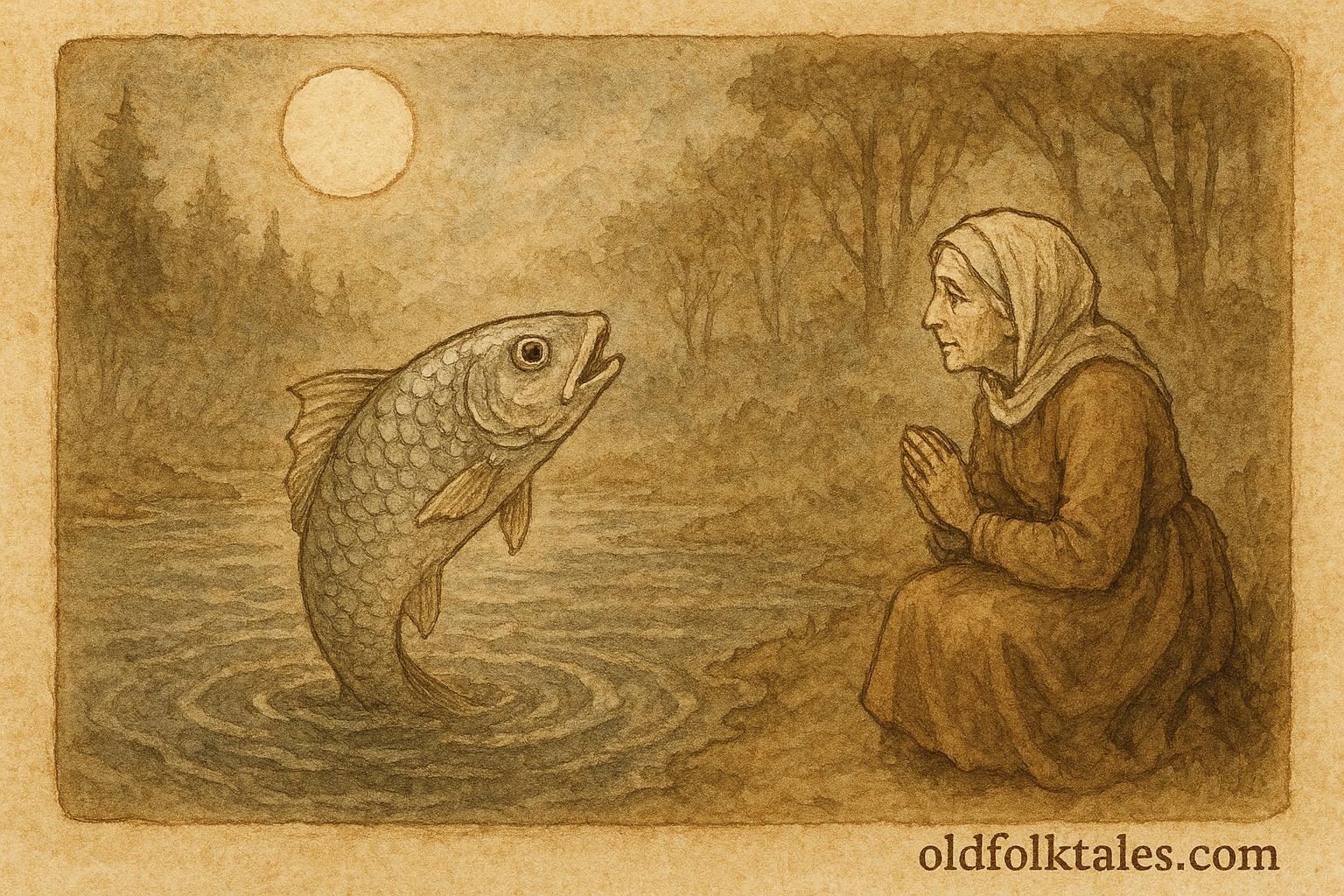
Along the winding bends of the Sauer River in Luxembourg, where mist rises from the water and forests stretch into rolling hills, there is said to swim a remarkable fish. Unlike any ordinary creature, this fish could speak, revealing hidden truths to those who approached with pure intentions. Yet, as the villagers quickly learned, its wisdom came with conditions: those driven by greed, selfishness, or deceit were cursed, while the humble and virtuous received guidance, protection, and even subtle blessings in their lives.
This is the tale of the talking fish, a guardian of morality and a source of mystical counsel along the Sauer River.
The River and Its People
The Sauer River flows gently through Luxembourg’s lush valleys, its waters teeming with life. Villagers relied on the river for fishing, washing, and irrigation. It was a lifeline, but also a place of mystery, where the waters could hide secrets as easily as they reflected the sky. Among the local people, tales of the talking fish spread like ripples, passed from one generation to the next.
Farmers, children, and travelers alike spoke of encounters with the magical creature. Some claimed to hear its voice echoing across the water on foggy mornings, offering advice, warnings, or riddles. Others swore that glimpsing the fish brought insight into hidden truths, truths about themselves, their neighbors, or the natural world.
Lessons in Humility
One story tells of a young peasant named Matthieu, eager for wealth and recognition. Hearing of the talking fish, he waded into the river at dawn, carrying a small net and a bag for treasures. He called out, demanding the fish reveal secret sources of gold or hidden riches. The waters shimmered, and a silver-scaled fish broke the surface, eyes glinting.
“You approach with greed, not respect,” the fish said. “Turn back, lest your desires bring you harm.”
Ignoring the warning, Matthieu lunged for the fish. In an instant, he slipped on the riverbank, the cold water sweeping him downstream. He emerged shivering, humbled, and realizing that the river, and the fish, rewarded virtue, not avarice. From that day, Matthieu treated the river and its creatures with respect, sharing his catch fairly with neighbors, and his fortunes improved through honest labor rather than trickery.
Rewards for Good Intentions
By contrast, humble villagers fared far better. A widow with children, who sought guidance on where to find the best fishing spots to feed her family, approached the river quietly at dawn. She whispered her question to the water, leaving her intentions pure and her heart open.
The talking fish appeared, circling her gently. “Seek the bend beneath the old willow, where the water is deepest. Patience and care will bring your reward,” it advised. Following the guidance, she netted a plentiful catch, sufficient to feed her children and neighbors alike. In this way, the fish acted as both a teacher and a protector, ensuring that the virtuous were supported in their daily lives.
Mystical Counsel
The fish’s wisdom was not limited to simple guidance for food or work. Villagers recounted that it could reveal truths about disputes, hidden dangers, or even the character of strangers. For instance, a farmer faced a quarrel with his neighbor over land boundaries. He quietly consulted the river, speaking humbly of his concern. The fish advised him to gather witnesses and approach the dispute with fairness. Following the advice prevented conflict and fostered goodwill between families.
Thus, the magical fish served as a moral compass. Its counsel reminded the villagers that humility, honesty, and good intentions are the foundations of both human community and harmonious interaction with nature.
The Consequences of Selfishness
Greed and selfishness were never tolerated. Stories tell of a boastful merchant who, seeking to cheat the talking fish, set out at midnight to capture it for profit. He dragged large nets into the river, ignoring the moonlit warnings. The fish emerged and spoke:
“Your heart is not pure; you seek gain without care. What you desire will turn to loss.”
As predicted, the merchant’s nets became entangled in reeds, and his canoe capsized. Soaked and humiliated, he returned to the village empty-handed. The villagers whispered that the river itself, guided by the spirit of the fish, protected the humble and corrected the arrogant.
Enduring Wisdom
Over time, the legend of the talking fish became a cornerstone of Sauer River folklore. Children were warned to treat the river with respect, fishermen approached its waters with patience and reverence, and families shared resources generously. Even as modern times arrived, the stories retained their power: the fish symbolized mystical guidance, moral oversight, and the enduring truth that virtue, humility, and good intentions shape both human and natural worlds.
Through these tales, the villagers learned that wisdom is often hidden in plain sight, waiting for those with respect and humility to seek it. And those who acted selfishly or arrogantly discovered that nature, guided by supernatural forces, could teach even the cleverest human a lesson in ethics.
Discover the timeless charm of French, Dutch, and Belgian stories filled with cleverness and heart
Moral Lesson
Humility, virtue, and good intentions bring guidance and protection, while selfishness, greed, or deceit invite consequences. Respect for nature and moral integrity ensures harmony in daily life.
Knowledge Check
1. What magical creature is central to this Luxembourg folktale?
A talking fish in the Sauer River.
2. Who is punished by the fish?
Those who approach with greed, selfishness, or impure intentions.
3. How are humble or virtuous villagers rewarded?
They receive guidance, protection, and practical blessings like abundant fish.
4. What types of advice does the fish provide?
Fishing guidance, warnings about danger, resolution of disputes, and insight into human behavior.
5. What themes define this folktale?
Humility, virtue, mystical guidance, reward for good intentions.
6. Who recorded this tale and when?
Nikolaus Gredt, in Sagenschatz des Luxemburger Landes (1883).
Source: Nikolaus Gredt, Sagenschatz des Luxemburger Landes (1883), Luxembourg.
Cultural Origin: Sauer River, Luxembourg.