Along the wide, flowing waters of the Danube in Austria, where morning mist curls like silver ribbons above the riverbanks and ancient forests rise into rolling hills, the villagers spoke in hushed tones of a magical being known as the Nix. No ordinary fish or bird, no simple animal of the river, the Nix was a river spirit whose voice could enchant the hearts of men, whose eyes gleamed with both beauty and danger. It was said that the Nix could lure the unwary into the depths of the river with a song as sweet as the morning breeze, and only those who approached with humility, respect, and good intentions would leave the river blessed.
This is the tale of the Nix, a guardian of the Danube whose lessons were as timeless as the flowing waters themselves.
The River and Its Enchantment
The Danube stretched wide and serene during the day, its surface reflecting the sky and the treetops that leaned over its edges. Fishermen relied on its bounty to feed their families, children played along its sandy banks, and villagers traveled along its winding course. But the river was more than a place of work and life; it was a realm of mystery. Even seasoned men spoke of sudden whirlpools, sparkling currents that appeared without cause, and strange silvery lights dancing along the water at twilight. These phenomena, they whispered, were signs of the Nix’s presence.
The Nix’s song, carried on the wind or the gentle ripple of the water, could be heard at dawn or dusk. It was melodious, clear, and irresistible, rising above the clatter of mill wheels and the low hum of village life. To listen was to risk being enchanted, yet also to gain guidance and blessings, if one’s heart was pure.
The Lessons of Humility
One of the best-known tales is that of young Leopold, a fisherman of modest means. Brave and ambitious, Leopold had heard the whispers of the Nix since childhood. He dreamed not of riches, but of understanding the river’s secrets. One misty morning, before the sun had risen above the hills, he rowed his small boat toward the shimmering waters where the song had called him.
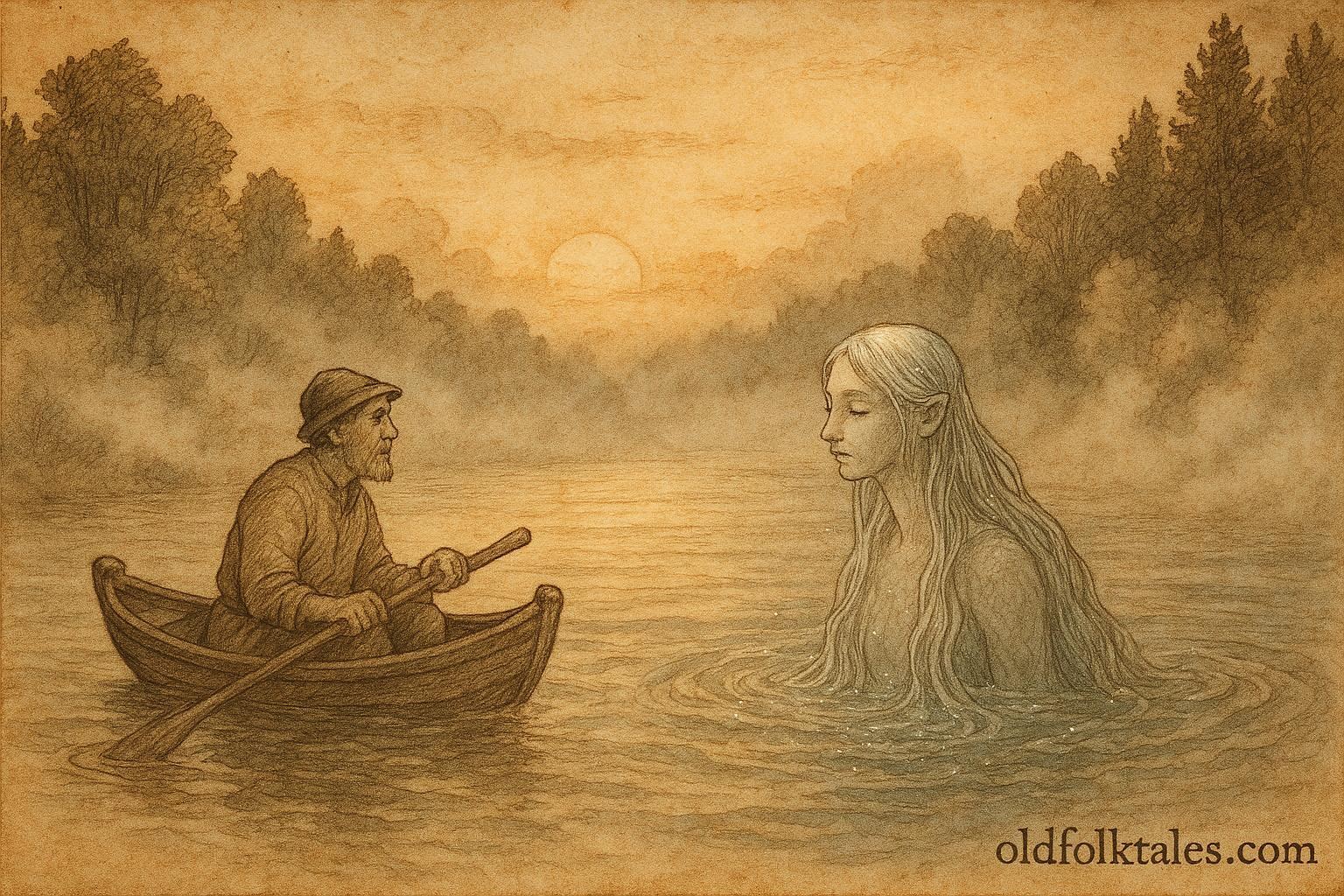
Leopold did not shout, he did not demand, nor did he show impatience. Instead, he knelt in his boat and whispered, “O Nix of the Danube, I come with respect, seeking wisdom and guidance. Teach me, that I may care for the river and my village.”
The river stilled, and a shimmering figure emerged. Her hair glinted like spun silver, and her voice, though gentle, carried authority. “You approach with reverence,” she said. “Your heart is unclouded by greed. I shall show you the safest bends, the richest schools of fish, and the currents to avoid. Respect the river, and it will respect you.”
Following the Nix’s guidance, Leopold returned to his village with a bountiful catch. But more importantly, he returned with knowledge of the river’s moods and secrets, understanding that careful observation and humility were as valuable as skill and strength.
The Consequences of Pride and Greed
Not all villagers heeded the lessons of respect. A wealthy merchant, who owned fields and boats beyond the reach of most, became envious of the stories about Leopold. “A fish that talks?” he scoffed. “I will teach this river spirit that I am not to be ignored!”
On a moonlit night, the merchant took his grand boat to the river, singing loudly and tossing coins into the water, hoping to bribe or coerce the Nix. The song of the Nix rose above him, sweet yet warning. “You approach with arrogance and greed. Turn back, lest the river teach you humility the hard way.”
But the merchant laughed, mocking the river and its supposed guardian. When he reached for the shimmering fish that seemed to appear before him, the currents twisted and surged. His boat rocked violently, and he was dragged under. The villagers later saw his boat overturned near the riverbank, his nets lost, and the merchant humbled, shaken to the core by the experience. Some versions say he barely escaped with his life, forever changed; others say he vanished into the Danube, a warning to all who thought themselves greater than the forces of nature.
Cunning and Virtue
Yet the Nix did not punish cleverness when paired with respect and humility. Another fisherman, a man named Matthias, had heard the tales but feared the enchantments of the river. Wishing to fish safely and benefit from the Nix’s wisdom, he devised a plan. He placed small offerings, bread, herbs, and a humble bouquet of river flowers, on floating boards, letting them drift downstream while he knelt respectfully at the water’s edge.
The Nix rose, circling the offerings and then Matthias’s boat. She observed his cautious, respectful behavior. “You honor the river and its gifts,” she said. “I will guide you to hidden pools where fish abound, and to currents that protect you from the river’s dangers.”
Through his clever yet respectful approach, Matthias received the bounty of the Danube without risk. His tale spread through the villages, teaching that intelligence alone could not substitute for virtue, but combined with humility, it could bring safety and prosperity.
Villagers and the Nix
The legend of the Nix permeated life along the Danube. Fishermen approached the river with quiet reverence, children learned to respect its waters, and families told stories of the spirit at night by the hearth. They spoke of the Nix not only as a magical being but as a teacher, a guardian of morality and human behavior.
The Nix’s presence was subtle yet constant. On foggy mornings, one could imagine her silver hair glinting in the light, or hear a song carried faintly across the reeds. Sometimes, she rewarded the patient and virtuous with unexpected gifts: a bountiful catch, safe passage through treacherous currents, or insight into disputes and dangers. At other times, she enforced natural justice, ensuring that arrogance and greed met with appropriate consequences.
The river, in essence, was both a mirror and a judge, reflecting human behavior and rewarding or correcting it. Villagers understood that supernatural oversight could not be ignored, and that the Nix embodied the balance between human ambition and respect for the natural and mystical world.
The Song That Teaches
The Nix’s melody carried multiple meanings. It warned, it enchanted, and it guided. Those with honest hearts and good intentions heard wisdom in its tune. Those with pride and selfishness heard temptation and danger. The song became a moral compass for all who lived along the Danube, a gentle reminder that humility, respect, and prudence were as necessary as skill or courage.
Even children learned to speak softly near the river, to leave offerings, and to observe without disturbance. Generations grew up with the belief that nature and the supernatural were intertwined, and that behavior shaped not only human lives but the river’s response as well.
Enduring Legacy
Though centuries have passed, and the Danube now carries modern boats and bridges, the stories of the Nix endure. Travelers along the riverbanks still tell of hearing faint, melodious voices or glimpsing silver strands in the water at dawn. The Nix remains a symbol of mystical guidance, a reminder of humility and respect, and a lesson in how intelligence, combined with virtue, ensures safety and reward.
The legend continues to inspire, showing that humans live best when in harmony with nature and its hidden forces. Through humility, respect, and cleverness, one may navigate not only the physical world but the moral and mystical currents that shape it.
Moral Lesson
Humility, respect, and ethical cleverness are rewarded, while arrogance, greed, and boastfulness invite peril. The Nix of the Danube teaches that virtue and prudence guide both human lives and interactions with the natural and supernatural world.
Knowledge Check
1. Who is the central figure in this Austrian folktale?
The Nix, a magical river spirit of the Danube.
2. What behaviors does the Nix reward?
Humility, respect, good intentions, and cleverness combined with virtue.
3. What happens to those who approach with arrogance or greed?
They are dragged into the river, lose their catch, or face misfortune.
4. How can humans safely interact with the Nix?
Through respect, humility, and intelligent but ethical behavior.
5. What themes define the tale?
Humility rewarded, respect for nature, cunning as survival, and supernatural oversight.
6. Who recorded the story and when?
Josef Haltrich, in Sagen und Märchen aus Österreich (1870s).
Source: Josef Haltrich, Sagen und Märchen aus Österreich (1870s), Austria.
Cultural Origin: Danube River region, Austria.