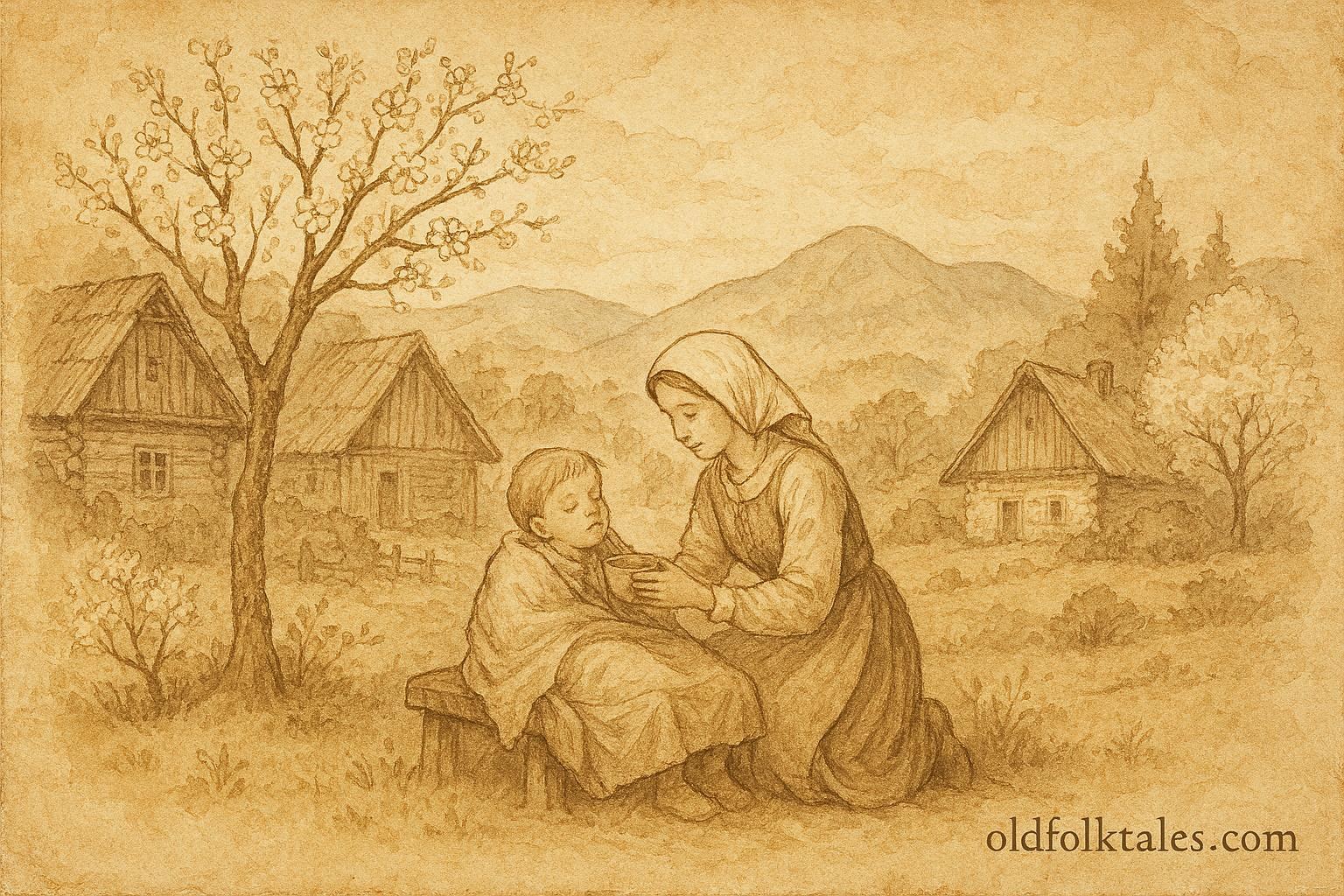
In the rolling hills and dense forests of Slovakia, villages were often quiet and contemplative, their inhabitants mindful of the lessons woven into the land, the rivers, and the mountains. Among these villages lived a young girl whose life was unlike that of any other child: she could not cry. From the day she was born, her eyes remained dry through sadness, joy, or fear, and the villagers whispered that she had been cursed, though no one could say by whom or why.
This is the story of the girl who could not cry, a tale of compassion, understanding, and the inner strength required to transform one’s life through virtue.
A Life Without Tears
The girl, known simply as Anička, grew up in a modest wooden cottage at the edge of a small village, where the air was rich with the scent of pine and the soil dark and fertile. Her parents, kind but worried, sought advice from village elders and traveling wise women, yet no remedy seemed to work.
When Anička fell and scraped her knee on the cobblestones of the village square, her lips trembled, but no tear fell. When her beloved dog, Čiko, wandered too far and returned with a limp, she smiled and soothed him, but her eyes remained dry. Even when she learned of her mother’s sickness, her chest tightened with grief, yet not a single tear escaped.
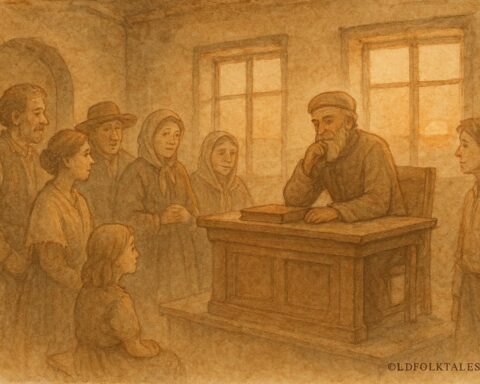
Villagers began to treat her with a mixture of awe and unease. Some whispered that she might be touched by some dark magic; others hoped she would one day break the curse, believing that her inability to cry was a test from the heavens, a trial to cultivate inner virtue.
The Turning Point
As Anička grew, she realized that the inability to cry was not merely a physical condition, but a reflection of her heart. She felt deeply but could not outwardly express emotion, which left her lonely despite her kind and generous nature.
One autumn, when leaves burned gold and crimson in the forests, Anička wandered into the woods beyond the village. There, she encountered a wounded bird, its wing bent at an unnatural angle. She gently cradled the bird in her hands and murmured soothing words, fashioning a small splint from twigs and leaves. Night fell, and she carried the bird home in a basket lined with soft cloth.
For the first time in her life, Anička felt a swelling of emotion so profound that her chest ached. Yet still, her eyes were dry. The bird, sensing her care, chirped softly as if in gratitude. The girl realized that her path to breaking the curse was not through lamentation alone, but through selfless acts of kindness, through empathy and understanding of others’ suffering.
Acts of Compassion
Anička began to dedicate herself to helping those in need. She tended to the elderly, repaired the homes of those who could not afford carpenters, and fed the hungry children of the village. With each act, her heart grew heavier with compassion and understanding. She began to listen to the villagers’ stories of hardship, offering comfort, advice, and small gestures of love.
One winter, a neighbor lost her husband to a sudden illness. Anička stayed with the grieving widow, helping her with firewood, cooking, and household chores. She comforted the children, telling them gentle stories to ease their sorrow. The village watched, amazed at her devotion, and slowly, whispers spread that Anička’s kindness was extraordinary, that perhaps her curse was part of a larger design, an opportunity to learn the deepest truths of human connection.
A Lesson in Empathy
Spring brought new challenges. A traveling merchant arrived in the village, seeking assistance with his wares. One of his apprentices, a boy barely older than Anička, had fallen ill and could not work. The merchant, anxious and impatient, threatened punishment. But Anička intervened, taking the boy into her care and nurturing him back to health.
During this time, she learned to understand suffering not as a distant observation, but as a shared human experience. Each day, as she washed, fed, and comforted the boy, she felt her chest tighten in a new way, emotion that demanded recognition. The villagers began to notice a subtle change: her smiles carried warmth, her actions radiated empathy, and she became a quiet center of wisdom and compassion in the village.
The Breaking of the Curse
One evening, after a particularly long day of helping a family rebuild their barn, Anička stood alone on a hill overlooking the village. The sun set in streaks of violet and gold, painting the sky above the mountains. For the first time, she felt a deep and encompassing emotion, a combination of sorrow, love, and understanding that no previous moment had held.
Her chest heaved, her lips trembled, and at last, a single tear rolled down her cheek. Then another. And another, until tears streamed freely from her eyes, cleansing her heart and soul. The curse had lifted—not by magic alone, but through virtue, empathy, and the selfless acts she had performed over the years.
The villagers, witnessing the transformation, rejoiced. They celebrated Anička not only for breaking the curse but for embodying the principles that their elders had always valued: compassion, understanding, and inner strength.
Love and Acceptance
With her newfound ability to express emotion, Anička discovered not only personal freedom but the ability to form deeper connections. She could grieve, rejoice, and empathize fully with others. Over time, a young man from the village, who had long admired her courage and kindness, approached her with affection. Anička’s heart, once constrained by the curse, now overflowed with warmth. Love, understanding, and community acceptance became a natural extension of the lessons she had learned.
From that day forward, the story of the girl who could not cry was told across the region, a lesson that virtue and empathy could transform not only the lives of others but one’s own spirit.
Experience legends where mountains breathe magic and heroes face moral choices that shape destiny
Moral Lesson
True emotional growth and personal transformation come from acts of kindness, understanding, and empathy. Compassion for others allows the human heart to heal, express its deepest feelings, and form meaningful connections.
Knowledge Check
1. Who is the central character in this Slovak folktale?
Anička, the girl cursed with the inability to cry.
2. How is the curse lifted?
Through acts of kindness, empathy, and understanding the suffering of others.
3. What themes define the story?
Compassion, moral growth, emotional resilience, transformation through virtue.
4. How does Anička demonstrate inner strength?
By selflessly helping the sick, elderly, and vulnerable, even while burdened by her curse.
5. What role does the village play in the story?
They observe, support, and eventually celebrate Anička’s moral and emotional transformation.
6. Who collected the story and when?
Pavol Dobšinský, Prostonárodné slovenské povesti, 1880.
Source: Pavol Dobšinský, Prostonárodné slovenské povesti (1880), Slovakia.
Cultural Origin: Slovak folklore.