In a small village in Bohemia, nestled among rolling hills and dense forests, lived a poor boy named Jan. His family had little more than the worn wooden furniture in their modest cottage, and meals were often meager. Yet despite his hardships, Jan’s heart was generous and his spirit resilient. Little did he know that a remarkable gift awaited him, one that would change his life, test the hearts of those around him, and reveal the consequences of greed and envy.
This is the story of the Wishing Table, a magical object that provides abundance to the virtuous and teaches lessons to the covetous, a tale collected by Božena Němcová in her 1857 Národní báchorky a pověsti.
Discover the spiritual depth and wisdom hidden in the ancient folklore of Eastern and Balkan Europe
The Gift of the Wishing Table
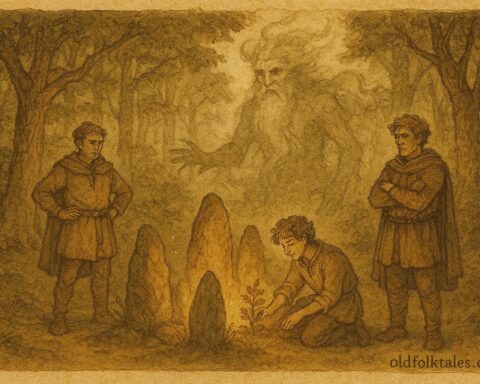
One evening, Jan wandered through the forest at the edge of the village, collecting firewood and foraging for wild herbs. There, he came upon a strange old man, hunched and shrouded in a cloak of deep gray. The man spoke in a voice both gentle and commanding:
“You, kind-hearted boy, have cared for the creatures and plants of these woods. I will reward your virtue with a gift, a table that produces food whenever you command it.”
Jan, astonished, could hardly believe his ears. The old man beckoned him closer and, with a wave of his gnarled hand, presented a small wooden table carved with intricate patterns of stars and vines.
“Speak to it wisely, and it will provide for you and those who are honest and pure of heart,” the man instructed. “But beware: greed will bring its own punishment.”
With that, the old man vanished, leaving Jan alone with the extraordinary table.
The Magic Revealed
Jan hurried home, excitement swelling in his chest. As soon as he entered the cottage, he placed the table in the center of the room and, remembering the man’s words, whispered:
“Wishing Table, set the table for dinner!”
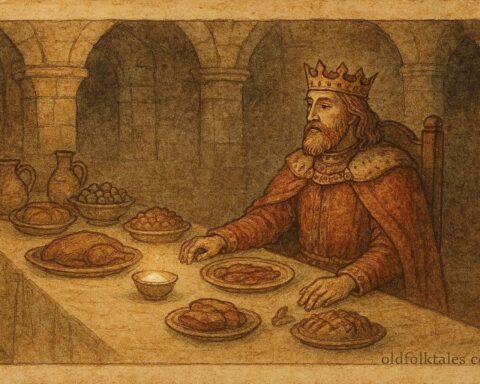
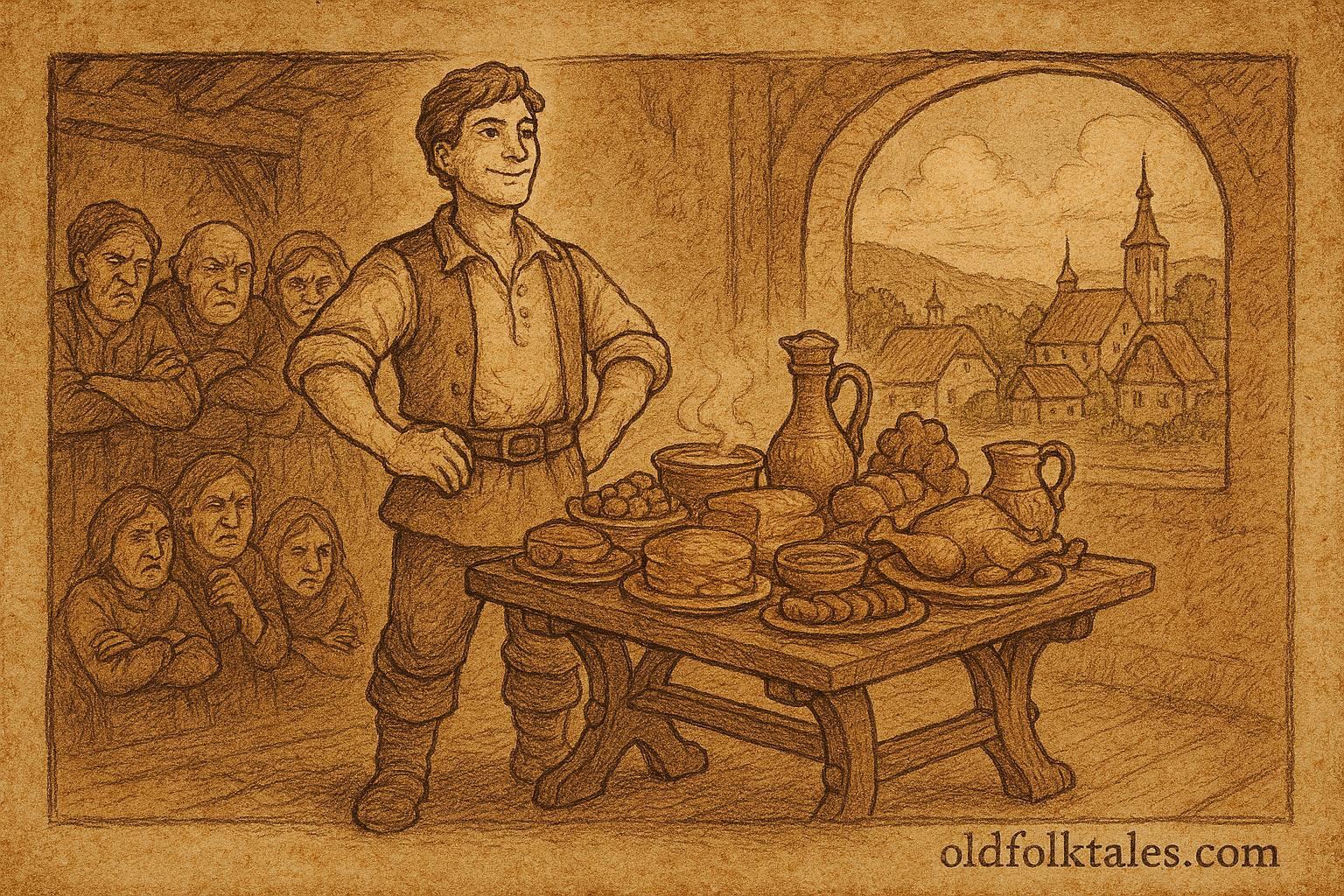
To Jan’s amazement, the table obeyed. Plates of steaming dumplings, freshly baked bread, and bowls of sweet porridge appeared before him. He called again, and golden roast chicken, fruits, and honeyed cakes filled the table. That evening, Jan and his family ate heartily for the first time in weeks.
Word of Jan’s miraculous table spread quickly through the village. Villagers came, curious and astonished, but Jan shared modestly, offering meals to the hungry without hoarding or pride. His honesty and generosity endeared him to all.
Greedy Relatives Arrive
Not everyone rejoiced in Jan’s fortune. His distant relatives, who had always envied his family’s modest resilience, plotted to claim the magical table for themselves. They traveled under the cover of night to Jan’s cottage, intent on stealing it.
“Think of the wealth and power we could wield!” whispered the eldest uncle. “With this table, no one would ever lack, and all would obey us.”
The relatives seized the table, but as soon as they tried to command it without honesty or respect, it remained motionless. Plates stayed empty, and bowls refused to fill. Frustrated and enraged, they attempted every trick they could think of, shaking it, threatening it, even pretending to care, but the magic would not respond.
Jan’s Clever Strategy
Jan, understanding the table’s rules, approached calmly the following morning. He said to the table in a cheerful, honest voice:
“Wishing Table, set the table for breakfast.”
Immediately, plates of bread, porridge, and fruit appeared. The greedy relatives, unable to resist, lunged forward to grab the food. But as soon as their hands touched the table, it tipped and sent them tumbling to the floor, covered in dough, vegetables, and the morning porridge.
The villagers, witnessing the spectacle, laughed heartily, and the relatives fled in embarrassment, their greed humiliated. Jan retrieved the table and set it firmly in the center of his home, safe and protected.
Generosity Rewarded
Jan’s family continued to prosper, not because of hoarded wealth, but because of generosity and careful stewardship. He shared the table’s bounty with the poor, fed traveling strangers, and ensured that the village children never went hungry. The magical table became a symbol of the rewards of honesty and virtue: it responded only to those who acted with integrity and punished selfishness.
Over time, Jan became known not merely for the magic of the table, but for the wisdom and cleverness he demonstrated in protecting it. He reminded the villagers that true abundance was not simply in food or wealth, but in generosity, cleverness, and moral integrity.
Lessons of the Wishing Table
The story of the Wishing Table teaches multiple lessons. Magic may offer great opportunity, but it is the character of the user that determines its success. Greed, envy, and selfishness are punished, while honesty, resourcefulness, and generosity are rewarded. The clever can protect virtue, and those who act with moral integrity can create abundance for themselves and their communities.
The tale also celebrates intelligence and creativity: Jan did not rely solely on the magic of the table. He anticipated the schemes of the greedy relatives and used both his wits and the table’s enchantment to ensure that justice prevailed.
Moral Lesson
Honesty, generosity, and cleverness are the true sources of abundance. Greed and envy bring humiliation and loss, while virtue, compassion, and resourcefulness create prosperity and security for oneself and others.
Knowledge Check
1. Who is the protagonist of the story?
Jan, the poor boy who acquires the magical Wishing Table.
2. What is the magical property of the table?
It produces endless food when commanded by someone honest and virtuous.
3. How are greedy relatives punished?
Their attempts to use the table fail, and they are humiliated when Jan cleverly exposes their greed.
4. What themes are central to the story?
Rewards for honesty, dangers of envy, cleverness, and moral integrity.
5. Who collected this Czech folktale and when?
Božena Němcová, Národní báchorky a pověsti, 1857.
6. What lesson does Jan’s cleverness teach?
That intelligence and moral integrity can protect virtue and ensure justice prevails.
Source: Božena Němcová, Národní báchorky a pověsti (1857), Czech folklore.
Cultural Origin: Bohemia, Czech Republic.