Beneath the green hills of South Wales, where sheep graze peacefully above and chapel bells ring across the valleys, there lies another world, dark, narrow, and carved by the hands of men. It is a world of coal seams and stone passages, of flickering lamps and patient labor. And in that hidden realm, miners have long spoken of companions unseen. They call them the Coblynau.
To strangers, they are but superstition, goblins of the mine, imagined by weary minds in cramped tunnels. But to generations of Welsh colliers, the Coblynau were as real as the timbers that held up the roof above their heads. They were the Knockers, small spirits whose tapping echoed through the underground chambers.
Some knocks meant warning. Others meant mischief.
The wise miner learned the difference.
It was in one such coalfield village, tucked among the valleys of South Wales, that the story of old Dafydd Morgan was often told. Dafydd had worked the pits since boyhood. His hands were thick with callus, his back bent slightly from years beneath low ceilings of stone. Yet his hearing remained sharp, and his mind sharper still.
From his earliest days underground, he had been told of the Coblynau.
“They’re not to be mocked,” his father had said as they descended the shaft together for the first time. “They mind the earth better than we do. Listen when they knock.”
Dafydd had listened.
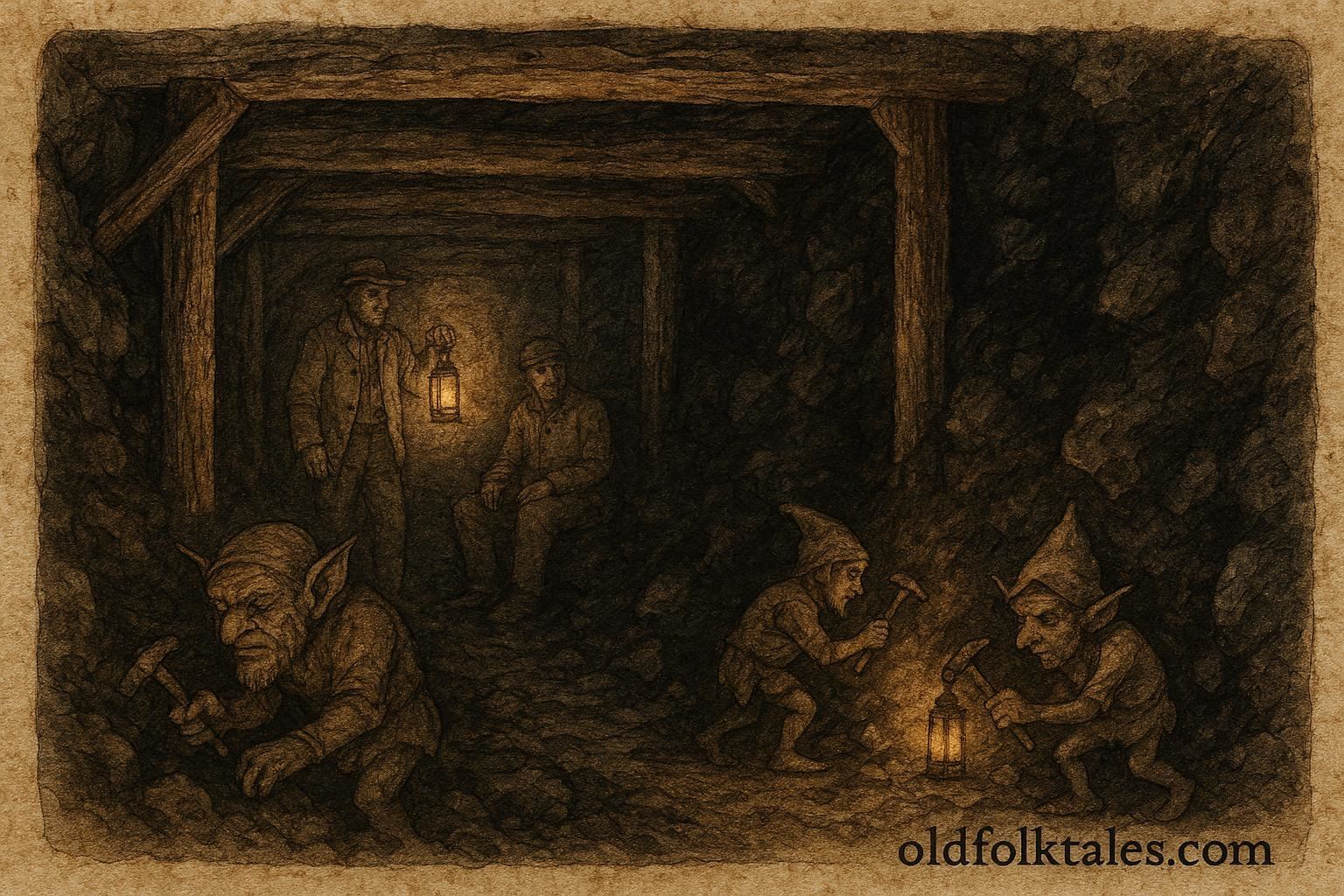
The Coblynau were said to be small in stature, no taller than a child’s knee. Their faces, as described by those who claimed glimpses, were wrinkled and strange, with bright, watchful eyes. They dressed like tiny miners, complete with caps and tools suited to their size. Some swore they carried miniature picks, tapping along the rock face as though searching for rich seams of coal.
Often, when a new tunnel was cut, faint knocking sounds could be heard ahead of the workers.
Tap. Tap-tap.
Sometimes the sound came from solid rock, where no human hand could yet reach.
Among the older miners, this was taken as a sign of good fortune. The Coblynau, they said, were marking where coal lay thick and ready. Follow the knocking, and you would find wealth beneath the earth.
But not every knock was kindly meant.
There were times when tapping echoed from unstable ground, where rock hung loose and treacherous overhead. Young or impatient miners, eager for profit, might chase the sound without caution. More than once, tunnels collapsed where heedless men had dug too quickly toward mysterious tapping.
Thus grew a rule among the careful: never follow the knock without testing the roof and walls. Listen first. Judge wisely.
One autumn evening, when rain lashed the valley and the wind howled through the pithead structures, Dafydd and his crew were working deep in a newly opened seam. The air was thick with dust despite the steady draft. Lamps flickered against damp stone.
Then came the knocking.
It was faint at first, barely more than a tremor in the rock. Dafydd paused mid-swing of his pick. The younger men continued their work, but he raised a hand for silence.
There it was again.
Tap. Tap-tap. Tap.
It seemed to come from beyond the wall to their left, an area not yet cut, where the rock face appeared solid and unremarkable.
One of the younger miners, Rhys, grinned. “Hear that? Coblynau promising us a fine seam.”
Dafydd did not smile. He stepped closer to the wall, pressing his ear near the stone. The knocking was rhythmic, deliberate.
He examined the ceiling overhead. A faint crack traced along the rock like a spider’s web, nearly invisible in the dim light.
“Back,” Dafydd ordered quietly.
Rhys frowned. “But the coal,”
“Back,” Dafydd repeated, firmer now.
Reluctantly, the men withdrew several paces. Dafydd struck the wall cautiously with the butt of his tool. The stone gave a dull, hollow sound.
Another knock echoed, sharper this time.
Then the ceiling groaned.
With a thunderous crash, a section of rock collapsed where they had been standing moments before. Dust billowed, lamps sputtered, and the ground trembled beneath their boots.
Silence followed.
When the air cleared, the men stared at the fallen stone in stunned disbelief. Had they been digging there, they would have been crushed.
Rhys swallowed hard. “The Coblynau,” he whispered.
Dafydd nodded slowly. “They warned us.”
From that night on, even the skeptics among the crew listened more carefully when unexplained sounds traveled through the tunnels.
Yet not all encounters ended in safety.
There were tales, too, of Coblynau who misled. In another pit farther east, miners once followed persistent knocking deep into a narrow passage. The sound seemed to promise a rich seam just ahead. They dug eagerly, pushing forward without reinforcing the walls properly.
The tapping grew louder.
Encouraged, they hurried their work.
But instead of coal, they struck a pocket of foul air. Lamps dimmed. Breath grew tight in their lungs. Only by retreating quickly did they escape disaster.
Later, the elders of that village said the Coblynau had tested them. Greed had drowned out caution.
Such stories spread through the coalfields, shaping habits and beliefs. Before cutting into new ground, miners would sometimes pause and listen. A respectful nod to unseen neighbors was not uncommon. No one wished to anger spirits said to dwell within the very rock they sought to carve.
Some claimed to have seen the Coblynau directly.
A flicker of movement near the edge of lamplight. A small figure darting behind a support beam. Bright eyes glinting before vanishing into shadow.
But whether truly glimpsed or merely imagined, their presence carried meaning. In the dangerous world beneath the hills, where darkness pressed close and death could come from falling stone or unseen gas, any guidance, natural or supernatural, was taken seriously.
The Coblynau embodied both hope and warning. They were said to know the veins of coal better than any surveyor, to understand the shifting tensions within the rock. They could guide, but they could also deceive.
The difference lay not in the spirits alone, but in the hearts of the miners.
Those who labored with care, who respected the earth and worked steadily rather than rashly, often found the knockers to be allies. Those who chased profit without patience sometimes met only danger.
As years passed and mining methods modernized, some dismissed the old stories. New tools, stronger timbers, and improved ventilation offered explanations for sounds once attributed to spirits. Rock shifted naturally. Air pockets created strange echoes. The earth itself spoke in groans and cracks.
Yet even as science advanced, many miners retained a quiet habit: they listened.
For underground, where light is scarce and survival depends upon awareness, the lesson of the Coblynau endured. Whether spirit or subtle warning of the earth, the knocking demanded attention.
Above ground, in the valleys of South Wales, the green hills give little hint of the shadowed world beneath. But in cottages warmed by coal fires, stories of the knockers are still told, of tiny goblins tapping in the dark, guiding or testing those who dig into the bones of the earth.
And so the Coblynau remain part of Welsh memory: not merely mischievous goblins, but symbols of vigilance in a world where one careless moment can cost a life.
Moral Lesson
The Knockers of the Welsh Mines teach that wisdom lies in careful listening. Whether warning comes from spirits or from the subtle signs of nature, survival depends upon respect, patience, and attention. Greed and haste invite danger, but humility preserves life.
Knowledge Check
1. Who are the Coblynau in Welsh folklore?
The Coblynau are small goblin-like mining spirits from South Wales believed to knock within tunnels to signal danger or hidden coal.
2. Why are they called “Knockers”?
They make tapping or knocking sounds in mine shafts, which miners interpret as warnings or guidance.
3. How can the Coblynau help miners?
They may indicate safe areas rich in coal or warn of unstable rock and collapse.
4. How can they mislead miners?
If miners act greedily or ignore caution, following the knocks blindly can lead them into danger.
5. What themes are central to this Welsh legend?
Superstition in labor communities, respect for the earth, vigilance, and survival.
6. Where does this folktale originate?
It comes from the coalfield traditions of South Wales.
Source: Adapted from British Goblins: Welsh Folk-Lore, Fairy Mythology, Legends and Traditions (1880) by Wirt Sikes.
Cultural Origin: South Wales coalfield tradition, Wales.