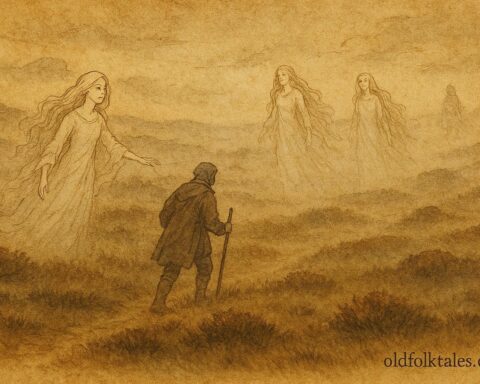
In the heart of Bulgaria’s central forests, where the trees stretch tall and the night air hums with mystery, tales whisper of beings known as Samodivas, ethereal women of extraordinary beauty and power. They dwell in secluded glades, appearing only under the silver glow of the moon, dancing with the grace of wind over water, their laughter mingling with the rustle of leaves and the murmur of hidden streams.
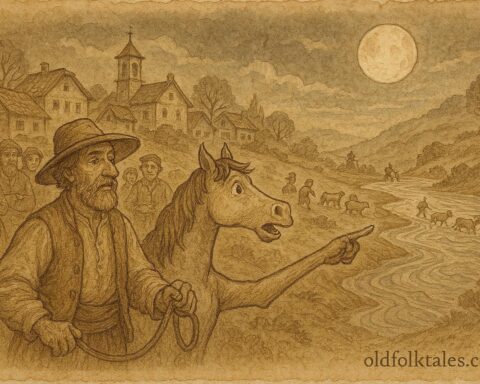
It was on such a night, when the moon hung high and cast a gentle, luminous sheen over the forest, that a horseman named Petar rode along a winding woodland path. Brave and skilled, he was known among his village for daring journeys through the rugged hills and dense forests, earning both admiration and envy. Yet even he had heard the hushed warnings of elders: “Respect the Samodivas, wanderer. Their beauty may ensnare, their wrath destroy.”
Petar had long been curious. He yearned to see these forest spirits, to witness the legends firsthand. On this particular evening, as a silver mist clung to the undergrowth and the wind carried a faint, haunting melody, he glimpsed a clearing bathed in moonlight. There, dancing with unearthly elegance, was a Samodiva. Her hair flowed like spun gold, her gown shimmered with the iridescence of morning dew, and her every movement seemed to harmonize with the forest itself. Around her, the leaves swirled as though enchanted, and the small woodland creatures froze in reverent awe.
The horseman watched, heart pounding. For a long while, he remained hidden, leaning against a sturdy oak, reluctant to break the spell of the night. Then, in a moment both fateful and daring, the Samodiva spun and, in her excitement, dropped a delicate veil, a shimmering fabric woven with magic, catching the moonlight like liquid silver. The veil floated toward Petar, and he seized it, knowing that such a treasure was rare beyond measure.
From that instant, fortune seemed to favor him. Horses he rode became swifter, burdens lighter; the path through the forest that once challenged him now yielded easily. Villagers whispered that Petar had been touched by the magic of the Samodiva, and his deeds grew bolder, his courage unmatched. Yet amidst the thrill, a quiet awareness settled in his heart: the power of the veil was not his by right, and the spirits of the forest were not to be trifled with.
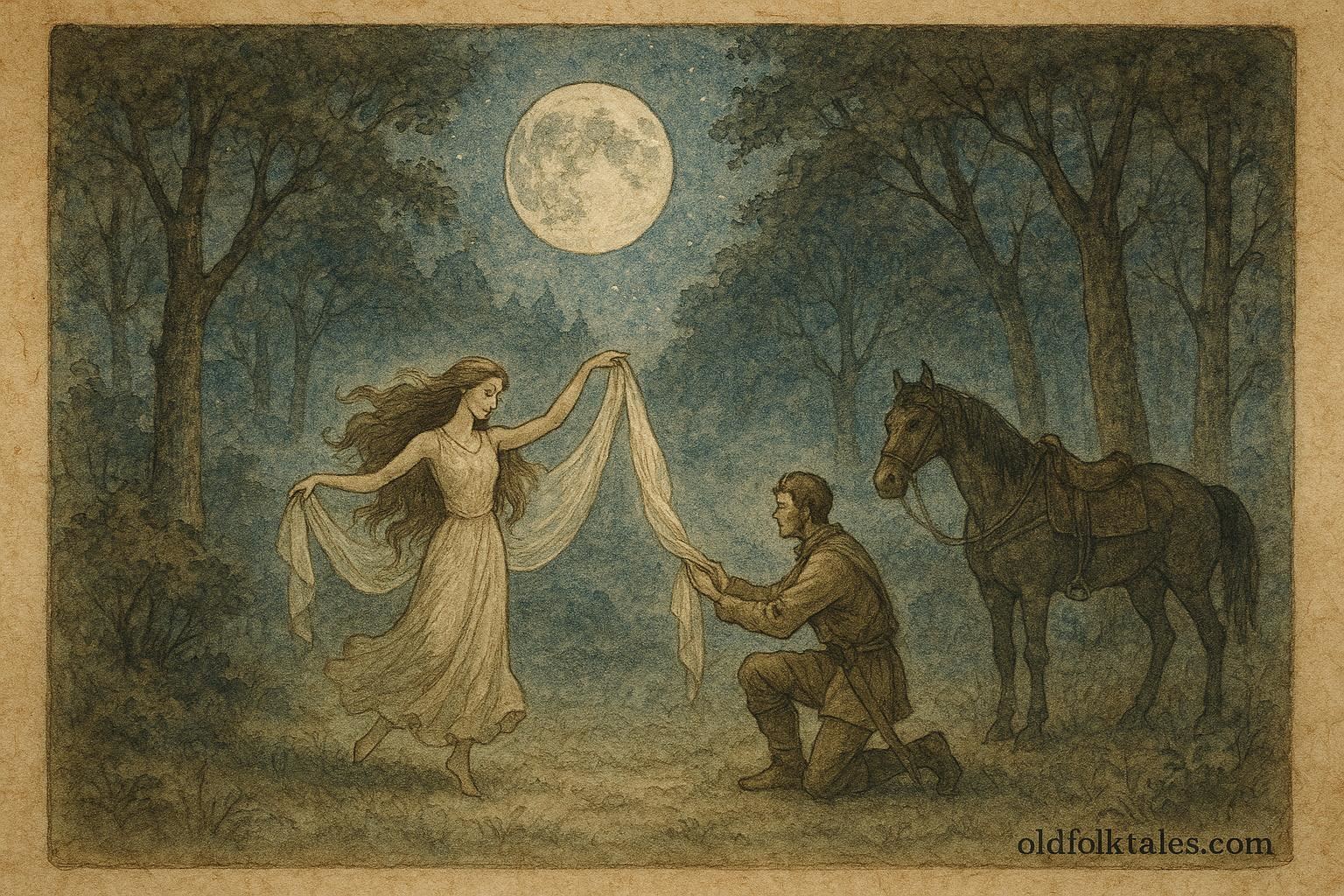
Days passed, and Petar found himself returning to the same moonlit clearing. The Samodiva appeared once more, radiant as ever. Her eyes glimmered with both curiosity and gentle reproach. Without a word, Petar knelt and returned the veil to her, bowing deeply to show respect. He offered his gratitude, not for the wealth and courage he had received, but for the chance to witness her presence and the blessings it had conferred.
The Samodiva accepted the veil and smiled, a smile that seemed to illuminate the entire clearing. Then she spoke, her voice like a melody carried on the evening breeze: “Brave horseman, your courage is worthy, and your heart has shown respect. Yet heed this: greed and pride are chains that even the mightiest cannot bear. Let your deeds honor the forest, and fortune shall continue to smile upon you. But should arrogance enter your heart, ruin will follow swiftly.”
Petar bowed once more, understanding fully the weight of her words. He knew that the true magic was not in the veil itself, but in humility, courage, and the honor with which one treated others, even spirits beyond mortal reckoning.
From that night onward, Petar’s life became a tale woven into the fabric of village lore. He carried himself with quiet dignity, assisted neighbors in need, and defended the weak. Though whispers of his bravery spread far and wide, he remained cautious, never allowing pride to cloud his judgment. The Samodiva was said to watch over the forest, her blessings enduring so long as respect for her and her realm remained unbroken.
Generations later, elders would recount the story to children gathered by the hearth: of a horseman bold enough to witness the dance of the Samodiva, wise enough to return her veil, and humble enough to carry her lessons through a lifetime. The tale became a reminder that human interaction with the unseen world, whether magical or moral, is guided not merely by courage, but by virtue.
And in the moonlit depths of Bulgaria’s forests, it is said that the Samodivas still dance, watching over those who approach with reverence, ready to bestow favor upon those who act with kindness, and warning all against the snares of arrogance.
Moral Lesson
The story of the Horseman and the Samodiva’s Veil teaches that true courage is accompanied by humility, and that respect for the unseen, whether nature, spirits, or moral law, yields reward, while pride and greed bring downfall.
Knowledge Check
1. Who are the Samodivas in Bulgarian folklore?
Samodivas are magical forest spirits, known for their beauty, dancing under the moonlight, and granting blessings to those who act with respect.
2. What object does Petar take from the Samodiva?
He takes her magical veil, which grants him wealth and courage.
3. How does Petar demonstrate humility?
He returns the veil willingly and bows, showing gratitude and respect.
4. What warning does the Samodiva give the horseman?
She cautions that greed and pride will lead to ruin, emphasizing virtue over selfish desire.
5. What themes are central to this folktale?
Respect and humility, rewards for kindness, caution against pride, and interaction with magical beings.
6. Where and when does this legend originate?
Central Bulgarian forests and mountains; collected in the 1890s by Ivan Shishmanov.
Source: Adapted from Bulgarian oral folklore collected by Ivan Shishmanov, 1890s.
Cultural Origin: Central Bulgaria.