In the heart of Ukraine, where rivers weave silver threads through rolling meadows and ancient forests whisper with forgotten secrets, the villagers prepared for Ivana Kupala night, a celebration that mingled midsummer warmth with the lingering shadows of old Slavic rites. Bonfires were lit along riverbanks, and young women and men wove wreaths of flowers, singing songs that carried on the breeze as if calling unseen spirits to witness the night’s mysteries.
Among the villagers, the legend of the fern flower was whispered with reverent awe. They said that once each year, on this magical night, the elusive fern would bloom, a single fiery flower appearing only for the briefest moment. Whoever found it would gain great fortune and hidden knowledge, a glimpse into the mysteries of the world, but only the pure-hearted could see it. Many had searched, some out of greed, some for glory, yet none had returned with the prize.
Young Ivan, a modest boy from a nearby village, listened to the stories with wonder. Unlike many of his peers, he did not seek wealth or fame. He was drawn by curiosity and reverence for nature, hoping simply to witness the miracle and perhaps understand its secret. As twilight descended, he gathered a small bundle of provisions and stepped into the forest, where shadows deepened and the songs of frogs and crickets filled the air.
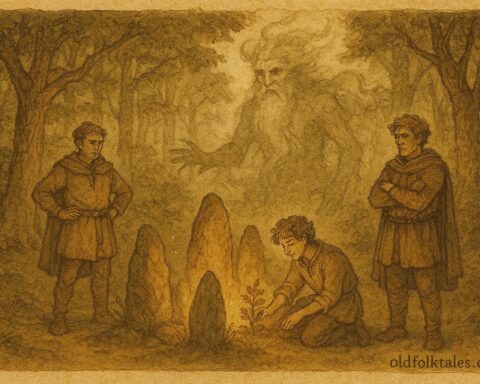
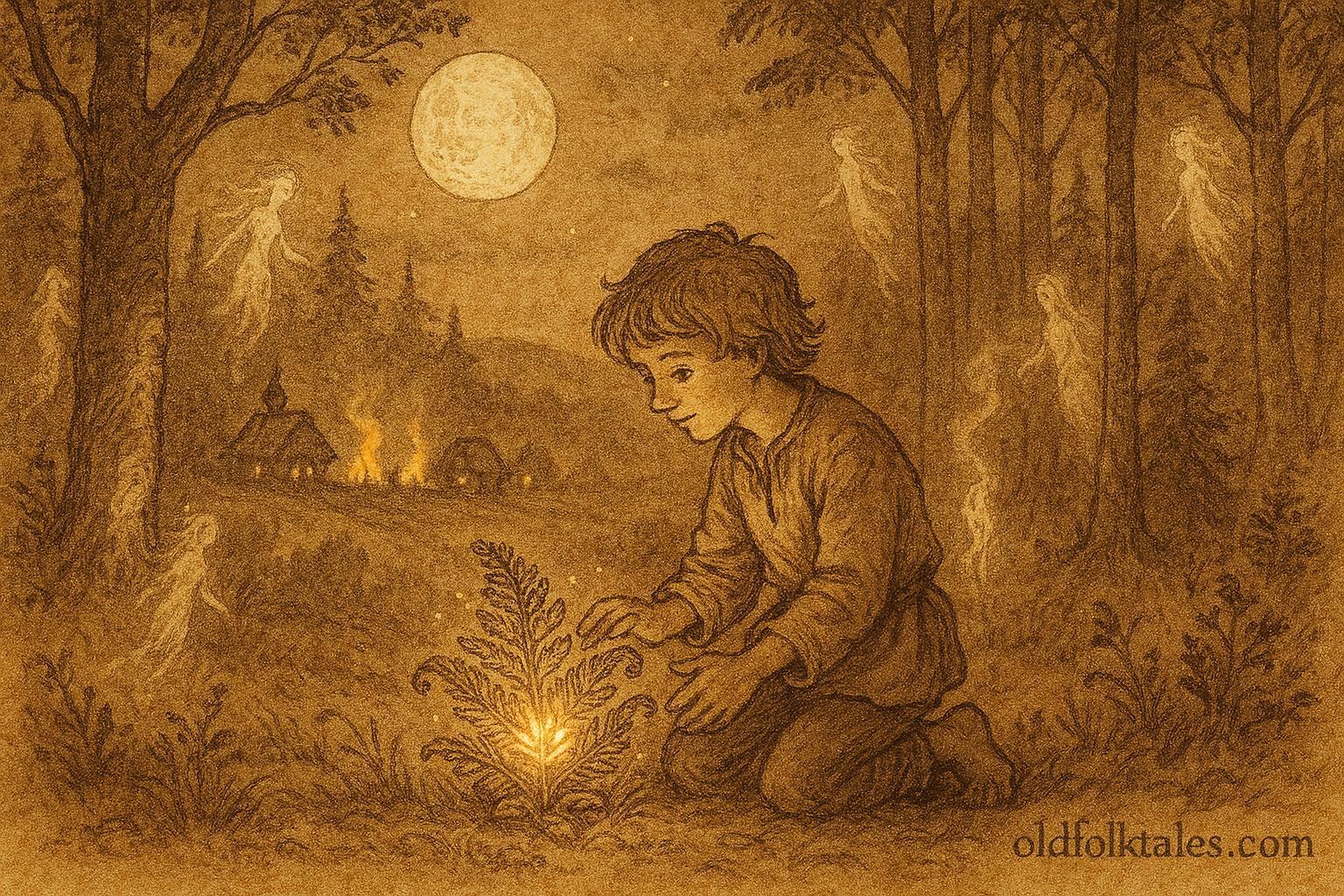
The forest seemed alive, attuned to the night. Every rustle of leaves, every whisper of wind through the birches and oaks, carried a sense of expectation. Ivan moved cautiously, guided by instinct and the tales he had heard from elders. Soon, he reached a clearing where moonlight danced on dew-kissed grass. In the center, a low fern spread its fronds in intricate patterns, shimmering faintly as though aware of his presence.
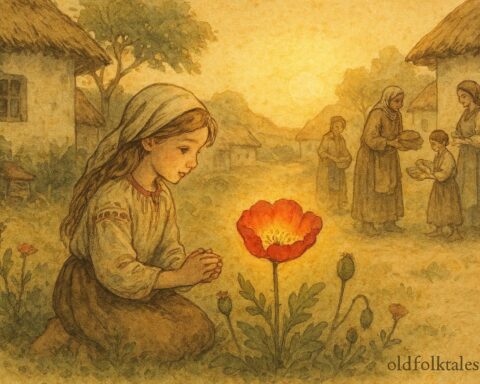
Ivan knelt beside the fern, his heart steady. “I seek only to understand,” he whispered, “not to steal its gift.” The words, spoken with humility and sincerity, seemed to carry into the night, and for a moment, silence enveloped the clearing. Then, as the clock of the universe ticked its secret hour, a single blossom erupted from the heart of the fern. It glowed with a fiery light, golden and crimson, illuminating the clearing with otherworldly radiance.
Ivan gasped, for the flower seemed to pulse with life, its petals shifting like flames in a gentle breeze. Time itself felt suspended. He did not reach for the bloom; he simply observed, absorbing the wonder, feeling the connection between the earth, the night, and the spirits that lingered unseen. In that instant, he understood truths beyond words, the interwoven rhythms of nature, the flow of life, and the subtle balance between chance and choice.
Yet the legend’s warning was clear. Many who approached with selfish intent saw nothing but shadow. Others, impatient or greedy, reached out and found their hands grasping empty air, or worse, were met with sudden disorientation, as though the forest itself sought to guide them away from folly. Ivan, however, remained still, reverent, and attentive. When the flower faded into the night as suddenly as it had appeared, he felt no disappointment, only gratitude.
As dawn approached, Ivan returned to the village. Though he carried no treasure, no tangible reward, he held within him the wisdom imparted by the fern flower, a serene understanding that patience, humility, and respect for nature were worth more than any gold. The elders smiled knowingly when he recounted the night, recognizing that he had glimpsed the true gift of Ivana Kupala: harmony with the world and insight into its hidden currents.
In the years that followed, Ivan shared what he had learned, not as teachings of wealth or magic, but as guidance on living with awareness and kindness. Villagers began to honor the forest more carefully, to respect the river’s flow, and to see the night not only as celebration but as a moment to reflect upon the fragile balance of life. And in every midsummer, when the fern flower was said to bloom, whispers of its glow inspired new seekers to approach with humility, dreaming of discovery, yet mindful of the virtues of the pure-hearted.
Discover Polish, Russian, Ukrainian, and Belarusian folktales where magic and morality meet
Moral Lesson
True fortune and wisdom are granted not to those driven by greed, but to those who approach the world with sincerity, humility, and respect for nature. The greatest gifts may be invisible yet transformative, guiding one’s life in harmony with the unseen currents of the world.
Knowledge Check
1. What is the Fern Flower in Ukrainian folklore?
A mystical bloom appearing on Ivana Kupala night, granting fortune and hidden knowledge to the pure-hearted.
2. Why do only the pure-hearted see the flower?
Because the bloom responds to sincerity and humility, rejecting those motivated by greed or pride.
3. What risks do selfish seekers face?
They see nothing, become disoriented, or are misled by the forest, reflecting the consequences of greed.
4. What lessons does Ivan learn from witnessing the flower?
Patience, respect for nature, and that true wisdom surpasses material wealth.
5. How does the legend connect to Ukrainian seasonal rituals?
It is tied to Ivana Kupala, a midsummer festival blending pagan and Christian traditions, celebrating fertility, fire, and water.
6. What broader theme does the story illustrate?
Harmony with nature and the rewards of moral virtue over selfish ambition.
Source: Ukrainian folktale, Ukraine. Recorded in Ukrainian ethnographic collections, 1906.
Cultural Origin: Pan-Ukrainian midsummer ritual folklore connected to ancient Slavic fertility festivals.