In the rugged expanse of the Jablanica mountains, where winter winds howl through icy passes and snow blankets the pine forests, travelers often found themselves lost. The peaks and valleys twisted in ways that confounded the eye, and the mountain trails were treacherous for anyone without skill and patience. Among these wild paths, legend tells of a creature both feared and revered: the Silver Wolf.
It was said that this wolf roamed the mountains only during the coldest nights of winter, its fur shimmering like fresh snow under the moonlight. Its eyes glowed with an inner light, wise and penetrating, seeing not just the paths through the forest, but into the hearts of men. Those who journeyed through the mountains with greed, cruelty, or selfish ambition rarely glimpsed the silver guardian; often, they vanished without a trace. But those with pure intentions, humility, and respect for nature found guidance, warmth, and protection in its silent presence.
Step into the enchanted forests and mystical realms of the Slavic imagination
One evening, a young boy named Emir set out to gather firewood for his family. The snow lay deep, and the path through the forest was hidden beneath a thick white blanket. Emir was careful, stepping lightly to avoid breaking branches or disturbing the small animals that scurried in the underbrush. Yet, even with care, the cold and the heavy snow soon wearied him. As the sun sank behind the distant peaks, casting long shadows across the frozen ground, he realized he was lost.
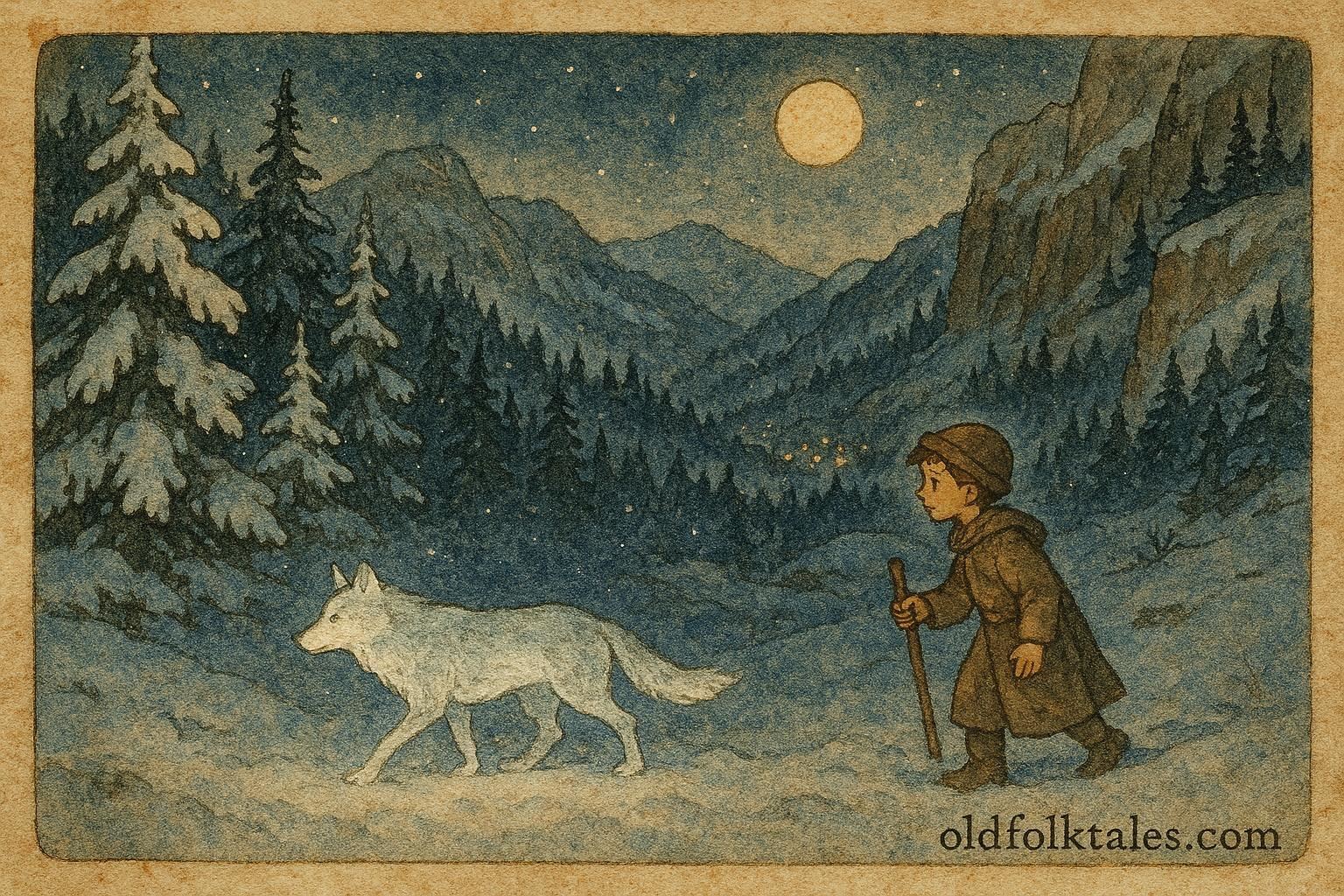
The wind whipped against his face, carrying the sharp scent of pine and the distant howl of mountain wolves. Fear gripped him, and he pressed on, hoping to find a familiar landmark. Suddenly, a soft silver glow appeared in the distance, moving gracefully through the trees. At first, Emir thought it might be the reflection of moonlight on ice, but then the shape took form: a majestic wolf, its fur a brilliant silver, its eyes luminous and gentle.
The wolf stopped, and Emir froze. Despite his fear, he felt no malice from the creature. Instead, there was a calm authority, a quiet understanding that the boy would not harm or be harmed if he acted rightly. The wolf beckoned with a slow tilt of its head, and Emir, sensing guidance, followed.
They traversed narrow passes, crossed frozen streams, and wound around towering cliffs. The wolf moved effortlessly, yet always waited for Emir to catch up. The boy’s fear began to ebb, replaced with awe and trust. Along the way, he noticed that the snow beneath the wolf’s paws glimmered faintly, as if sprinkled with silver dust, marking a path only he could follow.
Hours passed, though it felt like minutes, until the wolf led Emir to a sheltered valley where the snow had thinned, revealing evergreen trees and a small frozen pond. Here, the wind was gentler, and the boy could see smoke curling from a distant village. Emir realized he had been wandering in circles before, but the wolf had guided him safely to the edge of safety. Before he could speak, the wolf lifted its head, letting out a soft, melodic howl that seemed to echo through the mountains like a song of warning and blessing. Then, as quietly as it had appeared, it vanished into the forest, leaving only faint tracks glinting in the moonlight.
Emir returned home that night, forever changed. He shared the story of the silver wolf with his family and neighbors, emphasizing the creature’s wisdom and the lessons it imparted: humility in the face of nature, the importance of pure intentions, and the consequences of greed. Over time, the legend spread throughout the villages of the Jablanica mountains. Hunters who sought to trap the wolf vanished in the stories, and children were taught to honor the mountains, tread lightly, and respect the living spirits of the wild.
The silver wolf became more than a guide; it was a symbol. It reminded villagers that the mountains themselves were alive, filled with guardians who watched over those who treated the land with reverence. To see the wolf was considered a blessing, a sign that one’s heart was true and that one’s path, though winding and difficult, would be made clear.
Generations later, travelers still whispered of the silver wolf, especially on winter nights when the moon hung low and the air shimmered with frost. They told of how Emir, now a wise man, had learned that courage alone was not enough. Only when bravery was paired with respect and humility could one navigate the dangers of the mountains safely. And so, the legend endured, guiding those willing to honor the land and the creatures that dwelt within it.
Moral Lesson
True guidance comes to those who approach life with humility and respect. Greed blinds, arrogance misleads, and only purity of heart allows one to find the paths meant for them.
Knowledge Check
1. What is the Silver Wolf in Bosnian folklore?
The Silver Wolf is a magical guardian of the Jablanica mountains, appearing to guide travelers with pure intentions and punishing the greedy.
2. Who is Emir in the story?
Emir is the young boy who learns humility and respect for nature while being guided by the silver wolf.
3. What does the wolf symbolize?
It symbolizes guidance, moral clarity, protection of the natural world, and the consequences of greed.
4. Why do greedy hunters vanish in the tale?
They attempt to exploit the wolf, violating the moral law of respect for nature, which results in their disappearance.
5. What cultural region preserves this legend?
The story originates from the Dinaric Alps in Bosnia, part of Bosnian Slavic highland folklore.
6. What is the central theme of the folktale?
The tale teaches respect for nature, humility, and moral consequences for greed and selfishness.
Source: Adapted from Legends of the Dinaric Alps by Nada Grujić (1985).
Cultural Origin: Bosnian Slavic highland folklore (Jablanica mountains).