In the gentle hills of Central Croatia, where forests whispered with the secrets of centuries and the rivers gleamed under the sun’s warmth, there lay a small village named Križevci. Its cobblestone paths and thatched cottages were humble, yet the people’s hearts were rich with tradition. Here, neighbors tilled the soil, raised livestock, and shared their joys and sorrows beside the hearth. But not all lived in fairness. A few landowners had grown wealthy, exploiting the villagers’ labor, hoarding the finest grains, and leaving many to struggle through long winters and parched summers.
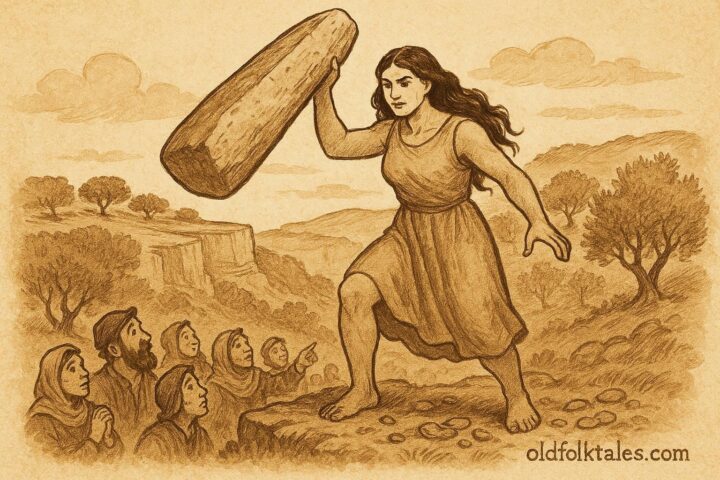
Among the villagers was a girl named Marica, known far and wide for her clever mind. Unlike the strong farmers or the bold blacksmiths, Marica’s power was her wit. She could resolve disputes among neighbors with insight and fairness, find lost livestock where seasoned herders had failed, and even mend broken machinery or tangled nets with surprising skill. Elders said her intelligence was a gift from the forest spirits themselves, a spark of wisdom that shone brighter with each passing year.
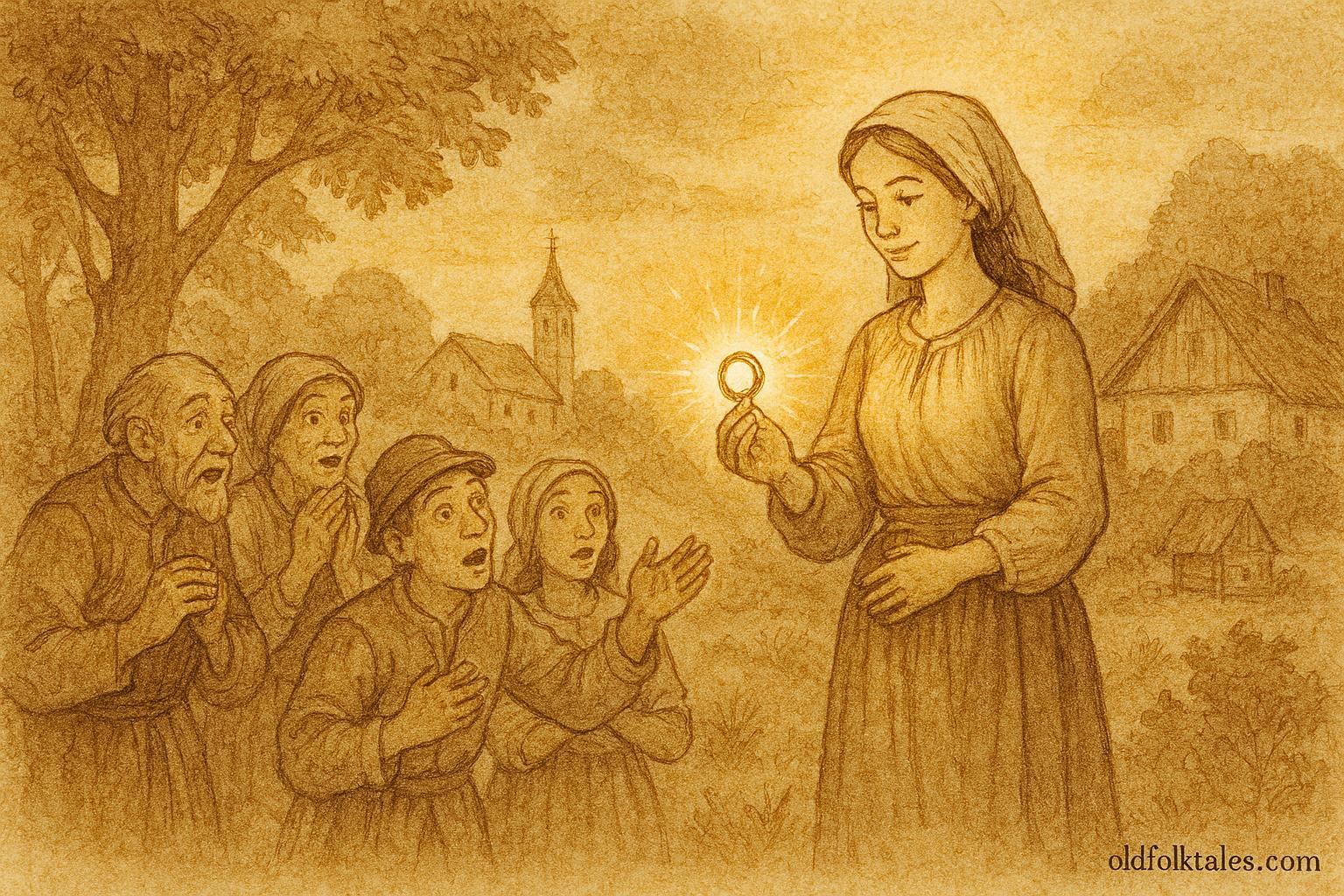
One crisp autumn day, as the leaves turned copper and gold, Marica wandered to the edge of the forest to gather firewood. The ground was littered with acorns and fallen branches, the air rich with the scent of pine and earth. As she dug beneath a mound of damp leaves, her fingers struck something hard. Clearing away the debris, she uncovered a small carved wooden box, decorated with swirling vine patterns and symbols that shimmered faintly in the sun. Her curiosity piqued, she lifted the lid, revealing a glowing ring, warm to the touch and pulsing with a golden light.
The moment Marica slipped it onto her finger, the world seemed to hum around her. She could hear the quiet sighs of the trees, the murmur of the river, and, most astonishingly, the unspoken thoughts of the villagers. She sensed the struggles of the poor farmers, the anxiety of a mother tending sick children, and even the secret intentions of the greedy landowners. Though tempted to keep the ring for herself, Marica felt a weighty responsibility: this power was not mere ornamentation, it was a tool for justice.
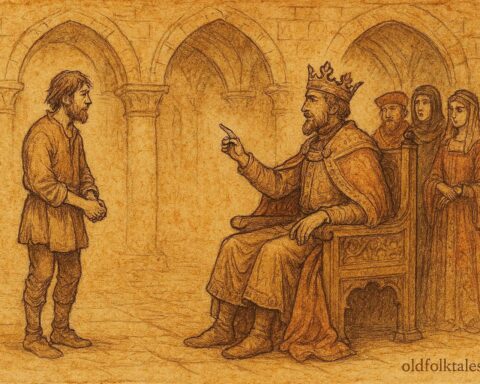
Days later, the landowners’ greed became urgent. They planned to seize the harvest of a struggling family, intending to claim their ripening wheat and corn for themselves. Marica watched the villagers toil under the late sun, hearts heavy with worry. She knew this was her moment. Stepping into the fields where the landowners stood, she held the ring discreetly in her palm.
“I have a warning for you,” she said, her voice soft yet commanding. “Those who attempt to steal from these hardworking families today will face misfortune. Only the just and fair will be spared.”
The landowners scoffed, their laughter echoing across the fields. But as they moved to seize the crops, strange events unfolded. Horses stumbled, tools fell from hands as if pushed by unseen forces, and carts tipped over with alarming precision. Panic spread. One by one, the landowners realized they were powerless against the clever girl’s foresight and the subtle power of the ring. By nightfall, they relented, allowing the farmers to gather their harvest in peace.
Word of Marica’s cleverness traveled swiftly throughout the village and beyond. Villagers admired her not only for her intelligence but also for her courage and fairness. Yet Marica remained humble. She never revealed the secret of the ring, understanding that true wisdom lay not in display, but in discreet action for the common good.
But the greatest test of her character came soon after. Marica realized that the ring could make her wealthier than the landowners themselves, able to manipulate events for her personal gain. She could demand fine cloth, livestock, and even a grand house. Yet, with each passing day, her heart grew heavy with doubt. Using the ring selfishly would betray the trust and hopes of her community, turning her gift into a tool for greed rather than justice.
One evening, as the sun dipped low behind the hills, painting the village in shades of amber and rose, Marica climbed to the highest hill. From there, she could see the fields, the cottages, and the tiny winding paths that connected neighbor to neighbor. The sight of families tending their children, of friends helping one another, and the laughter of villagers in the fading light filled her with quiet resolve. She understood that her cleverness, her wit, and even the magic she possessed should serve them, not herself.
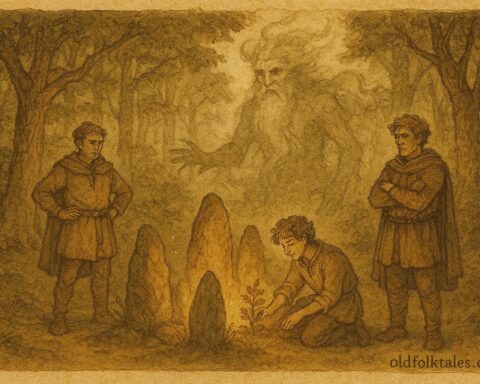
Carefully, she returned to the forest where she had found the box. Choosing a spot beneath a mighty oak, whose roots reached deep into the earth and whose branches touched the sky, she buried the ring. Whispering a prayer, she asked that only those with pure hearts, seeking justice and fairness rather than selfish gain, might one day find it. Her decision reflected not weakness, but the wisdom of restraint, a gift far rarer than the ring’s magic itself.
From that day forward, Marica relied not on magic but on her natural talents. She helped neighbors resolve disputes, guided the villagers in planting and harvest, and used her quick thinking to protect them from threats, both human and natural. She remained humble and generous, teaching through example that intelligence and courage, when paired with compassion, were far stronger than any enchanted object.
Over the years, the legend of Marica the Wise spread through the hills and valleys of Central Croatia. Travelers spoke of a girl who could outwit the cleverest landowners and heal the most complicated disputes. Even long after she had grown old, the villagers remembered her as a beacon of fairness and selfless wisdom, a woman who used her gifts not for personal glory, but to protect and uplift her community.
And so the village of Križevci, though small and unassuming, became a place where the people valued cleverness, fairness, and moral courage, all thanks to a girl named Marica, who understood that true power lies not in what one possesses, but in how one uses it.
Moral Lesson
True wisdom lies not in wealth or magical power, but in using one’s talents to benefit the community. Courage, selflessness, and integrity are far stronger than material gain or trickery.
Knowledge Check
-
Who is the main character of this Croatian folktale?
-
Marica, a clever village girl renowned for her intelligence and fairness.
-
-
What magical object does Marica find, and what does it do?
-
A carved wooden box containing a magical ring that grants insight, foresight, and understanding of others’ thoughts.
-
-
How does Marica use the ring to help her village?
-
She prevents greedy landowners from stealing crops and ensures fairness for the poor farmers.
-
-
What central theme does “Marica the Wise” highlight?
-
Wisdom over strength, moral responsibility, and community service.
-
-
What moral choice does Marica make regarding the magical ring?
-
She chooses not to use it for personal gain and buries it so only pure-hearted people may find it.
-
-
What is the cultural origin of this folktale?
-
Central Croatia, collected in 1858 by Matija Valjavec.
-
Source: Collected in the Matija Valjavec collection of Croatian folktales (1858)
Cultural Origin: Croatia, Central Croatia, rural oral tradition