Long ago, when the Great Hungarian Plain stretched like a golden sea under the endless sky, there lived a humble shepherd named Gábor. His days were spent tending a small flock of sheep, wandering the sun-baked fields and the winding riverbanks of the plain. Though poor, he was known in nearby villages for his honesty, gentle heart, and patience, a rare combination in a land where harsh winters and parched summers tested even the strongest of men.
One evening, as Gábor rested against the trunk of an old oak after leading his sheep to graze by the Kőrös River, he noticed an unusual light flickering across the horizon. It shimmered and glowed with the warmth of fire, moving like a living ember carried on the wind. He rubbed his eyes, thinking it a trick of the sunlight on the waving wheat, but the light persisted, growing brighter with every moment.
Step into the enchanted forests and mystical realms of the Slavic imagination
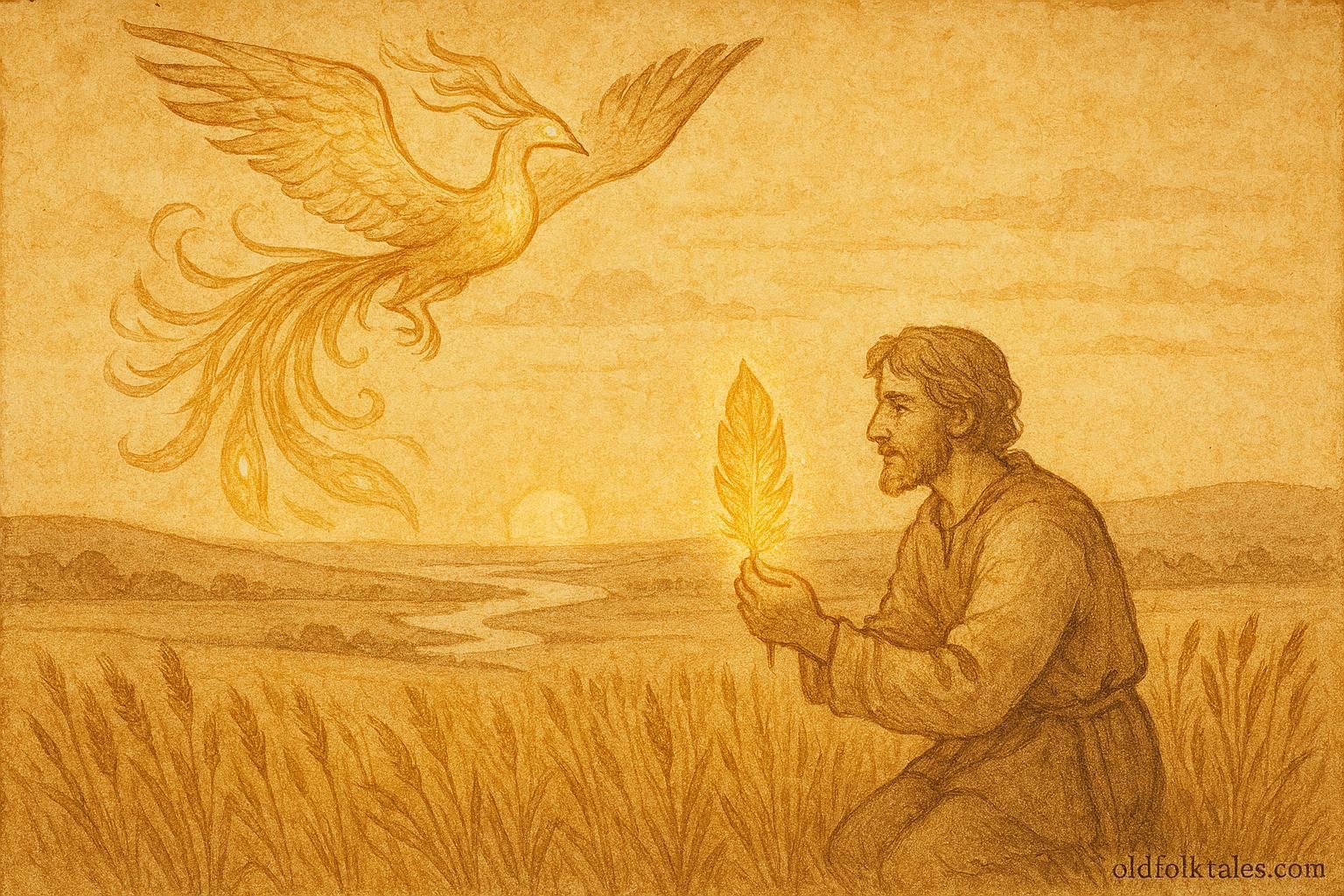
Curiosity pulled him forward, careful not to startle his flock. As he crested a gentle rise, the firebird revealed itself in full glory. Its feathers were a brilliant mix of gold, crimson, and amber, radiating light as though the sun itself had chosen this creature as its messenger. The firebird moved gracefully across the plains, dipping near the river and weaving through tall grasses. Its song was unlike any bird Gábor had ever heard, soft, melodic, carrying the warmth of sunlight and the sweetness of honey.
Gábor remembered the old legends told by the elders: “The firebird roams the plains, and any who can capture a golden feather without harming the bird will gain wisdom, moral insight, and the respect of the people.” Many had tried. Hunters with nets and traps, even the strongest young men from distant villages, had all failed. The firebird’s magic was subtle but profound; it would vanish in a blaze of light at the first hint of fear or greed.
“I will not harm it,” Gábor whispered to himself. “If the firebird is to teach me, I must learn, not conquer.”
For days, he observed the firebird from a safe distance, hiding among reeds, behind low hills, and under the shade of tall oaks. Each day, the bird appeared at dawn and dusk, always moving swiftly, always vigilant. Gábor began to notice patterns in its behavior. The firebird never landed near a disturbance, never lingered where there was noise, and often sang softly to itself while hopping along the fields and riverbanks.
Gábor decided that patience would be his ally. He built a small blind of reeds and straw near the river, concealing himself while keeping the bird in sight. Hours stretched into days, and he rarely moved, rarely spoke, waiting for the perfect moment. His hands grew rough from clutching his staff, his back ached from long hours of stillness, but his resolve never wavered.
On the seventh day, a cold wind swept across the plains, sending ripples through the wheat. Gábor felt a shiver of anticipation. The firebird appeared, as if drawn by the quiet respect of the shepherd. Its glowing feathers reflected the pale light of the rising sun, and it danced above the river, its song filling the air with warmth. Gábor remained motionless, holding out his hand as a gesture of peace.
For a moment, the firebird hesitated. Its head tilted, golden eyes studying the boy. Then, with a soft flutter, it brushed against his fingers, leaving a single golden feather in his palm. Gábor inhaled sharply, feeling warmth radiate from the feather. In that instant, he understood the lessons the firebird carried: patience, humility, respect for life, and the reward of virtue over force.
Word of Gábor’s feat spread quickly. Villagers from nearby towns and distant fields came to see the shepherd who had captured a firebird’s feather. Yet Gábor never boasted. He displayed the feather humbly, recounting his trials and emphasizing the importance of respect, patience, and careful observation. Many young men who had sought the firebird with greed in their hearts were humbled, learning that strength alone could not conquer the magic of the plains.
Seasons passed. Gábor’s wisdom became a beacon for the village. Elders sought his counsel, families asked for his guidance, and the firebird itself was said to visit him from time to time, perching briefly upon his roof or gliding across the fields as he tended his sheep. Though he remained a simple shepherd in appearance, Gábor’s heart and mind had grown vast and luminous, reflecting the wisdom of the mystical firebird.
The legend of Gábor and the firebird endured for generations. Children were taught to wait, to watch, and to respect the world around them. Hunters learned that patience and observation were as important as skill and strength. And the plains themselves, golden under the sun, became a place where stories of virtue, humility, and magical reward were etched into the hearts of all who lived there.
In the end, Gábor understood that the true magic was not in the feather itself, but in the discipline, reverence, and inner growth required to obtain it. The plains, the rivers, the wheat fields, and the ever-watchful firebird had taught him the greatest lesson of all: that wisdom and moral virtue outshine the allure of wealth or fame.
And so, under the vast skies of the Hungarian Plain, the firebird continued to roam, its feathers shimmering, its song carrying the warmth of the sun, and only those with patience, humility, and respect would ever hope to glimpse its light.
Moral Lesson
True achievement and recognition come through patience, humility, and respect for the world around us. Force, greed, or haste yield nothing, while virtue and careful action bring wisdom, growth, and lasting honor.
Knowledge Check
-
Who is the main character of the Hungarian firebird folktale?
-
Gábor, a humble and patient shepherd on the Great Hungarian Plain.
-
-
What mystical creature must Gábor approach without harming it?
-
The firebird, a magical bird with golden and crimson feathers.
-
-
What traits allowed Gábor to succeed where others failed?
-
Patience, humility, careful observation, and respect for the bird.
-
-
What rewards does Gábor gain from capturing the feather responsibly?
-
Wisdom, insight, moral growth, and recognition from his community.
-
-
What lessons about human behavior does the tale convey?
-
That patience, humility, and respect are superior to greed, force, or haste.
-
-
What cultural tradition does this story represent?
-
Hungarian plains folk tradition, recorded in the 19th century by Elek Benedek.
-
Source: Documented in the 19th century in Elek Benedek’s Hungarian folktale collections, c. 1890
Cultural Origin: Hungarian plains folk tradition