In the green valleys near Coimbra, where the Mondego River winds beneath ancient stone bridges and the bells of monasteries echo across tiled rooftops, there unfolded one of Portugal’s most enduring royal tragedies. Her name was Inês de Castro.
And her story would not end with her death.
The Court of Portugal
In the 14th century, the Portuguese court stood poised between ambition and instability. Alliances with Castile shaped policy. Noble families maneuvered quietly behind velvet-draped chambers. Marriage was not romance, it was strategy.
Prince Pedro, heir to the Portuguese throne, had been wed to Constança of Castile in a politically arranged union. Yet within the royal household served one of Constança’s ladies-in-waiting: Inês de Castro, noble-born from Galicia, graceful and intelligent.
It began not with scandal, but with conversation.
Pedro found in Inês something rare within court life, sincerity. Their exchanges grew longer. Their glances lingered. The court noticed.
Whispers spread through marble halls.
After Constança’s death, grief reshaped the court’s atmosphere. But rather than fade, Pedro’s attachment to Inês deepened. He withdrew with her to Coimbra, far from Lisbon’s calculating ministers. There, in relative quiet, their love flourished.
A Secret Marriage
Though history blurs certain details, the legend is clear: Pedro and Inês were secretly married.
The ceremony, said to have been performed privately, bound them not merely in affection but in legitimacy. Inês bore Pedro children. They lived as husband and wife in all but public recognition.
Yet Portugal’s political elite viewed this union with alarm.
Inês was foreign-born. Her family’s influence in Castile troubled the king, Afonso IV, Pedro’s father. Courtiers feared that her brothers might draw Portugal into unwanted conflict or weaken royal authority.
What Pedro saw as love, the council saw as threat.
And fear in royal courts rarely remains passive.
The King’s Decision
King Afonso IV wrestled with the matter. He had already witnessed unrest among nobles. Rumors circulated that Pedro intended to secure Inês as queen upon his accession.
Counselors urged decisive action.
They argued that removing Inês would preserve stability. They warned of civil discord. They invoked the safety of the kingdom.
At last, in 1355, the king gave the order.
Inês de Castro was to be executed.
The Garden at Coimbra
The deed took place near the Monastery of Santa Clara-a-Velha in Coimbra, where Inês had been living.
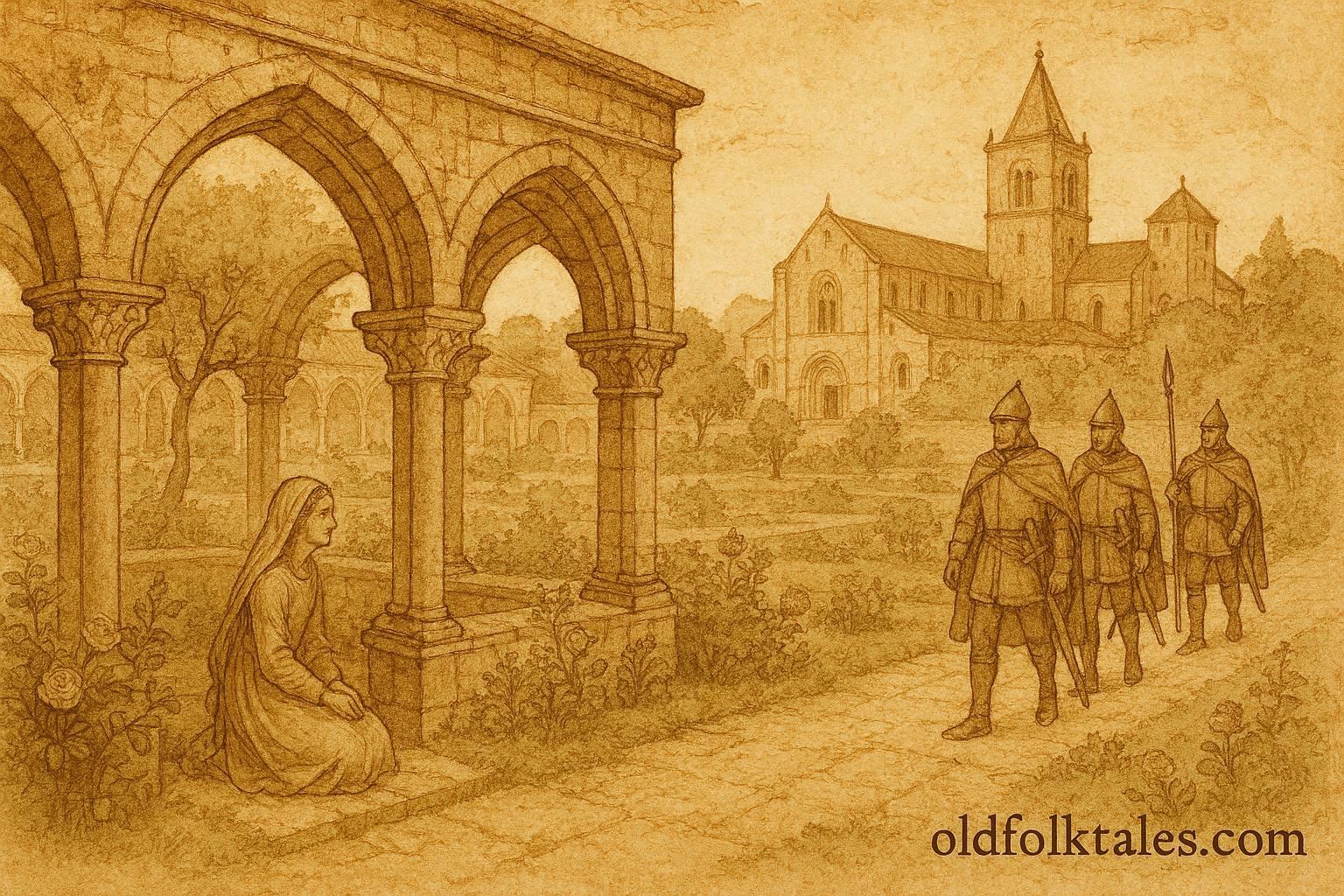
Accounts describe her pleading not for her life alone, but for the safety of her children. She knelt before the king’s emissaries in the monastery gardens, surrounded by stone walls and fruit trees heavy with early spring blossoms.
Whether the king was present or whether his men acted under firm instruction varies by telling. But all agree: Inês was put to death.
The blade fell.
And Portugal was changed.
Pedro’s Fury
When Prince Pedro learned of her execution, grief gave way to rage.
He did not weep quietly.
He rebelled.
Raising supporters loyal to him, Pedro confronted his father’s authority. Though reconciliation eventually occurred before Afonso’s death, the wound remained.
When Pedro ascended the throne as King Pedro I of Portugal, his first acts were not ceremonial, they were judicial.
He declared publicly what had been whispered privately:
Inês de Castro had been his lawful wife.
And therefore,
She had been Queen of Portugal.
Justice After Death
Pedro ordered the execution of those directly responsible for Inês’s death. Chroniclers describe dramatic punishments, though historians debate precise details. What remains consistent is Pedro’s insistence on retribution.
But his most unforgettable act came afterward.
He commanded that Inês’s remains be exhumed.
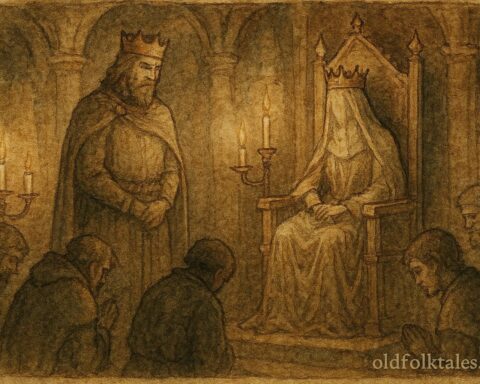
In solemn procession, her body was transported to the royal monastery at Alcobaça. There, according to legend, Pedro had her crowned as queen, even in death.
One version of folklore claims he required members of the court to swear allegiance by kissing her skeletal hand. Whether literal or symbolic, the story endured because it expressed something larger than historical precision.
Pedro refused to allow love to be erased by politics.
He refused to let her memory be diminished.
In life denied her crown, in death he bestowed it.
The Tombs at Alcobaça
Pedro ordered magnificent tombs constructed in the Monastery of Alcobaça. They were placed facing one another so that, as legend says, when the Last Judgment comes and the dead rise, their first sight will be each other.
Carved angels support their resting places. Scenes of judgment and redemption adorn the stone. The artistry reflects not merely royal wealth but enduring devotion.
Visitors to Alcobaça still stand between those tombs in quiet reflection.
Stone cannot weep.
But it remembers.
Folklore and Legacy
Over time, the tragedy of Inês de Castro transcended chronicle and entered folklore.
Poets retold her plea in the garden. Ballads carried her name through villages. Dramatists transformed Pedro into a king torn between crown and heart.
She became a symbol of love beyond death.
Of injustice answered, if too late.
Of legitimacy reclaimed through declaration.
In Coimbra, where students walk beneath ancient university walls and the Mondego still flows past monastery ruins, her story lingers like evening light.
The tale warns rulers of political cruelty.
It honors devotion that outlives mortality.
And it reminds Portugal that power may command death, but memory commands history.
Moral Lesson
Love, when bound by truth, can outlast death itself. Political power may silence a life, but it cannot erase devotion or deny justice forever.
Knowledge Check
-
Who was Inês de Castro?
A noblewoman secretly married to Prince Pedro of Portugal. -
Why was Inês executed?
Political fears about her family’s influence and royal legitimacy. -
What did Pedro declare after becoming king?
That Inês had been his lawful queen. -
Where did Inês die?
Near the Monastery of Santa Clara-a-Velha in Coimbra, Portugal. -
What symbolizes their eternal love today?
Their facing tombs in the Monastery of Alcobaça. -
What themes define this Portuguese legend?
Love beyond death, political power, revenge, and legitimacy.
Source: Chronicled by Fernão Lopes in 15th-century royal chronicles (c. 1440s).
Cultural Origin: Coimbra, Portugal.