Along the wide flowing waters of the Vistula River, the longest and most storied river in Poland, fishermen and travelers have long whispered about a spirit who appears at dusk. They call her the Wiślana Rusałka, the Water Spirit of the Vistula.
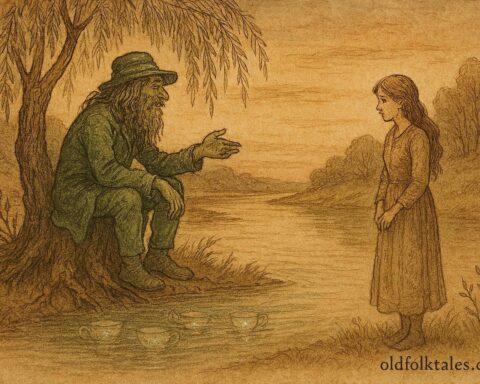
Some say she glides across the river like mist rising from the surface. Others claim she sits quietly upon the reeds, her reflection rippling in the darkening water.
But all agree on one thing: the river belongs to her, and those who respect its power may receive her help.
Those who do not… may face her wrath.
The River of Many Stories
For centuries, the Vistula River has carried boats, merchants, and fishermen across the heart of Poland. Its waters pass through forests, farmland, and ancient towns before finally reaching the Baltic Sea.
To the people who live along its banks, the river is more than a source of fish and travel.
It is a living presence.
Old villagers often say that rivers remember everything: every storm, every boat that sails upon them, and every careless traveler who forgets their power.
Among the many legends of the river, none is more famous than the tale of the Wiślana Rusałka.
The First Sightings
Long ago, fishermen returning late from their nets began reporting strange encounters.
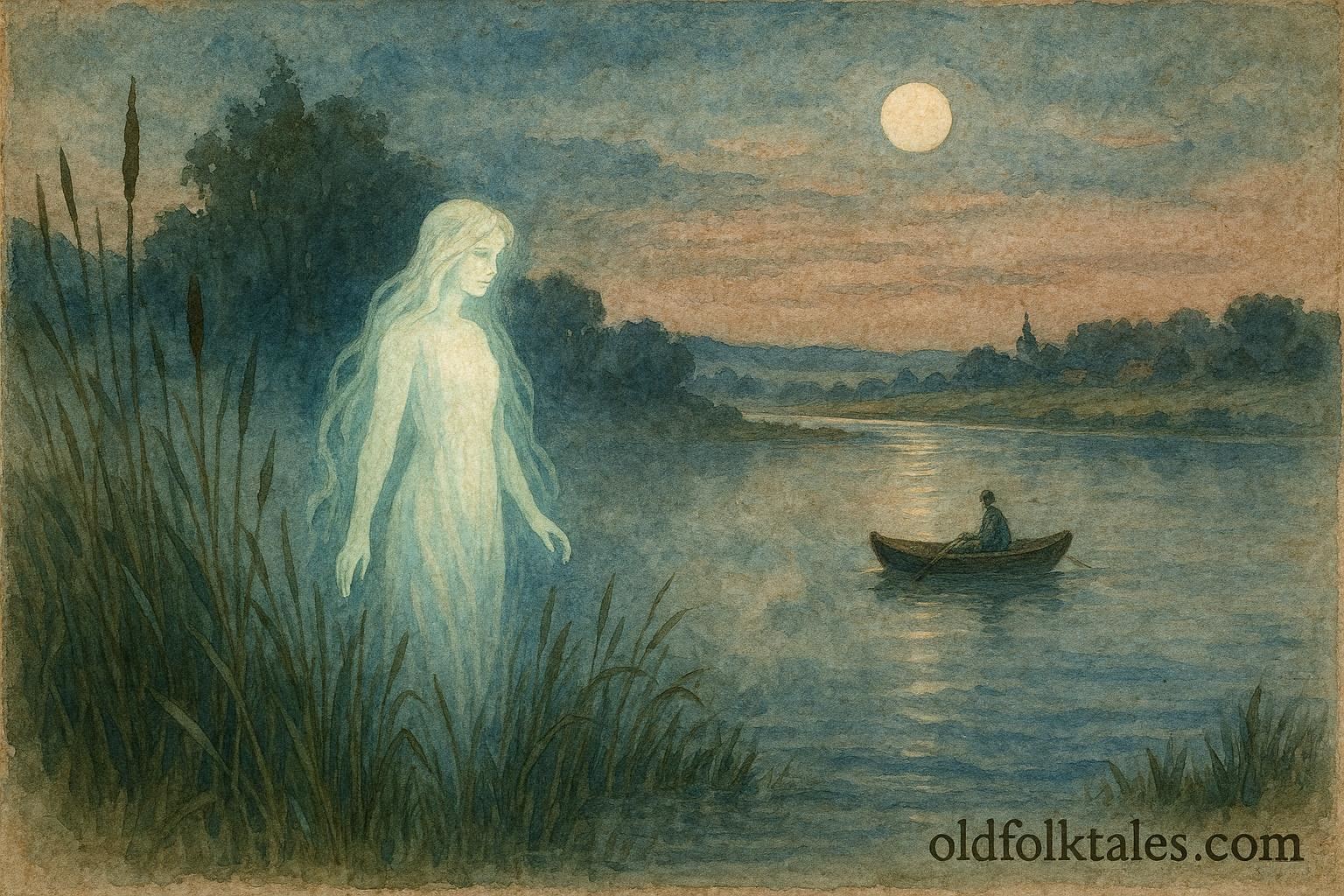
At dusk, when the sky glowed purple and gold above the water, a figure sometimes appeared near the riverbank.
She looked like a young woman with long flowing hair that shimmered like moonlight on water. Her dress seemed woven from mist and reeds, and her voice carried across the river like a distant song.
Some fishermen claimed she warned them about storms before dark clouds appeared.
Others said she guided lost boats safely back to shore when fog covered the river.
But not every story about the Rusałka ended kindly.
The Proud Merchant
One of the most famous stories concerns a traveling merchant named Janek, who once sailed along the Vistula River with a boat full of goods.
Janek was wealthy and proud. He often mocked the superstitions of riverfolk.
“Spirits in the water?” he laughed. “Stories for children and fishermen who spend too long staring at waves.”
One evening, as his boat drifted through a quiet bend of the river, a soft voice echoed across the water.
“Traveler,” it said gently, “the current grows dangerous ahead. Turn back before nightfall.”
Janek looked toward the shore and saw the figure of the Rusałka standing among the reeds.
Instead of thanking her, he scoffed.
“I take orders from no river ghost,” he replied.
And he continued downstream.
The River’s Wrath
As darkness fell, the river began to change.
The water grew restless, and strong currents twisted beneath the surface. Hidden rocks appeared where the river narrowed between steep banks.
Soon Janek’s boat struck one of them with a terrible crack.
The hull split open, and icy water rushed inside.
Panic filled the boat as the merchant struggled to save his cargo.
Through the roaring wind he heard the same voice once more.
“The river gives warnings only once.”
Moments later the current carried the wrecked boat toward the shore.
Janek survived, but most of his cargo was lost beneath the dark waters.
From that day forward, he never mocked the river again.
The Lost Traveler
Yet the Rusałka was not only a spirit of punishment.
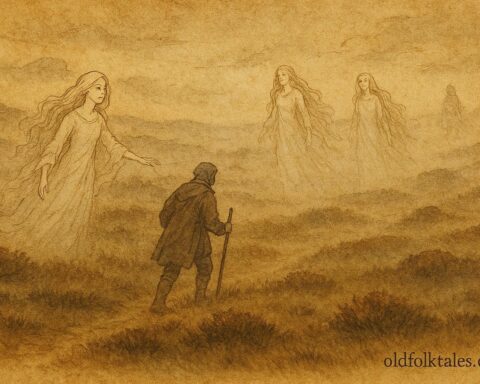
Another story tells of a young traveler who became lost in the marshlands beside the Vistula River.
Night fell quickly, and thick fog rolled across the water. The traveler wandered helplessly among reeds and muddy banks, unsure which direction led to safety.
Just as fear began to overwhelm him, a soft glow appeared ahead.
There stood the Wiślana Rusałka, her hair drifting in the cool night air.
“Follow the light,” she said quietly.
The traveler obeyed.
Step by step, she guided him through the marsh until the warm lights of a riverside village appeared in the distance.
When the traveler turned to thank her, the spirit had already vanished.
Only the gentle sound of flowing water remained.
A Spirit of Two Worlds
Stories like these spread through villages along the Vistula River.
Some described the Rusałka as a guardian spirit who protected the river and those who respected it.
Others believed she represented the river itself, beautiful, mysterious, and powerful.
For the river could give life through fish, water, and trade.
But it could also take life away when treated carelessly.
In this way, the Rusałka reflected the true nature of the water she guarded.
The Fishermen’s Tradition
Even today, some fishermen along the Vistula River follow an old custom.
Before casting their nets at dusk, they quietly place a small offering into the water, perhaps a piece of bread or a handful of grain.
It is not a sacrifice.
It is simply a gesture of respect.
A reminder that the river is not just a path for boats, but a living force that deserves gratitude.
The Spirit at Dusk
Travelers who walk along the riverbank at sunset sometimes notice something unusual.
When the evening mist rises from the water and the reeds sway gently in the breeze, a faint reflection may appear where no person stands.
A shape like a figure watching the current.
A shimmer of pale light moving across the river.
And for a brief moment, it almost seems as if someone is standing quietly beside the flowing water, guarding it.
Watching.
Waiting.
Step into the enchanted forests and mystical realms of the Slavic imagination
Moral Lesson
The Water Spirit of the Vistula teaches that nature must be treated with respect. Like the river itself, the supernatural world can be both generous and unforgiving, rewarding humility while punishing arrogance.
Knowledge Check
1. Who is the Wiślana Rusałka?
A legendary water spirit said to guard the Vistula River.
2. When does she usually appear?
At dusk along the riverbanks.
3. How does she treat respectful travelers?
She may warn them of danger or guide them safely home.
4. What happens to those who mock the river?
They may face misfortune or the river’s wrath.
5. What does the spirit symbolize?
The powerful and unpredictable nature of rivers.
6. What tradition do fishermen follow?
They offer small tokens of respect before fishing.
Source: Recorded in Polish ethnographic studies by Zygmunt Gloger, 1890s
Cultural Origin: Vistula River basin, central Poland