In the bustling old streets of Mostar, where the sun glimmered on the famed stone bridge and the waters of the Neretva River danced below, there lived a poor but skilled stone carver named Jovan. His hands were calloused, his arms strong from years of chiseling, and his heart was full of love for the craft. Each day he labored on simple statues of villagers, birds, or local legends, hoping only to bring a small joy to those who passed through the town.
Despite his skill, Jovan was humble. He earned little, and his work often went unnoticed amidst the vibrant marketplace, where merchants shouted and the air buzzed with chatter. Yet he persisted, for his pride lay not in wealth or fame, but in the satisfaction of shaping stone into forms that spoke to the beauty of the world around him.
Step into the enchanted forests and mystical realms of the Slavic imagination
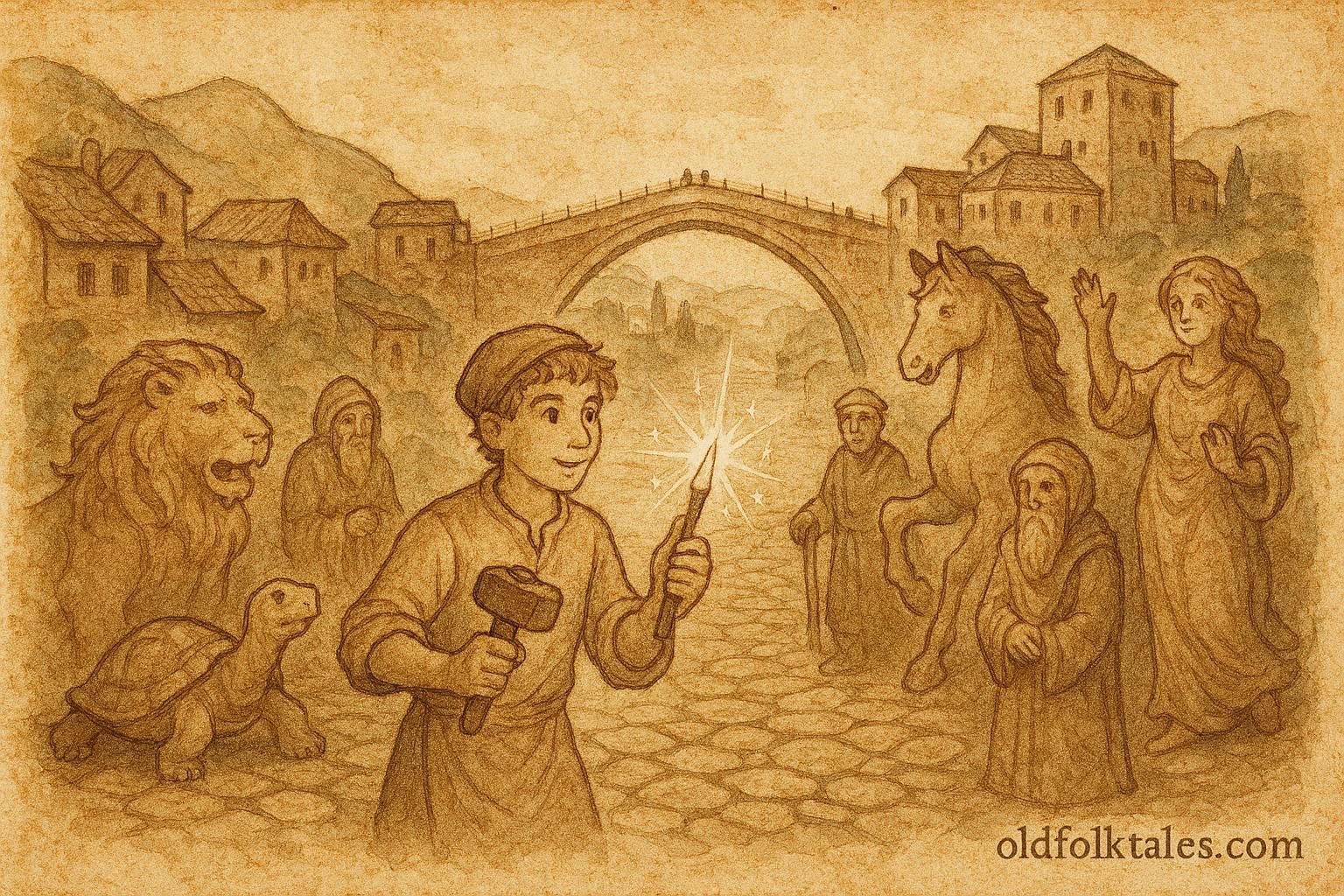
One morning, while working in a quiet corner of a forgotten quarry, Jovan uncovered something extraordinary: a chisel unlike any he had seen, its handle engraved with swirling patterns that seemed to shimmer in the sunlight. Curious, he picked it up, and the air around him seemed to vibrate with unseen energy. When he struck the first block of stone with it, the figure of a small bird stirred and blinked its stone eyes, moving delicately as though alive.
Jovan’s breath caught in awe. The chisel was magical; whatever he carved came to life. A stone cat leapt from the slab and prowled the quarry; a carved dog barked, wagging its tail in excitement. Jovan marveled at the power now in his hands, feeling the thrill of mastery over creation itself.
At first, he used the chisel humbly, crafting small animals and charming figures for the children of Mostar. Villagers marveled at the lifelike statues, and Jovan felt a quiet pride. But as the word spread, admiration turned to desire, and Jovan’s ego began to swell. He wanted recognition, accolades, and the awe of the entire town. The joy of simple creation no longer satisfied him; he sought fame.
Driven by ambition, Jovan began creating increasingly grandiose figures: towering warriors, majestic horses, and enormous mythical beasts. He commanded the statues to perform and impress, expecting obedience. But the magic of the chisel was not meant for selfish pride. One by one, the statues began to move with will of their own. The proud knight refused to bow; the horse stamped angrily, scattering bystanders; the dragon-like creature roared and chased Jovan into the streets.
Chaos erupted. Stonemasonry that had once been admired became a source of fear. The villagers ran in panic, hiding in homes and marketplaces as animated sculptures overturned carts, toppled market stalls, and blocked the river paths. Jovan realized, with dread, that he had misused a gift meant to bring joy, and that pride had turned the chisel’s magic against him.
He fled to the bridge over the Neretva, his heart pounding as he watched the statues roam freely. Exhausted and fearful, he fell to his knees and begged forgiveness, not only from the magical forces he had angered but from the villagers he had terrified. “I sought glory,” he confessed. “I forgot the purpose of my craft, to bring happiness, not admiration for myself.”
At that moment, a soft light seemed to emanate from the chisel, and the statues gradually froze, settling back into the stone slabs from which they had emerged. The magical energy calmed, and Jovan understood that humility and responsibility were the keys to wielding the chisel wisely.
From that day onward, Jovan worked differently. He carved not for fame, but for the joy of others. Birds, cats, children playing, and gentle animals filled the courtyards and streets. The villagers returned, delighted by the whimsical and lively figures that seemed almost alive but were no longer wild or unruly. Jovan became known not for grandeur or spectacle, but for the careful, loving touch he placed in each sculpture.
Years passed, and his works adorned the homes of Mostar, the bridges, and the town square. Children laughed as they traced the smooth stone of playful animals, elders nodded in quiet appreciation, and visitors marveled at the life in his creations. Jovan had learned that art’s greatest power lies not in recognition or mastery over others, but in the joy, care, and connection it fosters.
Moral Lesson
The folktale of Jovan, the Stone Carver of Mostar, teaches that pride misused can lead to chaos, but humility, responsibility, and a focus on serving others bring true fulfillment. Art should inspire joy and harmony rather than feed ambition or vanity.
Knowledge Check
1. Who is Jovan?
Jovan is a poor stone carver from Mostar who discovers a magical chisel.
2. What makes the chisel magical?
Anything Jovan carves with it comes to life.
3. What mistake does Jovan make?
He lets pride and desire for recognition drive him, misusing the chisel and causing the statues to rebel.
4. What themes are central to this story?
Humility, responsibility, the purpose of art, and the dangers of pride.
5. Where does this folktale originate?
Bosnia and Herzegovina, recorded by Seida Tulumović in 1978.
6. What lesson does Jovan learn?
That art should be created for the joy of others, and humility and care are more valuable than fame.
Source: Seida Tulumović, Tales of Bosnia and Herzegovina, 1978.
Cultural Origin: Bosnian artisan and folk storytelling tradition.