In the heart of Bosnia, where the Neretva River winds like a silver ribbon through emerald valleys and jagged cliffs, life followed the rhythm of the river. Villagers lived in small, clustered homes of stone and wood, their livelihoods bound to the water that nourished their fields, powered their mills, and carried their boats laden with fish and goods. For generations, they had revered the river, not only as a provider but as a living spirit whose moods shaped their fates.
The elders spoke of a river maiden, known to some as Vesna, who dwelled in the deepest pools and along hidden channels of the Neretva. She was said to appear only to those who treated the river with care, her beauty radiant as the sun glinting off the water. Her hair shimmered silver, like moonlight rippling across the current, and her eyes mirrored the deep green pools hidden beneath the cliffs. It was whispered that Vesna would warn of storms, floods, or unseen dangers, but she demanded respect in return: nets untangled, fish not overfished, and the riverbank kept clean. Those who took heed could hear her voice; the careless and greedy could not.
Among the villagers was a young fisherman named Dario, known for his gentle manner and reverent attitude toward the river. Unlike others, he never cast his nets recklessly, always mended broken lines, and spoke softly to the water as he worked. From childhood, he had listened to the elders’ stories, observing how the river could shift suddenly and how the creatures of the water responded to kindness. The river was his teacher, and he obeyed its lessons with humility.
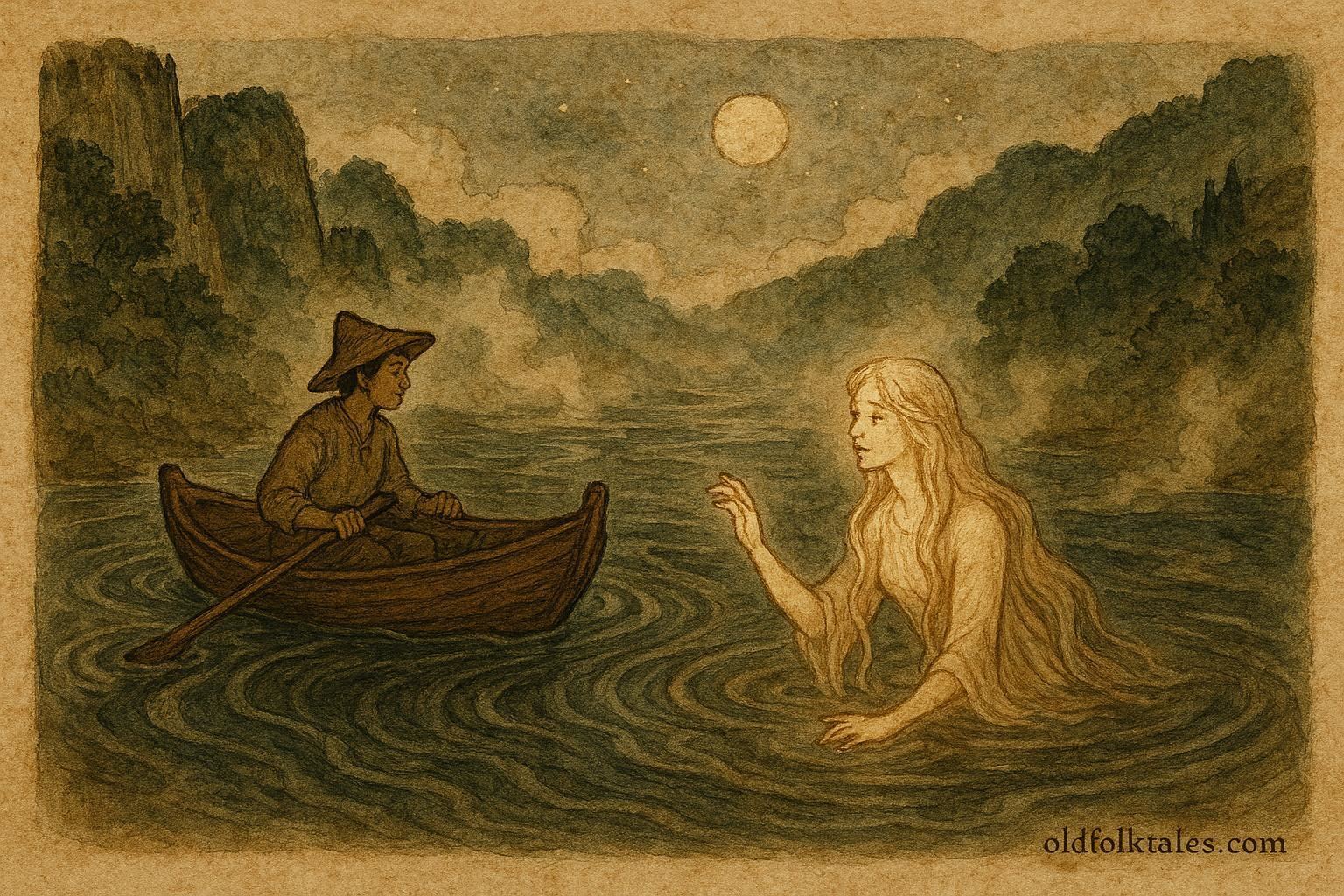
One late afternoon, as Dario pushed his small wooden boat into the river’s gentle current, a soft voice rippled across the water. It was almost imperceptible, like the whisper of leaves in the wind, yet it carried a melody that tugged at his heart.
“Dario… Dario…”
He froze, the oars hovering over the water. His pulse quickened as the voice repeated, soft and musical. “Prepare yourselves… the river rises… danger approaches…”
Emerging from the emerald waves, the figure of Vesna appeared. She rose slowly, her silver hair flowing around her like liquid light. Her eyes held both warning and compassion. “A flood comes,” she said. “The waters will rise beyond the banks and sweep the valley. Prepare your village, or all will be lost.”
Dario’s heart pounded. He knew the maiden spoke truth. Without hesitation, he pulled his boat ashore and ran to the village, shouting for everyone to gather. At first, the villagers laughed, thinking he spoke in fear or imagination. “A river maiden?” some muttered. “You’ve been watching the water too long, boy.”
But Dario’s urgency and the sincerity in his voice stirred some of the elders. They nodded, recalling the ancient tales, and began organizing the villagers. They gathered sand, stones, and timber, reinforcing homes and building makeshift barriers along the river’s edge. Livestock was moved to higher ground, and families prepared to flee if the waters grew beyond control.
Night fell, and the storm began. The sky darkened with swollen clouds, the wind tore through the valley, and rain hammered down in relentless sheets. The Neretva swelled, its current churning violently, waves crashing against the newly built barricades. Villagers who had ignored Dario’s warnings were caught unprepared, scrambling desperately to save what they could, while those who had listened found relative safety behind walls of stone and sandbags.
Vesna glided along the river’s surface, guiding branches, uprooted trees, and debris safely past the fortified areas. Her presence was radiant yet commanding, a reminder that the river, like life itself, rewarded care and foresight. Dario, soaked and exhausted, kept close to the banks, helping the villagers maneuver their boats, carrying children to safer ground, and reinforcing weak points along the river.
Hours passed in tension. The storm’s fury seemed unending. Thunder rolled through the cliffs, and lightning split the sky above the raging waters. But Dario did not falter. He listened to Vesna’s subtle guidance, the gentle shifts in the river’s current, and the signs in the wind and rainfall. Step by careful step, the village survived the night’s onslaught.
At dawn, the rain eased. The river slowly receded, leaving behind a landscape soaked and muddy but intact. Homes remained standing, livestock was safe, and the villagers were shaken but alive. From the river’s edge, Vesna appeared once more, shimmering in the pale morning light. She gazed upon Dario and the villagers with a soft, approving smile. “You have honored the river,” she said. “Its gifts are preserved for those who show respect. Remember this always, for disregard will bring sorrow.”
Dario knelt at the riverbank, his hands pressed against the wet stones. “Thank you, Vesna,” he whispered. “I will never forget.”
The villagers, awed by the events, changed their ways. They fished responsibly, kept the riverbanks clean, and passed down stories of the river maiden to each new generation. Dario continued his work as a fisherman, but he also became a teacher, guiding young boys and girls in the ways of the river, sharing both its beauty and its demands.
Years later, travelers along the Neretva would hear whispers of a shining maiden in the water and a humble fisherman who listened. The story of Dario and Vesna became a symbol, reminding all that nature is alive, wise, and responsive, rewarding those who act with reverence and foresight, while showing no mercy to the careless or arrogant.
Even now, it is said, on quiet evenings when the river shimmers under the sun and mist rises from the waters, those who walk the banks with respect might hear Vesna’s gentle voice, guiding, teaching, and protecting.
Moral Lesson
The folktale of the River Maiden of Neretva teaches that reverence for nature, foresight, and communal care are vital. By listening and acting responsibly, humans can prevent disaster and coexist in harmony with the natural world, while greed, neglect, or arrogance can lead to loss and danger.
Knowledge Check
1. Who is Vesna?
Vesna is the river maiden of the Neretva River who warns respectful villagers of impending danger.
2. Why does Dario hear Vesna while others do not?
Because he treats the river and its creatures with care and respect, demonstrating reverence.
3. What natural disaster threatens the village?
A sudden flood caused by heavy rainfall and the swelling Neretva River.
4. How do the villagers survive the flood?
By following Dario’s guidance, reinforcing homes, moving livestock, and respecting the river.
5. What is the central theme of this folktale?
Respect for nature, foresight, communal protection, and attentiveness to natural spirits.
6. Where does this story originate?
Bosnian Slavic river folklore, recorded in Legends of the Balkans by Marko Simić in 1982.
Source: Marko Simić, Legends of the Balkans, 1982.
Cultural Origin: Bosnian Slavic river folklore, Bosnia.