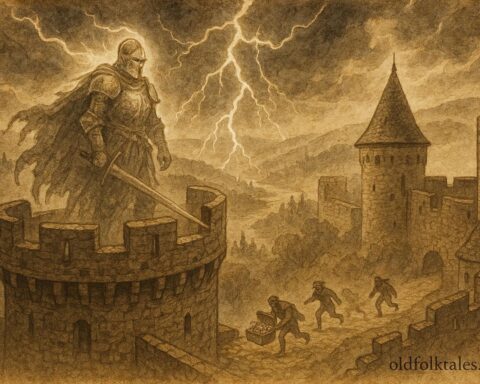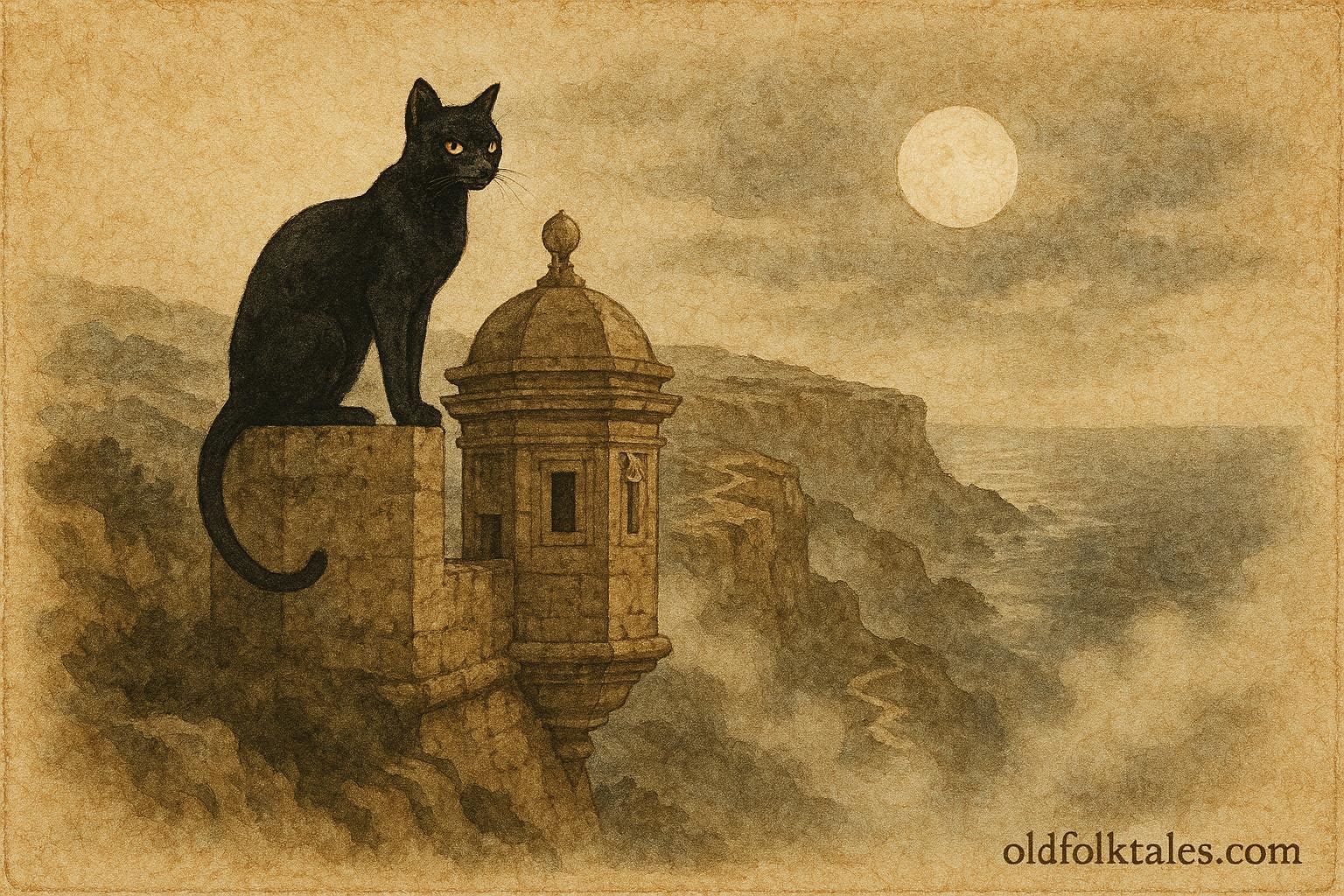
High on the rugged cliffs of Coastal Malta, where the limestone cliffs met the restless Mediterranean Sea, an ancient watchtower stood sentinel over the waves. Weathered by centuries of wind and salt, the tower had long ceased its military purpose, yet the locals whispered of a guardian that still prowled its parapets: a black cat, sleek and silent, with eyes like molten amber.
The villagers called it Il-Qattus tal-Qawra, the Cat of the Tower. They claimed the creature was no ordinary feline; it could speak to those of pure heart, guiding them along the narrow, cliffside paths. Yet those who were deceitful or greedy found themselves ensnared by unseen traps, slipping on hidden rocks or losing their way in the fog that rolled from the sea.
Among the villagers lived a young fisherman named Marco, known for his honesty, courage, and gentle nature. He often ventured along the cliffs to check his nets or gather shellfish, observing the waves with patience and respect. One evening, as the sky blushed with the last light of sunset, Marco approached the old watchtower, unaware that this night would mark the beginning of a remarkable tale.
As he neared the tower, he heard a soft, almost musical voice:
“Who treads these paths with honesty and care may pass safely. Those with deceit shall falter.”
Startled, Marco glanced around and saw the black cat perched upon the parapet, its fur glimmering in the fading sunlight. Its amber eyes locked onto his, as if peering into his very soul.
“I mean no harm,” Marco said respectfully. “I seek only to return home safely along the cliffs.”
The cat leapt gracefully from the tower, landing lightly before him. Its voice, soft and resonant, whispered:
“Follow my guidance, and you will navigate the treacherous path unharmed. Heed my warnings, for the cliffs are cunning, and the sea unforgiving.”
Marco bowed, astonished yet trusting. The cat led him along narrow ledges, past hidden crevices, and over slippery rocks. Occasionally, it paused, glancing back to ensure he followed, or brushing a paw against a danger so subtle he might have missed it, a loose stone, a sudden drop concealed by shadow, a patch of algae slick from sea spray.
Word of Marco’s encounter spread through the village. Some villagers were skeptical, claiming a cat could not speak. Others, having heard the tales from their grandparents, knew the truth: the Cat of the Tower was a guardian spirit, testing character and rewarding respect, caution, and honesty.
Not everyone who ventured near the tower was so pure of heart. One merchant, Giuseppe, greedy and cunning, attempted to reach the cliffs to claim valuable shells and herbs rumored to grow near the waves. He ignored the villagers’ warnings, calling out mockingly at the cat and laughing at tales of its wisdom.
The cat observed silently as Giuseppe stumbled along the paths. Fog rolled in suddenly, disorienting him. Rocks shifted beneath his feet, and the winds, seemingly alive, forced him back. No voice guided him; only his own greed and arrogance led him into traps hidden by nature itself. By the time Giuseppe returned to the village, he was bruised, shaken, and chastened, but wiser, if only slightly.
Meanwhile, Marco continued to benefit from the cat’s guidance. Over time, he discovered that the feline did more than merely lead travelers: it sensed the intentions of the heart, revealing hidden coves rich with clams and safe harbors for fishing, and warning of storms brewing offshore. When a sudden tempest threatened to sweep fishermen away, Marco followed the cat’s signals and brought his friends to shelter, saving lives and reinforcing the belief that honesty and attentiveness bring protection.
One night, during a festival celebrating the harvest of the sea, Marco ventured again to the tower. The cat greeted him, its voice both gentle and solemn:
“You have honored these paths with respect and honesty. Soon, you shall understand the deeper gift I bring.”
The cat led him to a hidden grotto beneath the cliffs, unseen by ordinary eyes. Within, pearly treasures glimmered, and the waves whispered secrets of currents, tides, and safe passages that even the most experienced sailors could misread.
“This knowledge is yours,” said the cat. “Use it wisely, for it is earned by virtue, not greed. Protect your village, respect the sea, and the paths will remain safe for those who walk with honesty.”
From that day onward, Marco became a revered guide. Travelers who followed his advice, whether returning from fishing or journeying along the cliffs, never strayed into danger. He taught that respect, for nature, for the unknown, and for guardian spirits like Il-Qattus tal-Qawra, was essential to survival.
Years passed, and Marco grew old. The cat continued to patrol the tower, silent to the deceitful, patient with the virtuous, a living embodiment of moral guidance and protection. The villagers told stories to children of the black cat with amber eyes, warning that the cliffs themselves were alive with judgment: honesty would light the path, while cunning and deceit would lead only to peril.
Even today, visitors to Malta speak in hushed tones of a black cat that watches from an old tower, guiding those who act with integrity, and reminding all who see it that courage, respect, and honesty are treasures in their own right.
Explore the warmth and wit of Mediterranean storytelling, where love and wisdom intertwine
Moral Lesson
Il-Qattus tal-Qawra teaches that honesty, respect, and attentiveness to guidance ensure safety and reward, while deceit and greed bring misfortune. True guardianship may be unseen, but virtue aligns one with protection and wisdom.
Knowledge Check
1. Who is Marco?
A young, honest fisherman who respects the Cat of the Tower and follows its guidance.
2. What is the role of Il-Qattus tal-Qawra?
A black cat guardian of the cliffs, speaking to the honest and leading liars into danger.
3. How does the cat help travelers?
By warning of hidden dangers, guiding them along treacherous paths, and revealing safe passages.
4. What happens to those with deceitful intentions?
They are misled by fog, slippery rocks, and natural hazards, illustrating that dishonesty brings danger.
5. Where does this folktale originate?
Coastal Malta; collected in Studies in Maltese Folklore by Joseph Cassar Pullicino (1964).
6. What is the central theme of the story?
Honesty rewarded, cunning and deceit punished, and respect for guardian spirits and the unknown.
Source: Joseph Cassar Pullicino, Studies in Maltese Folklore, 1964
Cultural Origin: Coastal Malta