The Scottish Highlands were a land of craggy hills, mist-wrapped valleys, and rivers that twisted like silver snakes through the heather. In the village of Knockmany, the people lived in small, stone cottages with thatched roofs, surrounded by rolling pastures and rugged forests. Their lives were simple but precarious. The land gave them food and shelter, but it could just as easily take life in the form of sudden storms, disease among the sheep, or harsh winters that left homes cold and empty.
Amid these wild hills, there lived a woman whom the villagers called only the woman of Knockmany. She was neither young nor old, though her dark eyes carried the wisdom of many winters. Her hands were rough from gathering herbs, working the soil, and tending fires. She spoke little in public, but those who had been in her cottage knew her knowledge was profound. She could ease fevers, mend broken limbs, and prepare poultices that restored strength to both people and animals.
Experience legends where mountains breathe magic and heroes face moral choices that shape destiny
Yet her solitude, her knowledge of charms, and her unusual ways made the villagers uneasy. It was said she could see things others could not. She drew patterns in the earth, whispered words no one understood, and kept jars of strange roots, leaves, and waters.
When misfortunes struck the village, a cow collapsing in the field, a sudden fever among the children, or a storm that destroyed a barn, whispers spread quickly. The woman of Knockmany was blamed.
“She bewitched us,” the farmers muttered. “Her magic brought the plague upon our livestock.”
“Surely she is a witch,” others said. “Only one with powers unnatural could cause such trouble.”
Fear is a cruel companion in the Highlands. It traveled faster than the wind that swept across the hills, carrying suspicion from cottage to cottage. Soon, the woman of Knockmany found herself shunned. Children were kept from her path, neighbors avoided her on the hills, and even the bravest men hesitated before entering her little stone cottage.
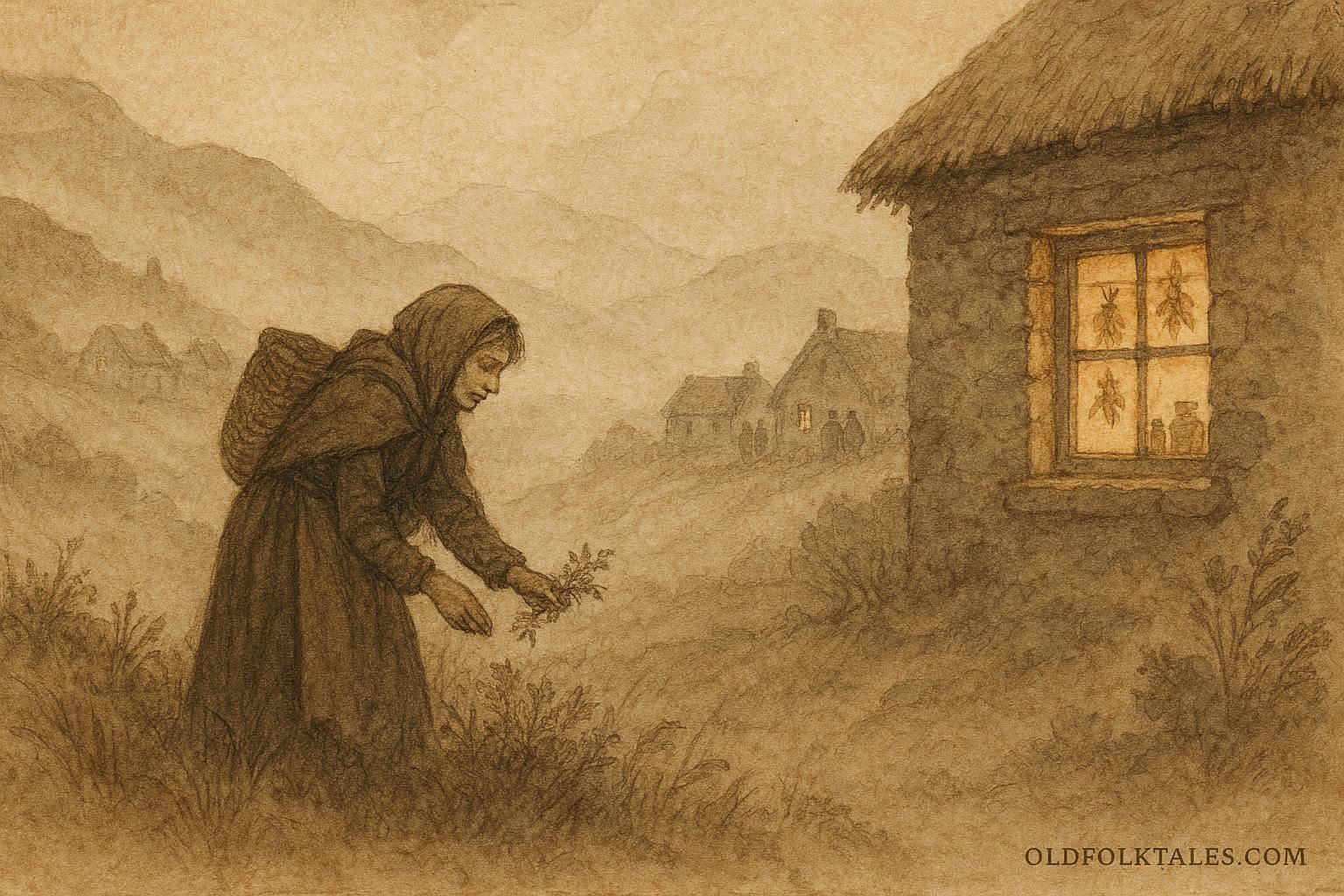
Despite this, she continued her work. She gathered herbs at dawn, selecting roots from the damp soil and leaves from the forest floor. She knew the properties of each plant: which eased fevers, which soothed the stomach, which could strengthen the heart. Each evening, she returned to her cottage to prepare remedies, chant protective words, and place small charms near windows and doors.
One year, in the heart of winter, misfortune struck the village harder than ever. A terrible illness spread among the children, leaving them weak, fevered, and pale. Families were desperate. Fires burned in every home, and prayers were whispered to saints and spirits alike. But the remedies of the local healer and priests failed to work. Fear clutched the hearts of every villager.
In their desperation, some of the braver families approached the woman of Knockmany. Their first visits were tentative, their eyes wary, yet the villagers found her calm and resolute. She welcomed them inside her small, smoky cottage, warmed by peat fires and shelves lined with herbs, dried flowers, and jars of mysterious liquids.
“Bring them to me,” she said softly, her voice carrying both authority and reassurance. “I will do what I can.”
The woman worked tirelessly through the nights, boiling roots into fragrant teas, mixing poultices for the fevered children, and whispering protective words over the doors and windows of each cottage. She instructed parents carefully: “Give them this, wash them with that, and speak these words. Fear weakens the body. Courage strengthens it.”
The villagers began to see the fruits of her labor. Children recovered more quickly than anyone had dared hope. The livestock regained vigor, the sheep returned to the fields, and the storm-damaged barns seemed to be spared further misfortune.
As the days passed, awe replaced fear. Those who had once whispered accusations now bowed to her knowledge. They realized that the woman of Knockmany had never caused harm; rather, she had used her wisdom to prevent it. Her so-called “witchcraft” was, in truth, a skill honed over years of observation and careful study of the natural world.
Still, the memory of fear lingered. Some villagers remembered the times of misunderstanding, the spilled milk, the sudden illness, the storms, and shivered. It became clear that fear often springs from misunderstanding, and that those who wield knowledge quietly may be judged harshly by those who know little.
In time, the woman of Knockmany became a guardian of the village. Her presence inspired respect and caution in equal measure. Parents brought their children to her not in fear, but in hope. Farmers consulted her before planting crops or treating sick animals. And at night, when the mist rolled through the hills and the wind rattled the cottage shutters, villagers whispered words of gratitude for the woman who had once been feared.
Even the children, who had once hidden at the sight of her, began to learn from her. She taught them which herbs could heal, how to respect the animals, and how to listen to the whispers of the wind and water. Her legacy spread quietly, like seeds carried by the Highland breeze.
And yet, the tale of fear and suspicion did not vanish entirely. Stories of her being accused as a witch continued to be told around fires, especially when storms raged or crops failed. They reminded villagers that fear of the unknown could blind judgment and that wisdom and courage often come from the most unexpected sources.
Thus, the woman of Knockmany endured in legend: a healer, a protector, and a symbol of the power of knowledge over fear. Her story became a moral compass for the Highlands, showing that patience, observation, and respect for the unseen could turn terror into trust, suspicion into gratitude, and fear into enduring reverence.
Journey into the charm of British wit and Irish wonder through centuries of folk tradition
Moral Lesson
The Witch of Knockmany teaches that fear and misunderstanding can overshadow true wisdom. Knowledge, courage, and a willingness to act for the good of others can transform suspicion into respect, showing that true power lies in healing and protection rather than intimidation or force.
Knowledge Check
1. Where does the Witch of Knockmany legend take place?
In the Scottish Highlands.
2. Why was the woman suspected of witchcraft?
Because she practiced healing and used charms, which coincided with village misfortunes.
3. How did she protect the villagers?
Through herbal remedies, protective charms, and guidance for care during illness and misfortune.
4. What theme is central to the story?
Fear versus wisdom, misjudgment, and the power of knowledge.
5. How did villagers’ perception of her evolve?
They shifted from fear and suspicion to respect and gratitude.
6. What lesson does the tale convey about knowledge?
Knowledge, patience, and courage can overcome fear, misunderstanding, and prejudice.
Source: Adapted from The Book of Scottish Witches by Christina Hole, 1937.
Cultural Origin: Scottish Highlands