Along the winding waters of the Zaan River, in the northern Dutch countryside, the villages nestled close to the water’s edge, where windmills turned tirelessly and wooden bridges creaked under the weight of carts and travelers. The river was both lifeblood and danger. It provided fish, transport, and fertile soil, yet its depths and misty banks had long been the source of whispered tales, of strange shapes, eerie lights, and spirits who haunted the riverbanks at night.
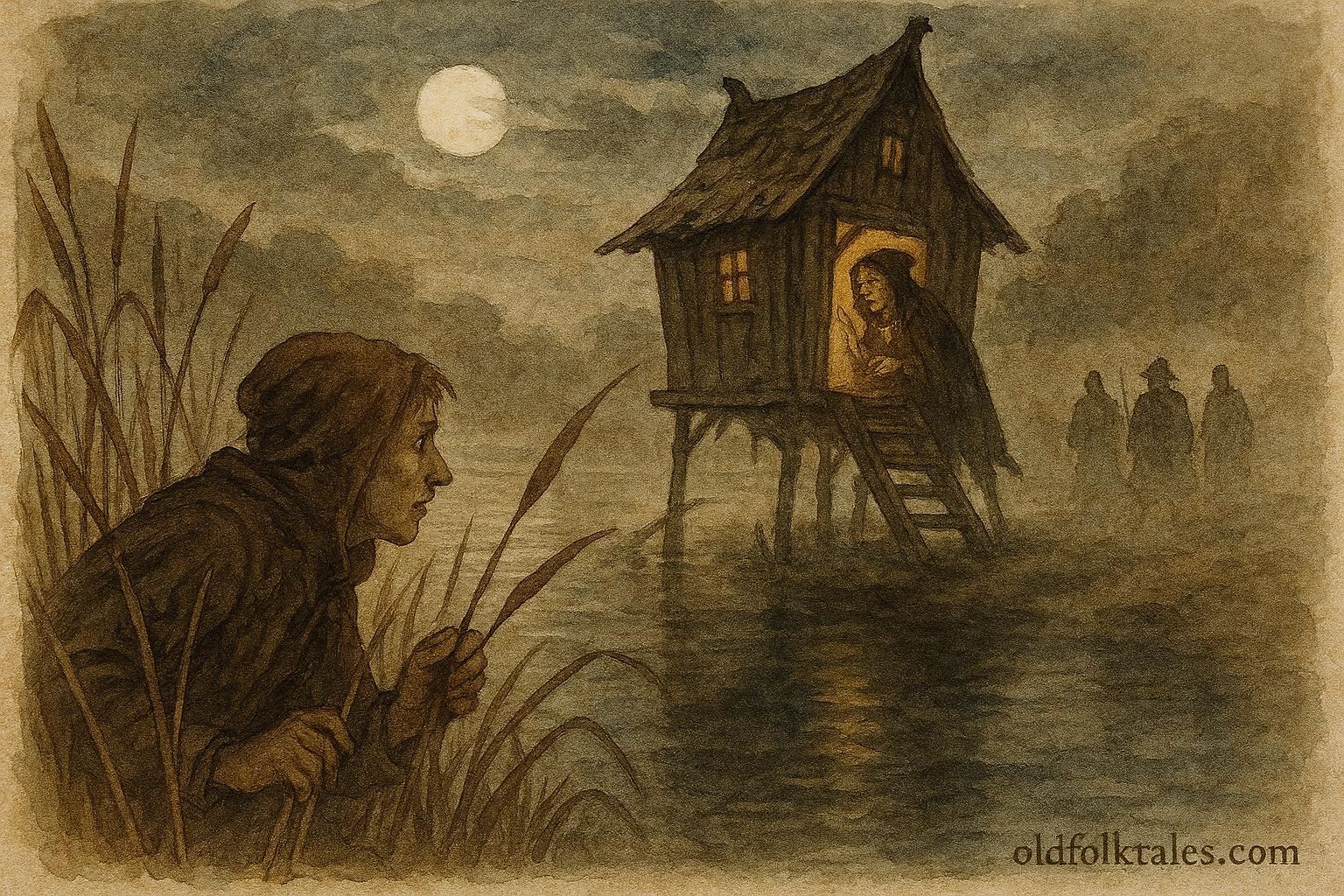
Among these tales, the most feared was that of the Witch of the Zaan River. Villagers spoke of her only in hushed tones, glancing nervously toward the dark waters where reeds swayed in the moonlight. She was said to live in a small, crooked hut built on stilts along a forgotten curve of the river. By day, she appeared as a frail, unassuming old woman, hunched beneath a threadbare cloak, eyes hidden beneath a wide hood. But by night, her malice revealed itself. She could stir the waters, summon storms, and bewitch livestock, leaving them mangled or sickly. Farmers whispered that she fed on the fear she inspired, and children were warned never to stray too close to the riverbanks.
The villagers tried everything to protect themselves. Some offered charms and tokens at the edge of their fields. Others prayed before venturing near the water. But the witch seemed cleverer than all precautions. She moved silently, her magic subtle and unpredictable. Boats went missing along the river; cows were found stiff and unwell in the morning; strange shadows flickered beneath the bridges. The Zaan River, long a source of life, had become a corridor of fear.
It was during such a season of unease that a boy named Pieter, no older than twelve, decided he could not remain a passive witness. Pieter was clever and observant, though small and unassuming, with keen eyes that missed little. He loved to explore the reeds and small islands along the river, often daring to climb into places other children feared. While others ran at the sound of creaking branches or rustling reeds, Pieter’s curiosity grew. He watched the river, noting patterns in the witch’s appearances, the way certain winds preceded her mischief, and the subtle signs that livestock were in danger.
One evening, as the sun sank behind distant windmills, Pieter noticed something unusual. The river, usually calm in its twilight hush, shimmered with a strange green glow near the witch’s crooked hut. He crouched behind a cluster of reeds, heart pounding, and watched. Through the dim light, he saw her, tall and twisted beneath her hood, moving with unnatural speed and grace. Her long fingers dipped into the water, and ripples formed, curling in unnatural spirals. He noticed, however, that she paused at moments, checking something carefully in her tattered cloak, muttering under her breath.
Pieter returned to the village as night fell. He pondered what he had seen, thinking through every detail. What was it she checked so meticulously? Could this be her weakness? He could not rest until he understood. Night after night, he returned, observing the witch silently from the reeds, noting the precise way she moved and the little talisman she seemed to carry close to her chest.
After many evenings of careful watching, Pieter made a discovery. The witch’s power, it seemed, was tied to a small silver pendant she wore at all times. When it was hidden beneath her cloak, she could summon the river’s dark magic. But if the pendant was removed or touched, her power diminished significantly. It was subtle, she could no longer create strong waves, nor cast spells that frightened livestock, nor summon the unnatural shadows that haunted the riverbanks.
Armed with this knowledge, Pieter devised a plan. He would not confront her recklessly; the witch was too cunning and dangerous for that. Instead, he waited for a night when the river mist was thick, concealing his movements, and he approached the crooked hut quietly. Using reeds and mud as cover, he crept to the edge of the stilted structure, his heart hammering with fear and determination. He watched the witch inside, muttering over her spells, unaware of his presence.
With careful hands, Pieter reached for the pendant as it hung just beneath her cloak. At first, his fingers trembled, but he gripped it tightly and tugged. The witch shrieked in alarm, a sound so chilling that it echoed across the river. Her cloak fell back, and the river, once writhing with green luminescence, stilled instantly. She tried to summon her magic, to bend the waters and strike at Pieter, but her power was gone. Cleverness had triumphed over strength.
The villagers, who had gathered on the opposite bank after hearing Pieter’s signal, rushed forward to help secure her. Together, they ensured the witch could no longer terrorize the community. They removed the pendant and placed it under lock and key, ending her malevolent influence permanently. The river, once a corridor of fear, returned to its natural rhythm, flowing calmly and carrying life back to the fields and homes along its banks.
Pieter, though small and often overlooked, was celebrated for his courage and wit. He had shown that careful observation, bravery, and clever thinking could triumph over fearsome strength and supernatural menace. The villagers learned an enduring lesson: that evil, no matter how powerful, often has its vulnerabilities, and that the sharp mind and steady heart could restore safety and peace.
In the years that followed, Pieter continued to wander the banks of the Zaan River, exploring the reeds and islands, not out of fear, but out of the joy of curiosity and vigilance. His adventures became stories told beside hearth fires, tales for children and adults alike, celebrating the clever boy who had dared to face the Witch of the Zaan River. Parents used the tale to teach caution, resourcefulness, and community protection, while children remembered the thrill of cleverness overcoming the darkness.
Moral Lesson
The Witch of the Zaan River teaches that courage, intelligence, and careful observation can overcome even the most frightening challenges. Evil is rarely invincible, and the protection of a community can rely on wit and resourcefulness as much as strength.
Knowledge Check
- Who terrorized the villagers along the Zaan River?
- A malevolent witch who could control the river and frighten livestock.
- What was Pieter’s role in the story?
- A clever boy who observed the witch, discovered her weakness, and helped stop her.
- What weakness did the witch have?
- A silver pendant she carried; removing it weakened her magic.
- What themes are central to this Dutch folktale?
- Good versus evil, cleverness triumphing over strength, fear of the unknown, and community protection.
- How did Pieter stop the witch?
- He carefully observed her, seized her pendant, and enabled the villagers to secure her.
- What cultural elements are highlighted in the story?
- Dutch river landscapes, village life along the Zaan River, and folklore emphasizing cleverness and communal responsibility.
Source: Dutch oral tales compiled by P. J. Meertens, 1927, Netherlands, early 20th century.
Cultural Origin: Netherlands