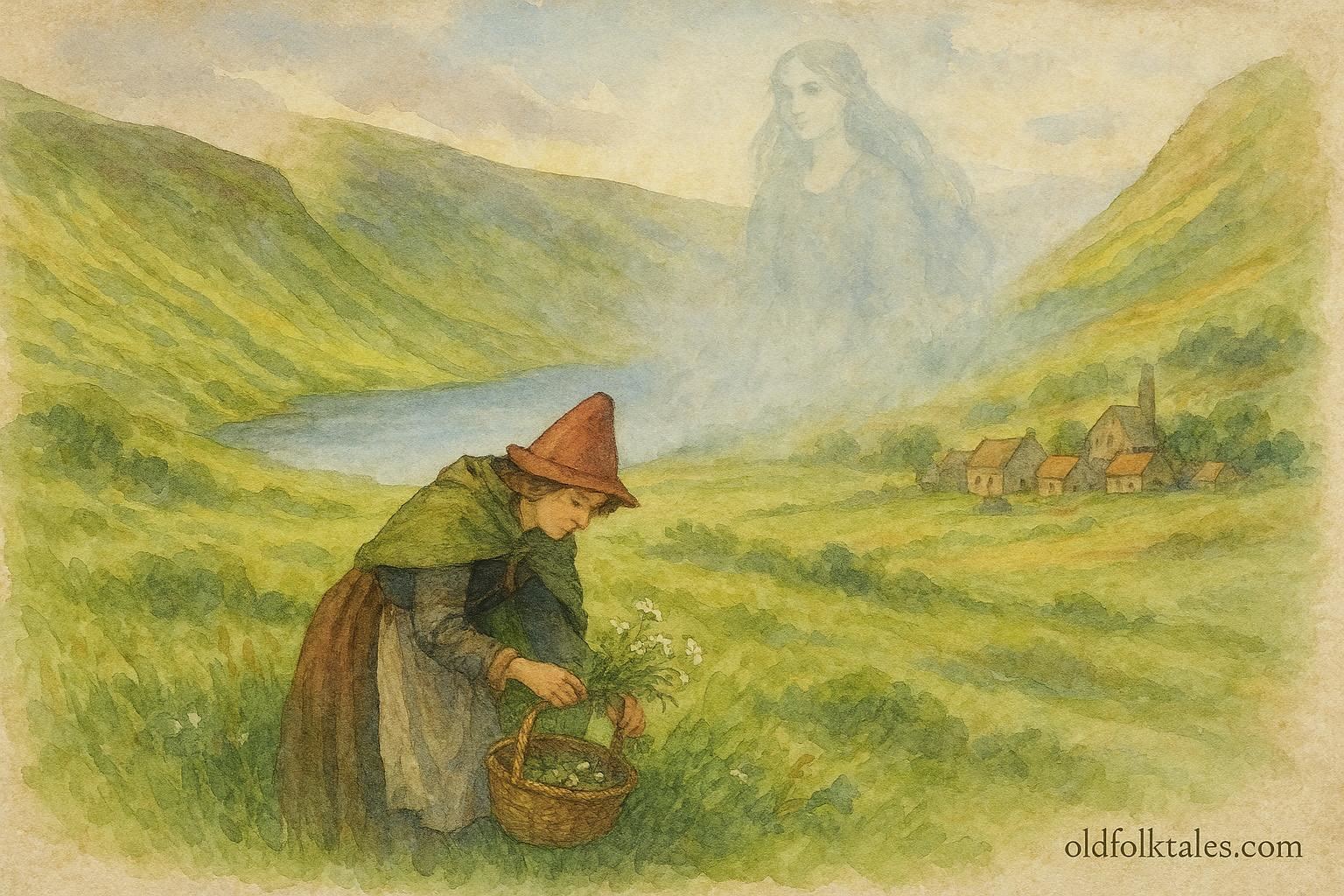
In the quiet village of Myddfai, nestled among the green hills of Carmarthenshire, there lived a lineage unlike any other in Wales. The people of the village were farmers, shepherds, and craftsmen, bound to the rhythms of the land. Yet among them was a family known not for their labor in the fields, but for a different kind of work, one that required knowledge, patience, and a deep understanding of the natural world. They were the Physicians of Myddfai.
Their reputation stretched far beyond the borders of their village. From distant valleys and neighboring towns, people came seeking their help, those suffering from illness, injury, or ailments that others could not cure. The physicians did not rely on wealth or status, nor did they boast of their abilities. Instead, they practiced quietly, guided by knowledge passed down through generations, rooted in both the natural world and something more mysterious.
For the origins of their skill were not entirely of this world.
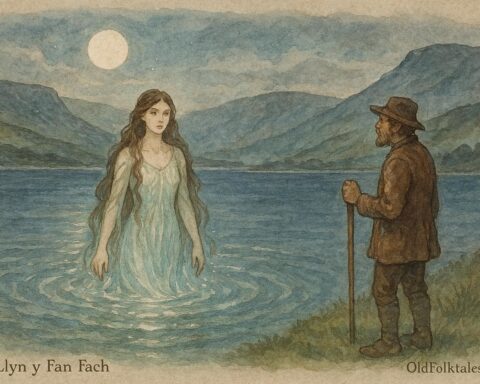
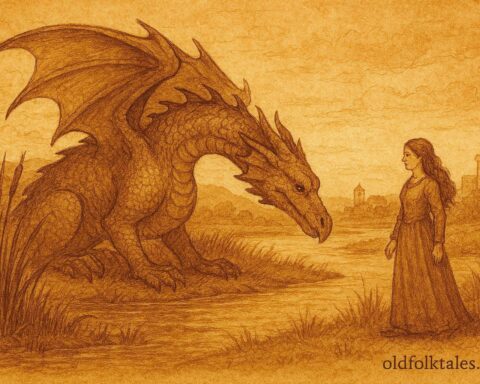
It was said that their lineage began with the Lady of Llyn y Fan Fach, the mysterious woman who had emerged from the lake and married a mortal farmer. Though she had returned to the water after the breaking of a sacred promise, she had not left her children without a gift. To them, she had entrusted a knowledge that was both rare and powerful, the understanding of herbs, healing, and the balance between nature and human life.
This knowledge was not written in books, nor taught in the manner of ordinary learning. It was passed from parent to child, through careful instruction, observation, and experience. Each generation of the family carried the responsibility of preserving it, adding to it, and ensuring that it was used wisely.
The physicians of Myddfai understood the land in a way few others did. They knew which herbs grew best in the early spring, when the ground was soft with rain, and which thrived under the warmth of summer sun. They recognized the subtle differences between plants that looked alike, knowing that one might heal while another could harm. They understood how to prepare remedies, how to dry leaves, crush roots, and blend mixtures that could ease pain or restore strength.
Yet their knowledge extended beyond the physical. They believed that healing required balance, not only within the body, but between the individual and the natural world. Illness, they taught, was often a sign that something had fallen out of harmony. Their treatments sought not only to cure symptoms but to restore that balance.
One of the most well-known among them was a physician named Rhiwallon, a man whose skill and wisdom became the foundation of the family’s enduring reputation. He was known for his calm presence, his careful listening, and his ability to diagnose ailments that others could not understand.
People traveled great distances to seek his help. Some came with injuries sustained in the fields, others with fevers that had resisted all attempts at treatment. Rhiwallon welcomed them all, treating each with the same care and attention. He would walk through the hills to gather herbs, selecting them with precision, as though guided by an unseen hand.
There were those who believed that the physicians’ knowledge was magical, a gift from the lake itself. Others saw it as the result of careful observation and generations of learning. Yet regardless of the source, none could deny its effectiveness.
One story tells of a farmer who fell gravely ill, his strength fading day by day. His family, desperate, brought him to Rhiwallon. The physician examined him carefully, asking questions, observing his condition, and considering the signs before him.
Rather than administering a single remedy, Rhiwallon prepared a mixture of herbs, each chosen for its specific properties. He instructed the family on how to use it, emphasizing the importance of patience and consistency. He also advised changes in the farmer’s routine, rest, nourishment, and time spent in the open air.
Over the following days, the farmer’s condition improved. Slowly, his strength returned, and he was able to resume his work. The family, filled with gratitude, spoke of the physician’s skill, spreading word of his abilities far and wide.
Yet the physicians of Myddfai did not seek praise or reward. They accepted modest offerings, but their work was guided by a sense of duty rather than desire for wealth. They believed that their knowledge was not theirs to hoard, but to share responsibly.
As the years passed, the family continued to practice their craft, passing their knowledge from one generation to the next. Each new physician learned not only the use of herbs but the principles that guided their work: humility, respect for nature, and a commitment to the well-being of others.
The connection to the Lady of the Lake remained central to their identity. Though she had long since returned to the waters of Llyn y Fan Fach, her presence was felt in the knowledge she had left behind. The physicians spoke of her with reverence, acknowledging the role she had played in shaping their lineage.
It was said that their knowledge came with a responsibility, to use it wisely and never for harm. To misuse it, or to allow pride to overshadow humility, would risk losing the gift entirely.
Over time, the physicians became a symbol of harmony between humanity and nature. Their work demonstrated that healing could be achieved not through force, but through understanding, by working with the natural world rather than against it.
Their legacy endured, carried forward by those who respected the traditions and values that had been passed down to them. Though the world around them changed, the principles they upheld remained constant.
The story of the Physicians of Myddfai is one of continuity, a reminder that knowledge, when preserved and respected, can endure across generations. It speaks of the importance of balance, of the relationship between people and the land, and of the wisdom that can be found in both tradition and nature.
Even today, the tale is remembered in Wales, not only as a piece of folklore but as a reflection of early healing practices and the deep connection between culture and the natural world. The hills of Carmarthenshire still stand, the lake still reflects the sky, and the story of the physicians continues to inspire those who seek understanding in the art of healing.
Moral Lesson
The Physicians of Myddfai teaches that true wisdom lies in respecting nature, preserving knowledge, and using one’s gifts responsibly. Healing is not only about curing illness but restoring balance between people and the world around them.
Knowledge Check
- Who were the Physicians of Myddfai?
- A family of healers in Wales known for their knowledge of herbs and natural medicine.
- Where did their healing knowledge originate?
- From the Lady of Llyn y Fan Fach, who passed it down to her descendants.
- What methods did they use to treat illness?
- Herbal remedies, observation, and restoring balance between body and nature.
- What themes are central to this folktale?
- Wisdom, legacy, harmony with nature, and responsible use of knowledge.
- Who was Rhiwallon?
- A renowned physician of Myddfai known for his skill and wisdom in healing.
- What cultural significance does the story hold?
- It reflects Welsh traditions of herbal medicine and the blending of folklore with early medical practice.
Source: The Physicians of Myddfai, associated with William Rees, 1861, Wales.
Cultural Origin: Myddfai, Carmarthenshire, Wales