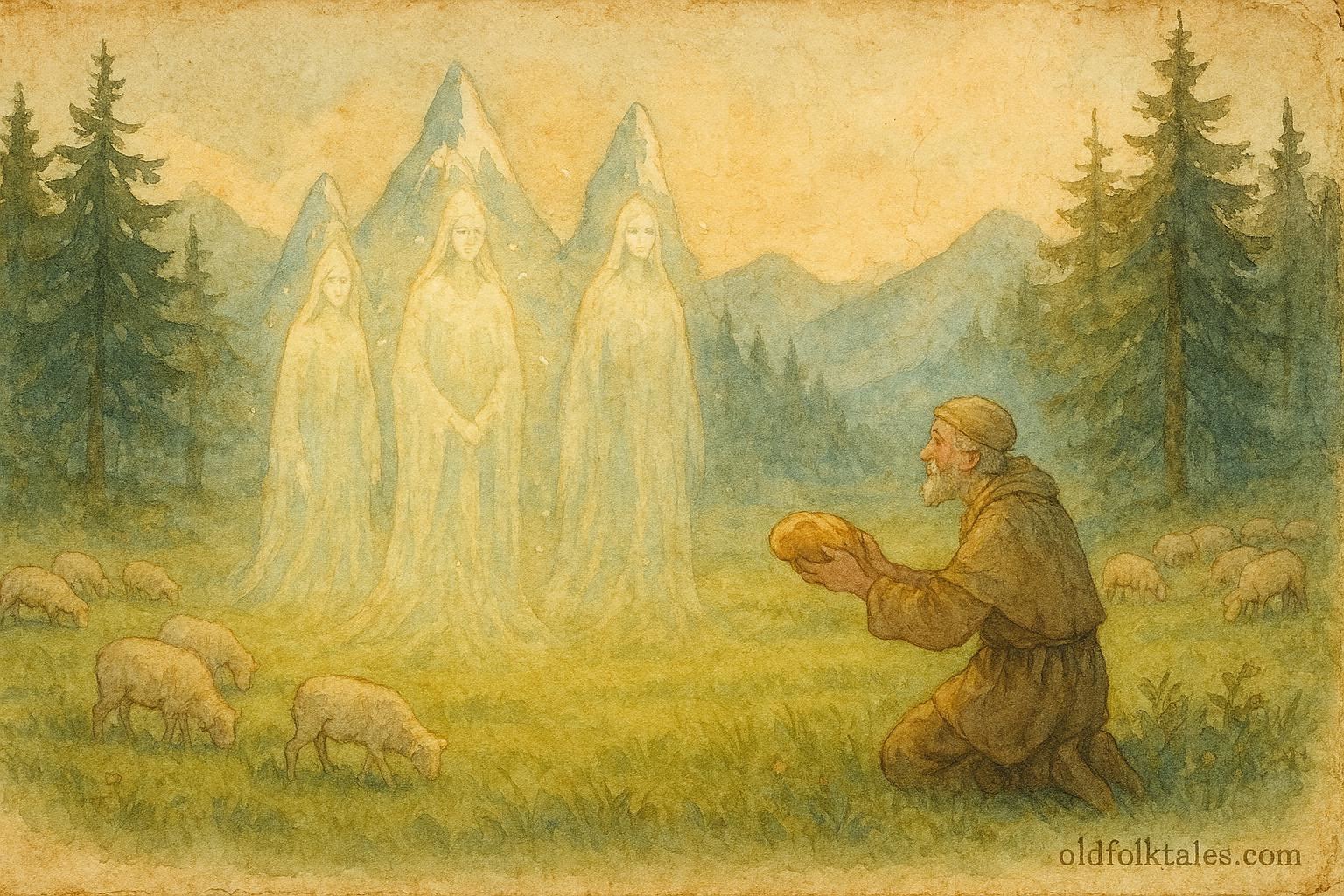
High in the snow-capped peaks of the Swiss Alps, where the air was crisp and pine-scented, there lived a young shepherd named Hans. Every morning, he would lead his small flock to graze on the sunlit meadows that rolled like green waves between the mountains. Life was simple, and though Hans had little in the way of wealth, he was rich in contentment, enjoying the gentle rhythm of the seasons and the quiet companionship of his animals.
The villagers often spoke of the mountains with a mix of reverence and fear. They said that deep within the crags and forests dwelled spirits, mysterious beings who watched the land and its people. They rewarded honesty and kindness but punished greed and deceit. Few dared venture far into the high pastures, fearful of these unseen watchers.
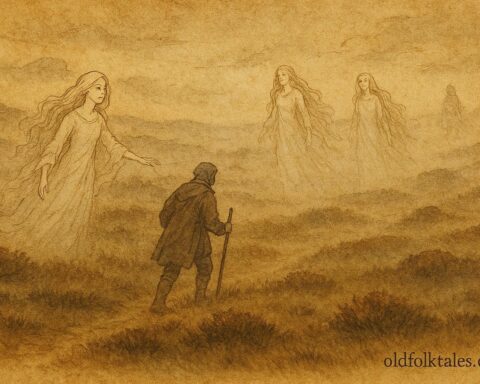
One afternoon, as Hans led his flock to a secluded meadow tucked between two towering peaks, he noticed a soft rustling among the rocks. Curious, he approached and was astonished to see figures shimmering in the sunlight, tall, ethereal beings with flowing robes of mist and hair that gleamed like mountain streams. These were the mountain spirits, rarely seen by human eyes.
At first, Hans trembled, unsure if he should speak. But the spirits’ faces were gentle, and their voices, when they spoke, sounded like the wind weaving through the pines.
“Good shepherd,” one said, “we have watched you tending your flock with care. Your kindness to the creatures of the land has not gone unnoticed.”
Hans bowed humbly. “I only do what I can, Spirit. The mountains feed my flock, and I give thanks every day.”
The spirits smiled, their eyes glimmering like sunlight on snow.
“Then share with us what you have,” they said. “Offer your food with a generous heart, and blessings shall come to you.”
Hans had brought a small loaf of bread and a bit of cheese for his own meal. Without hesitation, he broke the bread and offered pieces to the spirits.
As he did, a warmth spread through the meadow, and the mountain air seemed to hum with light. When Hans looked down, his simple staff had transformed into a golden shepherd’s crook, and his little flock had grown tenfold, all healthy and strong.
“Your generosity is rewarded,” the spirits said. “Treat all creatures and people with this same sincere heart, and prosperity will follow you.”
Before Hans could ask more, the spirits vanished, leaving only the whisper of wind through the alpine pines.
Word of Hans’ fortune soon spread through the valley. The villagers marveled at his thriving flock and the gleaming crook in his hand. Some were inspired, while others grew envious.
A few of the more ambitious shepherds sought to imitate Hans, believing that simply copying his actions would bring them the same rewards. They carried bread to the mountains, but their hearts were not generous, they hoped to gain wealth without effort, offering food with greed hidden beneath a smile.
The spirits, ever watchful, appeared once more, this time in a more severe light.
“Those who give for selfish reasons,” they warned, “shall find their deeds turned against them.”
Indeed, the bread they offered vanished in flames, and their flocks grew weak, wandering the meadows in confusion. The crooks in their hands crumbled to plain wood, and their hopes of sudden prosperity melted like snow in spring.
The villagers soon learned that the spirits rewarded sincerity, not cunning, and that imitation without heart could bring only misfortune.
Years passed, and Hans continued to tend his flock with the same devotion he had always shown. He spoke kindly to his sheep, gave food freely to travelers, and maintained a humble heart despite his growing wealth.
Whenever he climbed to the high meadows, he sometimes glimpsed the spirits, their forms shimmering in the mist. But he never sought to bargain or boast. Instead, he greeted them with respect and shared what he had without expectation.
Because of this, his life was peaceful and full. His flock thrived, and the valley prospered from the example of his honesty and humility. Children would follow him through the pastures, learning not only how to care for sheep but also the value of sincerity and respect for nature.
And so, the tale of the shepherd who gave from his heart became a legend in the Alps. Travelers told of how generosity, humility, and kindness toward both people and nature could summon blessings, while greed and imitation invited swift and certain retribution.
Even now, the mountain winds carry whispers of the spirits who still watch the valleys, rewarding those who act with true hearts.
Moral Lesson
True kindness is rewarded, but only when it comes from a sincere heart. Imitation without generosity invites misfortune, and respect for nature and humility brings lasting prosperity.
Knowledge Check
- Who is the main character in The Shepherd and the Mountain Spirits?
Hans, a humble and kind shepherd in the Swiss Alps. - How are the mountain spirits depicted?
As ethereal beings of light and mist who reward sincerity and punish greed. - What act earns Hans the blessings of the spirits?
Sharing his food with the spirits freely and with a generous heart. - What happens to those who imitate Hans out of greed?
Their flocks weaken, their tools fail, and their attempts at wealth are cursed. - What central lesson does the story teach about human behavior?
Generosity and sincerity are rewarded, while selfishness and imitation lead to misfortune. - What cultural setting is depicted in the tale?
Alpine life in Switzerland, with pastoral communities and close ties to nature.
Source: Collected in Swiss folklore anthologies by Otto Sutermeister (1869)
Cultural Origin: Switzerland (Alpine pastoral communities)