Long ago, in the rugged hills of Bulgaria, seven villages lay nestled at the feet of a great mountain range. Rolling green pastures stretched between the villages, while streams and forests provided sustenance and shelter. Yet despite the serene beauty of the landscape, the people lived in fear.
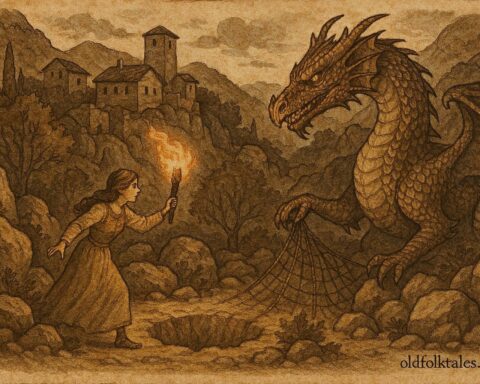
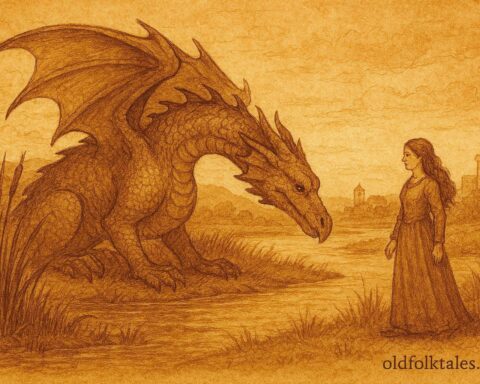
From the deepest caves atop the highest peak emerged a dragon of terrifying might. Its scales shimmered like molten bronze, its eyes glowed like molten gold, and its wings, vast as the roofs of a hundred homes, could blot out the sun. The dragon demanded tribute from the villagers: gold, livestock, and, at times, even the bravest youth. Those who dared resist vanished without a trace.
Year after year, the villages lived in trembling obedience, sending offerings and watching their fields and herds diminish. Despair hung over the people like a shadow, and elders whispered tales of heroes who had tried and failed to defeat the dragon.
In one of the valleys lived a young man named Stefan. Unlike the other villagers, Stefan was not renowned for his strength. He was clever and thoughtful, often spending hours in the forests and libraries of the nearby monastery, learning the lore of the land and the secrets of magic passed down through generations.
Stefan listened carefully to the stories of the dragon, noting its habits, the time it left its cave, and the treasures it coveted most. He also gathered magical items from wise elders—an amulet to shield him from fire, a cloak woven with invisibility, and a small pouch of enchanted dust said to confuse the senses of beasts.
With courage forged in preparation and knowledge, Stefan approached the seven village elders. “I will confront the dragon,” he said. “But I will not fight with strength alone. I will use wit, magic, and cunning.”
Though fearful, the elders consented. The villagers gathered provisions and sent Stefan on his way, offering prayers and blessings as he made his journey toward the dragon’s lair high in the Seven Mountains.
The climb was treacherous. Jagged rocks tore at his boots, icy winds whipped across the peaks, and clouds shrouded the path like drifting ghosts. Stefan moved steadily, holding the magical amulet against his chest and carrying the enchanted pouch. When the first echo of the dragon’s roar rumbled across the valley, his heart quaked, but he pressed onward.
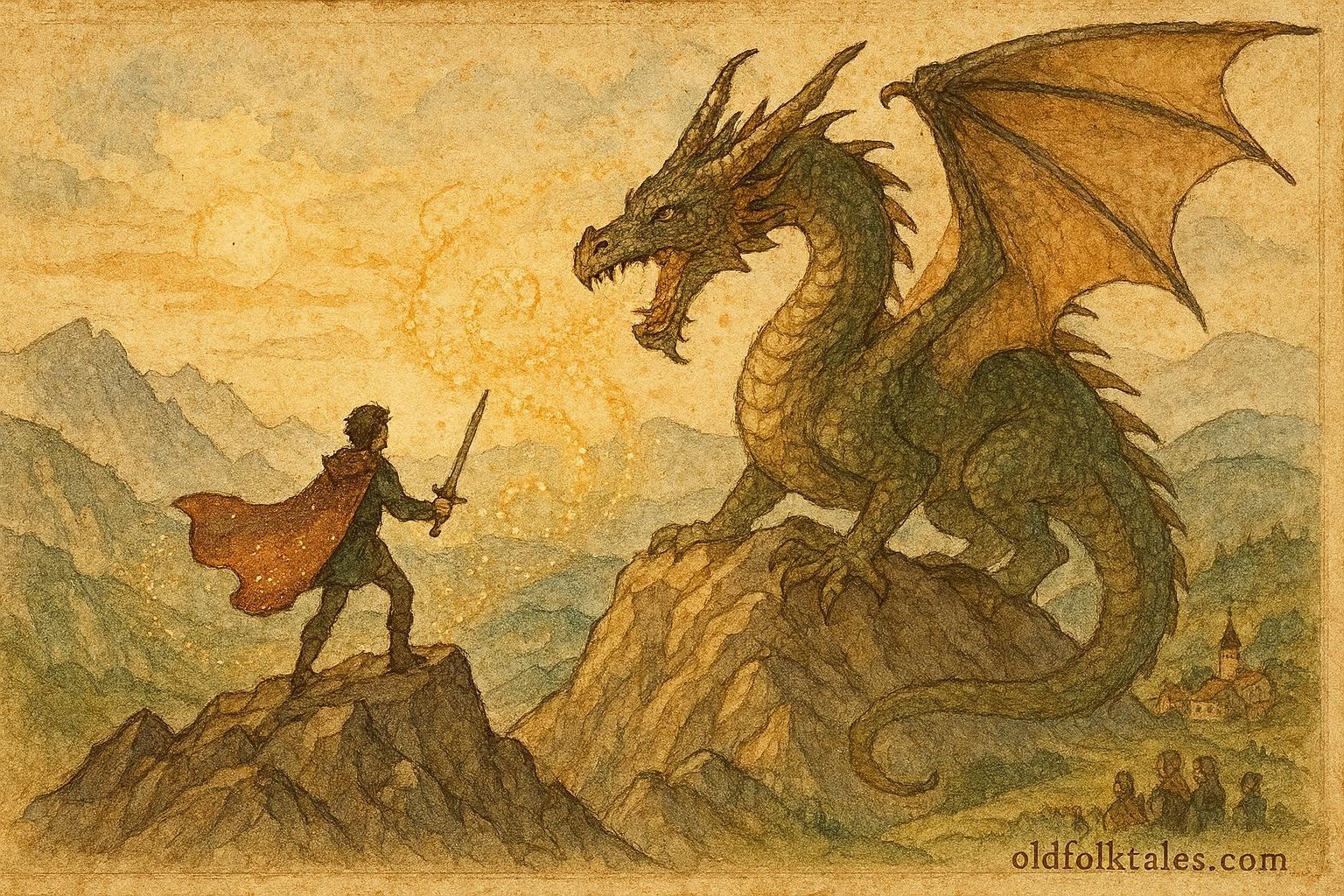
At last, he reached the cave. Smoke and fire curled from its mouth, and the heat scorched the air like a furnace. He waited in the shadows, his cloak of invisibility hiding him as the dragon stirred. Its eyes, golden as molten metal, swept across the mountain ridge, searching for prey.
Stefan whispered an ancient incantation from the old manuscripts he had studied. The enchanted dust shimmered into the air, drifting toward the dragon. Confused and disoriented, the dragon thrashed and roared, unable to discern friend from foe. Stefan seized the moment, moving closer with the amulet shining bright against the dragon’s flames.
Using his knowledge of the dragon’s habits, Stefan avoided its fire and its claws, darting and weaving around the cavern. He noticed the dragon’s heart, legend told that a single scale on its chest held the key to its vulnerability. With steady hands and careful aim, Stefan threw a small dagger blessed with magic, striking the scale. A mighty roar shook the mountains as the dragon writhed in surprise and pain.
But Stefan knew the fight was not yet over. He lured the dragon toward a narrow pass, where its immense size would hinder its movement. There, using his cunning, he led it over a cliff edge and into a hidden pit lined with enchanted chains provided by the village elders. The chains glowed and bound the dragon, preventing escape, while the magical amulet kept Stefan safe from the heat of its final struggles.
The dragon’s roar echoed across the valleys one last time, then faded into silence. The sky seemed to brighten, the clouds parted, and the villagers, who had watched from afar, erupted in jubilant celebration. Stefan descended the mountains, weary but triumphant, bearing news that peace had returned to the seven villages.
The villages held a festival in Stefan’s honor. He humbly accepted gifts and praise, but he reminded everyone that courage, wisdom, and preparation were as vital as bravery. The elders recorded his deeds, ensuring that future generations would remember the hero who had used knowledge and magic to overcome a seemingly invincible foe.
For decades, the story of the Dragon of the Seven Mountains inspired young and old alike, a lesson that true heroism was not merely in strength or daring, but in cleverness, courage, and respect for the powers both magical and natural.
Moral Lesson
Courage alone cannot conquer great challenges; wisdom, preparation, and clever problem-solving are equally essential. True heroism combines bravery with intelligence and selflessness.
Knowledge Check
- Who is the hero in The Dragon of the Seven Mountains?
Stefan, a clever young man armed with knowledge and magical items. - What threat do the seven villages face?
A fearsome dragon demanding tribute of gold, livestock, and sometimes people. - How does Stefan prepare to confront the dragon?
By studying lore, acquiring magical items, and learning the dragon’s habits. - Which magical tools aid Stefan in defeating the dragon?
A fire-protecting amulet, an invisibility cloak, and enchanted dust to confuse the dragon. - How is the dragon ultimately subdued?
Stefan uses cunning to strike a vulnerable scale and traps it in enchanted chains in a narrow pass. - What lesson does the tale teach about heroism?
True heroism combines courage, intelligence, preparation, and selflessness.
Source: Recorded in Bulgarian Folk Tales, compiled by Marin Drinov, 1889
Cultural Origin: Bulgaria